 Semiahmoo Siding
 Decking Built for Sumas, Not for a Catalog Photo
Sumas homes near Semiahmoo deal with a specific mix of conditions: salt-laden air off the water, driving rain that comes in sideways more often than straight down, and a moss season that can run most of the year in shaded yards. A composite deck that looks identical to one installed in a dry inland climate can perform very differently once it sits through a few Whatcom County winters. The board itself matters, but so does the framing underneath it, the fasteners holding it together, and the gaps left for water to actually leave instead of pool.
This page covers what a composite deck build should look like specifically for this area — not a generic rundown of decking materials, but the details that matter when the deck has to shed rain, resist salt exposure, and stay walkable even when moss wants to take over every shaded corner of the yard.
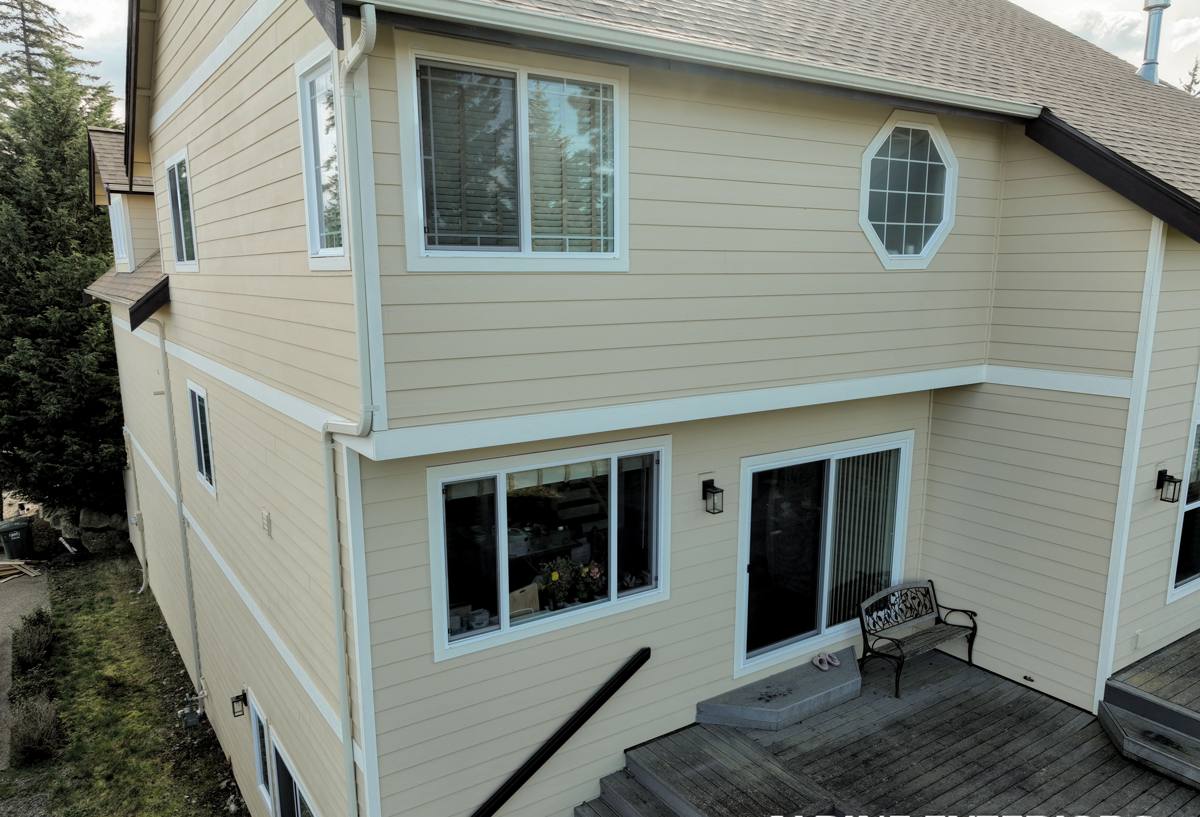
What the Local Climate Actually Does to a Deck
It's not one thing — it's the combination that wears a deck down over time:
- Salt air: accelerates corrosion on exposed fasteners, hidden clips, and any metal hardware that isn't rated for coastal exposure.
- Driving rain: pushes water sideways under rail posts, against ledger boards, and into any gap that wasn't flashed or sealed correctly at install.
- Moss and algae: take hold fastest in shaded, low-airflow areas — under furniture, along the north side of a house, or wherever boards were laid without enough ventilation underneath.
- Extended damp season: keeps moisture in contact with the substructure for months at a stretch, which is where rot problems actually start — not on the composite surface itself.
None of this means composite decking is a bad fit here — it's actually a strong fit, since it doesn't absorb water and rot the way solid wood does. But it has to be installed with this climate in mind, not installed the same way you'd build a deck in a dry, low-humidity region.
What a Correct Composite Deck Install Involves
Framing and Substructure
The composite boards get the attention, but the framing underneath is what determines how long the deck lasts. In a climate this wet, we look at joist spacing, use fasteners and hardware rated for exterior and coastal exposure, and make sure the substructure has enough airflow underneath to dry out between rain events. A deck built low to the ground with poor ventilation will hold moisture against the framing long after the surface looks dry, which is exactly the setup that leads to hidden rot years down the road.
Ledger Attachment and Flashing
Where the deck attaches to the house is the single most common failure point on decks we're called out to repair. Driving rain pushes water behind poorly flashed ledger boards, and once it's behind the siding, damage can build for years before anyone notices. Correct flashing — installed in the right order relative to the house's water-resistive barrier, not just caulked over the top — is not optional in this climate.
Board Selection and Spacing
Composite boards expand and contract with temperature and moisture, less than wood but still measurably. Gapping has to account for that movement, especially at butt joints and around fixed obstructions like posts. Boards run too tight will buckle over a wet winter; boards gapped too wide collect debris and become the first place moss and algae take hold.
Fasteners and Hardware
Hidden fastener systems are common with composite decking, but not all hidden clips are built the same. In a salt-air environment, stainless steel or coated hardware rated for coastal exposure is worth the extra cost — standard fasteners can start showing corrosion within a few seasons here, long before the boards themselves show any wear.
Composite vs. Other Decking Materials for This Climate
| Material | Moisture Behavior | Maintenance in Salt Air / Moss Season | Typical Lifespan Here |
|---|---|---|---|
| Composite (capped) | Doesn't absorb water into the board core; won't rot | Periodic wash to clear moss/algae film; no staining or sealing | Long-term, backed by manufacturer warranty |
| Pressure-treated wood | Absorbs and releases moisture constantly; prone to cupping and splitting | Annual staining/sealing needed to slow rot and graying | Shorter, heavily dependent on upkeep |
| PVC decking | Fully synthetic, no wood content, won't absorb moisture | Similar low-maintenance profile to composite; can look less natural | Long-term, but a different feel underfoot and price point |
We install composite because, for this climate specifically, it strikes the right balance: it handles constant moisture exposure without the rot risk of wood, it doesn't demand a yearly staining schedule from the homeowner, and it holds up to salt air better than untreated or under-maintained wood does. That's a judgment based on how these materials actually perform in wet coastal conditions over years, not a knock on wood decking as a product.
Our Process, Start to Finish
- On-site assessment: we look at the existing structure (if there is one), grade and drainage around the footprint, and how exposed the location is to prevailing wind and rain direction.
- Design and material selection: board style, color, and railing options based on your home and budget, sized to the space rather than a one-size layout.
- Framing and structural work: new or reinforced substructure, proper joist spacing, and hardware rated for exterior coastal use.
- Flashing and waterproofing at the ledger: done before a single deck board goes down, since this is the point that's nearly impossible to fix correctly after the fact.
- Board installation: proper gapping, fastening, and airflow underneath to manage moisture and reduce moss buildup over time.
- Final walkthrough: we go over care basics with you — what to expect from the material, what maintenance actually looks like, and what's covered under warranty.
Living With a Composite Deck in a Wet, Mossy Climate
Low-maintenance doesn't mean zero-maintenance. Composite decking still needs some basic seasonal attention, especially in a spot where moss season runs long:
- Sweep debris (leaves, needles, pollen) off the deck regularly — trapped organic matter is what feeds moss and algae growth.
- Rinse or wash the surface a couple of times a year to clear the thin film that moss and algae leave before it gets a foothold.
- Keep gutters and downspouts near the deck clear so water isn't dumping directly onto or under the decking.
- Check that furniture, planters, and rugs aren't sitting in the same spot for months at a time — trapped moisture under a stationary object is a common spot for surface staining.
- Inspect railing posts and ledger flashing once a year for any sign of water intrusion, especially after a stretch of heavy driving rain.
- Keep nearby vegetation trimmed back enough that the deck gets some airflow and doesn't sit in constant shade.
None of this is heavy work — it's the difference between a deck that looks new for decades and one that develops a green film and soft spots at the framing because moisture and debris were left to sit.
Mistakes We Commonly Find on Older or DIY Decks
When we're called out to look at an existing deck in the area, the same handful of issues show up again and again:
- Ledger boards attached to the house without proper flashing, leading to hidden water damage at the rim joist.
- Framing built too close to grade with little to no airflow underneath, trapping moisture against the joists.
- Standard (non-coated) fasteners used in a salt-air location, showing rust and staining within a few years.
- Boards installed with little or no gap, causing buckling or cupping after a wet season.
- No plan for drainage — water pooling at the base of posts or along the house foundation instead of being directed away.
Most of these aren't visible from a quick look at the surface. They show up as soft framing, rust streaks, or a deck that suddenly feels less solid underfoot — usually a few years after the fact, once the damage is already established.
What Affects the Cost of a Composite Deck Project
| Cost Factor | Why It Matters |
|---|---|
| Deck size and shape | Square footage and complexity (angles, multiple levels) drive both material and labor |
| Substructure condition | Reusing sound existing framing costs less than a full tear-out and rebuild |
| Height and stairs | Elevated decks need more structural work, railings, and stair framing |
| Board tier | Composite lines range from entry-level to premium, affecting both price and warranty terms |
| Railing style | Composite, metal cable, or glass rail systems vary significantly in material cost |
| Site access | Tight lots or backyard-only access can add labor time for material staging |
As a broad range, most composite deck projects in this area land somewhere in the mid-to-high dollars-per-square-foot range once framing, boards, and railing are all accounted for — the exact number depends heavily on the factors above. We give a firm, itemized number after seeing the site, not a phone estimate.
Why It Matters That We Already Work in Sumas
A crew that already works this specific area knows how the local wind and rain direction tends to hit a deck, which corners of a yard hold moss the longest, and what hardware actually holds up under salt exposure here versus what looks fine on a spec sheet. That local pattern recognition shows up in small decisions — where to add extra flashing, which side of a deck needs better drainage, how much ventilation a low-profile deck actually needs — that a crew unfamiliar with Whatcom County's coastal conditions might not think to build in.
It also matters for the parts of the job that happen after installation. If a warranty question comes up or a flashing detail needs a look years later, you're dealing with a crew that's still working in the area and stands behind what they built, not chasing down a contractor who worked a single job here and moved on.
Get a Straight Answer on Your Project
If you're weighing composite decking for a home in the Sumas or Semiahmoo area, we're happy to take a look and give you a straightforward, no-pressure estimate — what it would take on your specific site, what it would cost, and what to expect from the material over time. Use the form below to get started.