 Semiahmoo Siding
 Siding Replacement at Wiser Lake: What This Property Needs
Wiser Lake sits in the rural stretch of Whatcom County between Lynden and Ferndale, a mix of lake-adjacent homes and larger wooded lots set back from the water. It's a different setting than a downtown lot or a tight subdivision — more tree cover, more shade, more distance between a house and full sun exposure on at least one or two walls. Those conditions change what a siding replacement job needs to account for, and they're a big part of why a generic re-side doesn't always hold up the way homeowners expect.
This page is about one job: replacing siding on a home at or near Wiser Lake. Not a repair, not a patch, and not a general overview of every exterior system — a full siding replacement, done to match what this specific climate and this specific kind of lot actually put a wall assembly through.
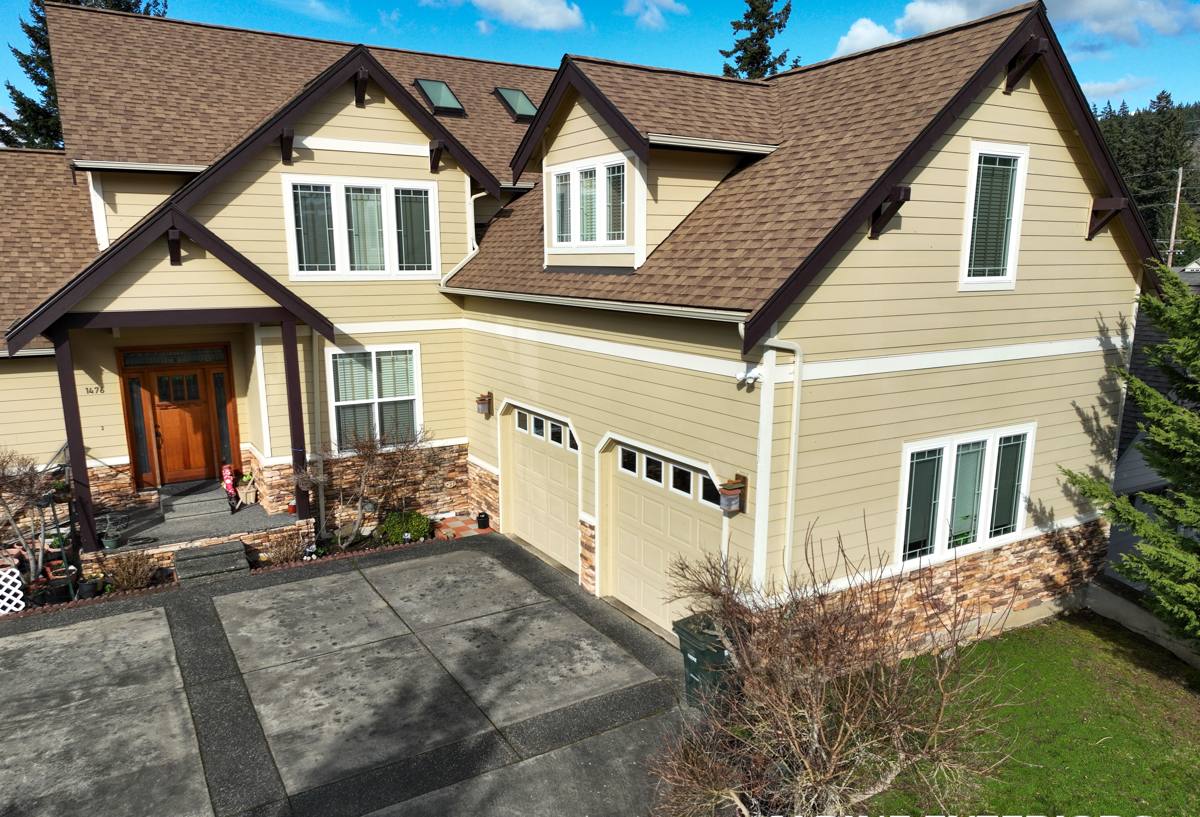
What Whatcom County Weather Does to Siding Here
Driving Rain and Wind-Driven Moisture
Whatcom County doesn't get flash storms so much as long, steady wet stretches, and on open or partially wooded lots like many around Wiser Lake, that rain often arrives with enough wind behind it to push water sideways into wall assemblies rather than straight down. Siding that's only detailed to handle vertical rainfall — undersized laps, gaps at trim, caulk standing in for real flashing — tends to start failing at exactly the joints and transitions that wind-driven rain finds first. A replacement job needs to correct those weak points, not just cover them with new material.
A Long Moss and Mildew Season
Mild temperatures and near-constant humidity give this part of the county a moss and mildew season that runs most of the year, and homes with mature trees or shaded north-facing walls — common around a lake with this much tree cover — see it earliest and worst. Porous or moisture-holding siding materials give moss and mildew something to grip onto; smooth, factory-finished fiber cement gives them a lot less to work with. That difference shows up clearly on north-facing walls a few years after installation.
Reduced but Still Real Marine Influence
Wiser Lake sits inland from Semiahmoo Bay, so homes here don't take direct salt spray the way waterfront properties on the spit do. But the broader weather system feeding this part of Whatcom County — the moisture-heavy air moving in off the Strait of Georgia — is the same system driving the rain and moss patterns described above. The salt-air load is lighter here than it is right on the water, but the moisture load that actually determines how long siding lasts is very much still in play.
Signs a Wiser Lake Home Needs Full Siding Replacement, Not a Repair
Not every siding problem calls for a full tear-off. But on a home that's been up against this climate for a couple of decades or more, patch repairs often just delay a job that needs to happen anyway — and can end up costing more in the long run once moisture has worked its way behind the cladding. Some signs point clearly toward replacement:
- Soft, swollen, or crumbling siding, especially near the bottom courses or around window and door trim
- Paint that won't hold anymore no matter how often it's redone — a sign the substrate underneath is failing, not just the finish
- Persistent moss or dark streaking on shaded walls that comes right back after cleaning
- Visible cupping, warping, or buckling panels, particularly after wet winters
- Soft spots in the sheathing behind the siding, found by pressing on the wall or during a close inspection
- Siding that's simply original to a home built decades ago and has never been replaced
If more than one or two of those show up, or if they're concentrated on the same wall, that's usually a sign the problem goes deeper than the visible surface — and that a proper tear-off and inspection is worth doing before more moisture gets in.
Why We Replace Siding With James Hardie Fiber Cement — and Nothing Else
We install James Hardie fiber cement on every siding replacement we do, full stop. We don't offer LP SmartSide, vinyl, Cemplank, Allura, primed spruce, or cedar as alternatives. That's a professional standard we settled on, not a supplier arrangement, and it comes down to a handful of things that matter specifically in a climate like this one:
- Non-combustible core: fiber cement doesn't feed a fire the way wood-based siding can, which matters for safety and often for insurance underwriting too.
- Factory-applied ColorPlus finish: baked on in a controlled factory setting rather than brushed on in the field, and it resists fading, chalking, and moisture intrusion far longer than site-applied paint.
- Climate-engineered HZ product line: Hardie's HZ5 formulation is built for regions with heavy moisture exposure and freeze-thaw cycling, which fits Whatcom County's wet-winter pattern well.
- Dimensional stability: it doesn't swell, cup, or warp the way engineered wood products can after repeated wetting over a long wet season.
- A strong, transferable warranty: backed by Hardie, provided the installation follows their published spec.
Every one of the products we don't install has a legitimate place in the market, and plenty of homeowners elsewhere are satisfied with them. But on shaded, moisture-heavy lots like the ones around Wiser Lake, we've made the call that we'd rather install one system we can fully stand behind than offer a cheaper option that quietly shifts long-term maintenance risk back onto the homeowner.
What a Correct Siding Replacement Job Involves
Tear-Off and Sheathing Inspection
A real replacement starts by removing the old siding entirely, not covering it over. That's the only way to actually see the sheathing underneath — and on a home that's had moisture problems, that inspection is often where the real story shows up. Soft or rotted sheathing needs to be cut out and replaced before anything new goes back on; installing new siding over a compromised substrate just resets the clock on the same failure.
Weather-Resistive Barrier and Flashing Details
Behind the siding, a correctly lapped weather-resistive barrier and properly integrated flashing at every window, door, and roof-to-wall transition are what actually keep wind-driven rain out of the wall assembly. This is the step that gets rushed or skipped on cut-rate jobs, and it's exactly the step that matters most on a lot exposed to sideways rain.
Fastening and Joint Work to Spec
Fiber cement only performs the way it's engineered to when it's installed to Hardie's published specifications — correct fastener type and spacing, proper clearance from grade and roofline, and factory-mitered or properly caulked joints. Installed loosely or off-spec, even the right material will develop moisture problems in a climate like this one. The material is only as good as the installation behind it.
Comparing Siding Materials for a Wiser Lake Home
| Material | Moisture Behavior | Performance in Shade / Moss Exposure | Typical Longevity Here |
|---|---|---|---|
| James Hardie fiber cement | Dimensionally stable, resists swelling | Smooth factory finish resists moss and mildew grip | 30+ years with correct installation |
| Vinyl siding | Can warp or distort with heat and settle over time | Seams and panel laps give moss and grime a foothold | Variable; shorter under prolonged wet-shade conditions |
| LP SmartSide / engineered wood | Wood-based core is moisture-sensitive at cut edges and joints | Needs consistent edge sealing to resist moisture in shaded areas | Depends heavily on installation and upkeep |
| Cedar / primed wood | Absorbs and releases moisture readily | Prone to moss and mildew without frequent refinishing | Shorter without consistent maintenance |
Our Siding Replacement Process
We start with an on-site walk of the home, looking specifically at how the existing siding has held up against moisture and shade exposure, and checking for soft spots that hint at sheathing damage before a contract is even signed. From there we put together a clear, written scope covering tear-off, any needed sheathing repair, weather-resistive barrier, flashing detail, and the specific Hardie profile and color for the home.
During the job, tear-off happens in sections so the home isn't left exposed to weather any longer than necessary, and any sheathing issues we find get addressed before new material goes up — not left for a future problem. Flashing and fastening are done to spec, not to a shortcut, because on a lot like this, those details are what separate a job that lasts thirty years from one that starts failing in five.
Why a Crew That Already Works Wiser Lake Matters
A crew that regularly works this part of Whatcom County already knows how shaded, tree-covered lots around a lake behave differently than an open subdivision lot a few miles away — which walls hold moss longest, where moisture tends to collect, and how much drainage detailing a given exposure actually needs. That familiarity shows up in decisions that don't get written into a bid line item: how flashing gets lapped, which walls get extra attention during tear-off, where a rain-screen gap is worth the added step.
A Simple Checklist Before Hiring for Siding Replacement
- Ask what siding material they install and why, and whether they'll put a written warranty behind it
- Confirm current Washington contractor licensing and active liability insurance
- Ask whether the job includes full tear-off and a sheathing inspection, not a re-side over existing material
- Ask how they detail flashing at windows, doors, and roof-to-wall transitions for wind-driven rain
- Get a clear, written scope of work — including which walls or areas got flagged during the walkthrough — before signing anything
If you're weighing a siding replacement for a home at or near Wiser Lake, we're glad to walk the property with you and give an honest read on what it actually needs. Reach out below for a free, no-pressure estimate.