 Semiahmoo Siding
 Semiahmoo Resort's Coastal Climate and What It Does to Siding
Semiahmoo Resort sits on Semiahmoo Bay at the northern edge of Whatcom County, close enough to the water that salt air is part of daily life, not an occasional nuisance. That salt-laden air settles on exterior surfaces year-round, and combined with the Pacific Northwest's long wet season, it creates conditions that are genuinely harder on siding than what most inland homes face. Salt accelerates the breakdown of paint films and caulking, driving rain off the bay finds every unsealed seam and lap joint, and the region's mild, damp winters keep moss and algae growing on north-facing walls for months at a stretch.
None of this means siding fails quickly here — it means siding that isn't built and installed for this exposure fails faster than it should. A wall system that would hold up fine forty miles inland can show soft spots, peeling paint, and moss staining well ahead of schedule when it's facing the bay. Understanding that distinction is the starting point for any siding decision in this neighborhood.
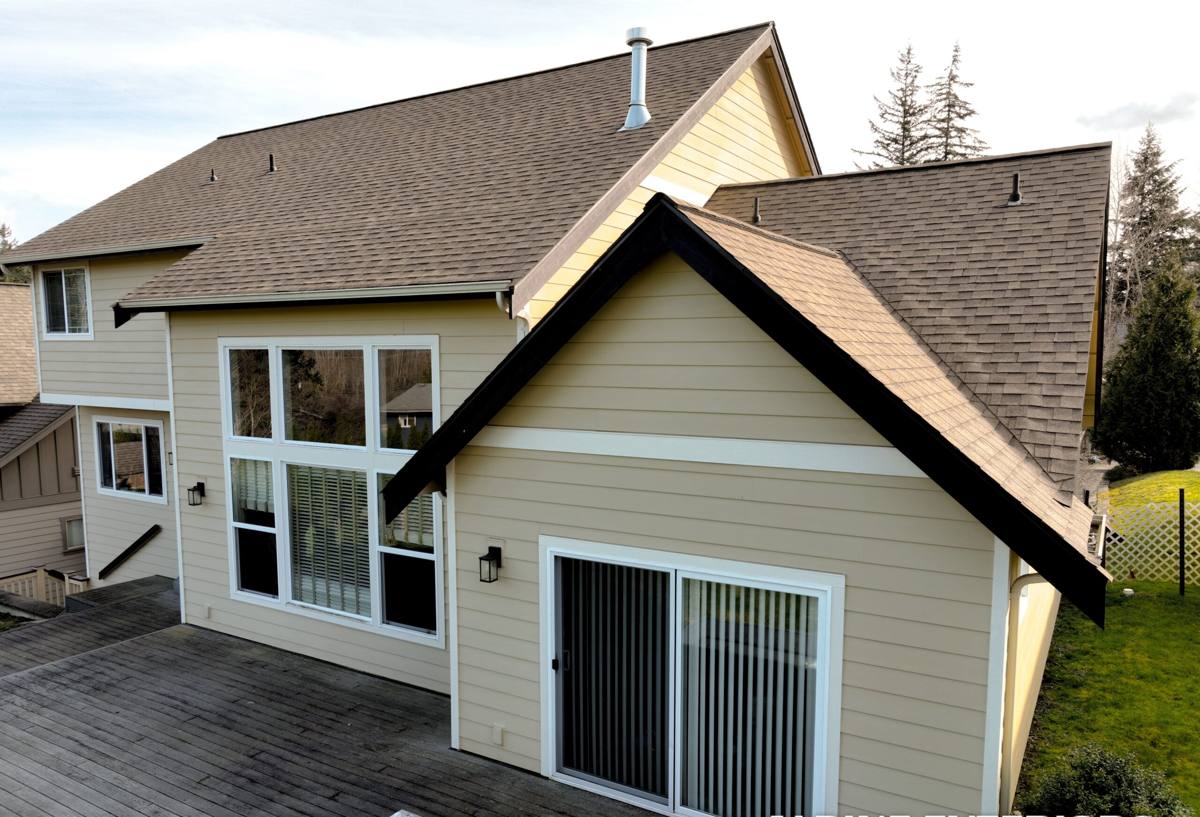
Recognizing When Siding Replacement Is the Right Call
Not every problem calls for full replacement — some issues are legitimately fixable with spot repair and repainting. But certain signs point to a wall system that has reached the end of its useful life, especially on homes exposed to Semiahmoo Bay's wind and salt spray.
- Soft, spongy, or crumbling siding when pressed, especially near the bottom courses and around window trim
- Paint that keeps failing within a year or two of repainting, even with a quality product
- Persistent moss or dark streaking on north- and west-facing walls that returns soon after cleaning
- Visible gaps, warping, or buckling boards, particularly on walls that take direct wind off the water
- Bubbling or discoloration on interior walls that back up to exterior siding, which often signals moisture already inside the wall assembly
- Siding that's original to a home built more than 20-25 years ago, especially wood-based products
- Visible corrosion streaking from fasteners, a common sign of moisture reaching the nail line
If you're seeing two or more of these at once, it's worth having a contractor open up a section of wall rather than just recaulking and repainting over the problem.
Material Choice Matters More on the Water
Every siding material behaves differently under sustained moisture and salt exposure, and the differences show up faster near Semiahmoo Bay than they would on a sheltered inland lot. This is the core reason we standardized on James Hardie fiber cement and stopped installing the alternatives.
| Material | Behavior in Salt Air & Driving Rain | Long-Term Maintenance Burden |
|---|---|---|
| Vinyl siding | Doesn't rot, but seams and J-channels can let wind-driven rain behind the panels; salt air accelerates fading and can make panels brittle | Low routine upkeep, but panel replacement is common after storm damage and color fade is hard to correct |
| Cedar / primed spruce | Natural wood absorbs moisture readily; salt air and constant dampness accelerate rot, cupping, and paint failure | High — regular refinishing, caulking, and vigilance for moisture intrusion |
| LP SmartSide (engineered wood) | Better moisture resistance than raw wood, but still wood-based; edges and cut ends need diligent sealing in a wet, salty climate | Moderate to high — edge sealing and paint maintenance are non-negotiable |
| James Hardie fiber cement | Non-combustible, dimensionally stable, and engineered specifically for damp Pacific Northwest climates (HZ5 product line); resists moisture-driven swelling and rot | Low — factory ColorPlus finish holds color and resists the fading and chalking that salt air causes on painted surfaces |
This isn't a knock on every other product's engineering — vinyl and engineered wood both have legitimate uses. But for a wall that's going to spend the next 20-30 years absorbing salt spray and winter rain off Semiahmoo Bay, fiber cement's stability and factory finish hold up in ways the alternatives generally can't match without much more frequent maintenance.
What a Correct Siding Replacement Actually Involves
Tear-Off and Substrate Inspection
Replacement starts with removing the old siding down to the sheathing, not siding over it. That's the only way to actually see what's happening underneath — soft sheathing, rusted fasteners, or trapped moisture from a failed weather barrier don't show up until the old material is off the wall. On a coastal property, this step matters even more, because salt-air corrosion on old fasteners or flashing can be present well before it's visible from outside.
Weather-Resistive Barrier and Flashing
A new weather-resistive barrier goes on before a single piece of new siding is installed, with careful attention to window and door flashing, kick-out flashing at roof-to-wall intersections, and proper lapping so water is always directed outward and down. This detailing is where most premature siding failures actually originate — not from the siding material itself, but from water getting behind it through a poorly flashed penetration. On a home taking direct wind and rain off the bay, flashing details are not a place to cut corners.
Fastening and Field Installation
Fiber cement has to be installed to the manufacturer's specifications to perform as engineered — correct fastener type and spacing, proper clearance from grade and roof lines, and factory-mitered or properly sealed joints. Installed loosely or with the wrong fasteners, even the best material underperforms. This is a large part of why installation quality matters as much as material choice.
Our Process for Semiahmoo Resort Homes
- On-site assessment. We walk the exterior, check for soft spots and moisture entry points, and look at how each elevation is exposed to prevailing wind and rain off the bay.
- Scope and product selection. We recommend the Hardie profile, plank width, and factory color that fit the home and the budget, and explain the reasoning so the decision is yours, not a guess.
- Tear-off and wall inspection. Old siding comes off, sheathing is inspected, and any repairs are addressed before anything new goes up.
- Barrier, flashing, and trim. Weather-resistive barrier and flashing go in first, with careful attention to every window, door, and roofline transition.
- Siding installation. Hardie siding is installed to manufacturer spec, with correct fastening and clearances.
- Final walkthrough. We review the completed job with you before calling it done.
The James Hardie Products We Install Here
James Hardie makes climate-engineered product lines, and homes in this part of Whatcom County fall into the company's HZ5 zone — engineered for regions with damp, moisture-heavy conditions rather than hot, humid ones. For Semiahmoo Resort, that typically means:
- HardiePlank lap siding — the most common choice for full replacements, available in several plank widths and textures
- HardiePanel vertical siding — often used as an accent or on specific elevations for design contrast
- HardieTrim boards — matched trim around windows, corners, and fascia so the whole exterior reads as one system
- ColorPlus factory finish — a baked-on finish that resists the fading and chalking that salt air and UV exposure cause on field-painted siding, backed by its own finish warranty separate from the substrate warranty
All of it carries James Hardie's transferable limited warranty when installed to spec, which matters both for your own peace of mind and for resale value if you ever sell the home.
What Siding Replacement Costs Depend On
We don't quote firm numbers without seeing the home, but the main cost drivers are consistent from job to job:
| Factor | Why It Affects Cost |
|---|---|
| Home size and wall area | More square footage means more material and labor, the largest single driver of total cost |
| Current substrate condition | Rotted sheathing or hidden water damage found during tear-off adds repair work before new siding can go on |
| Number of stories and roof lines | Multi-story homes and complex rooflines require more scaffolding, staging, and cutting around transitions |
| Siding profile and trim detail | Wider reveals, vertical accents, and extensive trim work take more time than a straightforward lap-siding job |
| Access and site conditions | Tight lots, landscaping to protect, or limited staging area near the water can add setup time |
The most useful number isn't a ballpark estimate pulled from a general range — it's a written quote based on an actual walkthrough of your home, which is what we provide.
Why Working With a Crew That Knows Semiahmoo Resort Matters
A contractor who regularly works this stretch of Whatcom County already knows which elevations of a Semiahmoo Resort home tend to take the worst of the wind and salt spray, where moss holds on longest through the wet season, and how flashing details need to be handled on homes built close to the water. That local pattern recognition shortens the assessment, sharpens the recommendation, and reduces the chance of the same failure showing up again in a few years. It also means someone who understands the area is available if a question comes up after the job is finished, not a crew that did one job here and moved on.
If your siding is showing its age, or you just want an honest read on whether repair or replacement is the right call, we're happy to take a look. Reach out for a free, no-pressure estimate using the form below.