 Semiahmoo Siding
 Window Installation Built for Ferndale's Coastal Climate
Ferndale sits close enough to the water and to Semiahmoo Bay that homes here take a different kind of weather beating than houses twenty miles inland. Salt-laden air corrodes hardware and fasteners faster than dry-climate manufacturers account for. Driving rain, pushed sideways by wind off the water, tests every seal and flashing detail around a window opening. And the long gray stretch of fall through spring keeps siding, trim, and sills damp enough for moss and mildew to take hold if water isn't shed properly. None of this is exotic — it's just what Whatcom County asks of a window installation, and it's why doing the job right here looks a little different than a generic install anywhere else.
This page covers window installation specifically for Ferndale properties: what the climate demands, what a correct installation actually involves, how our process works from first look to final walkthrough, and why it matters to hire a crew that already understands this stretch of coastline rather than one learning it on your house.
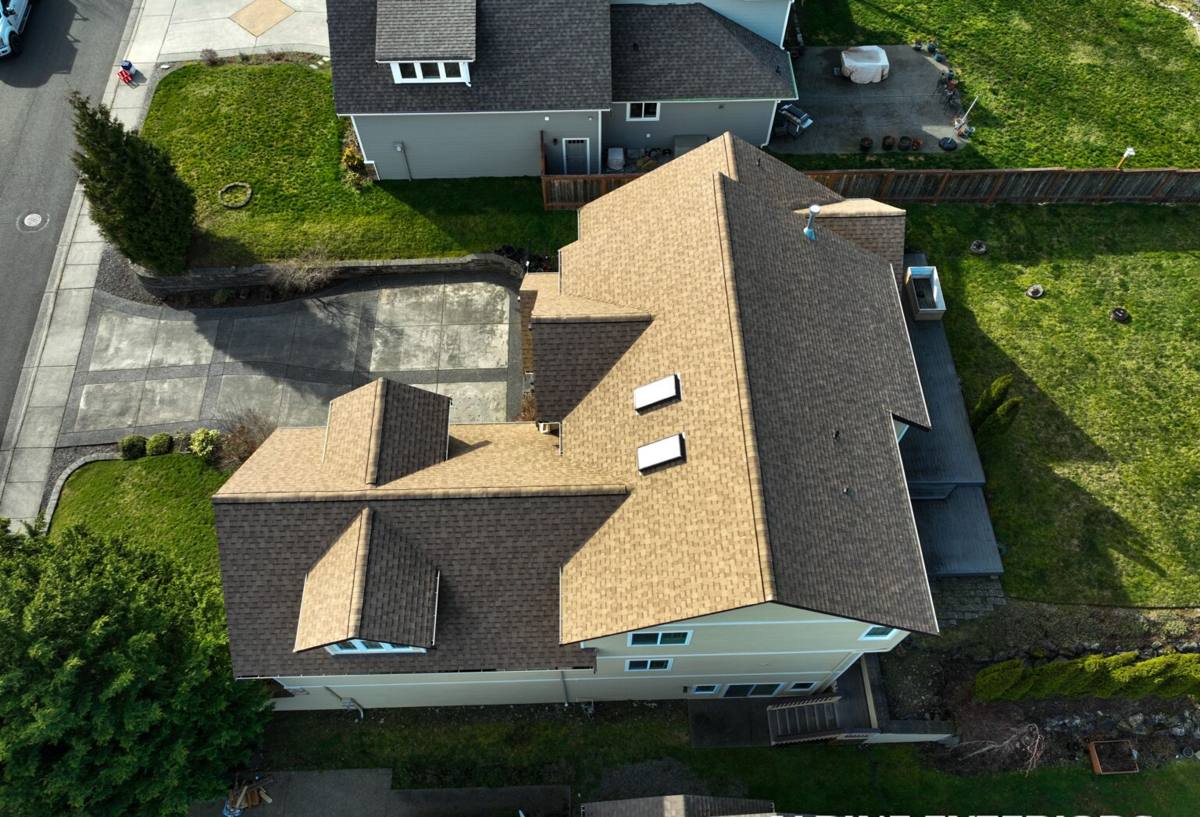
Signs a Ferndale Home Needs New Windows
Windows rarely fail all at once. They tell you first through small, easy-to-ignore signs — and in a wet, salt-exposed climate, those signs show up earlier than they would somewhere dry.
- Condensation forming between the panes (a sign the seal has failed and the gas fill is gone)
- Visible fogging or a milky haze that won't wipe away from the inside of the glass
- Wood sills that feel soft, spongy, or show dark staining at the corners
- Hardware — latches, hinges, cranks — that's pitted, sticky, or corroded
- Drafts you can feel with a hand near the frame on a windy day
- Paint or finish peeling on the interior trim, often a sign moisture is getting behind it
- Noticeably higher heating bills compared to a similar-sized, similarly insulated room
- Difficulty opening, closing, or latching the window as the frame has swelled or warped
Any one of these on its own might just mean a repair. Several together, especially combined with visible frame rot, usually means it's time to talk about replacement rather than patching.
Moisture and Condensation Clues
Interior fogging between panes is different from morning condensation on the inside surface of the glass. Fog between the panes means the insulated glass unit itself has failed — that's not fixable with weatherstripping or caulk, only replacement of the glass unit or the whole window. Staining at the bottom corners of a sill, meanwhile, usually points to water getting past the exterior seal and running down inside the wall cavity, which is a bigger concern than the window itself.
Drafts, Energy Bills, and Comfort
Older aluminum-frame windows in particular conduct cold straight through the frame, which shows up as a chilly zone in the room even with the window fully closed. Combined with wind exposure common near the water, that draft can be a steady, measurable drain on heating costs through the winter months.
What a Correct Window Installation Actually Involves
A window installation is judged less by the window itself and more by what happens in the four inches of framing around it. That's where water either gets managed correctly or doesn't, and it's the part a homeowner can't easily inspect once the trim is back on.
Removing the Old Window Without Damaging the Opening
The old sash and frame come out carefully so the rough opening — the studs, sheathing, and existing weather-resistive barrier — stays intact and undamaged. This is also the point where hidden problems get found: soft sheathing, old water staining, or framing that's been quietly absorbing moisture for years. A good installer stops here and shows you what's found rather than covering it up and moving on.
Flashing and Water Management
This is the step that matters most in a driving-rain climate like ours. Proper flashing means the water-resistive barrier, sill pan, and side and head flashing are layered so that any water that reaches the opening is directed back out and down — never trapped behind the siding or absorbed into the framing. A sill pan under the window is non-negotiable on a coastal property; it's the difference between water draining harmlessly away and water sitting against wood framing every time it rains sideways.
Insulation and Air Sealing
The gap between the new window frame and the rough opening needs to be filled with a compatible, low-expansion insulating material — not stuffed with fiberglass batting, which does little to stop air movement, and not overfilled with rigid foam, which can bow the frame and cause the window to operate poorly. Air sealing here directly affects both drafts and long-term moisture control, since air leaks carry moisture vapor into wall cavities.
Interior and Exterior Finish Work
Once the window is set, shimmed level and square, and fastened per the manufacturer's schedule, the exterior gets flashed and sealed with the siding detail restored around it, and the interior gets trimmed out to match the rest of the room. Caulk and sealant are a finishing touch on top of good flashing — they're not a substitute for it, and any installer relying on caulk alone to keep water out is setting the job up to fail early.
Choosing the Right Window for Whatcom County's Climate
Frame material matters more here than it would in a drier, milder climate, because the material has to stand up to sustained moisture exposure and, closer to the water, salt in the air.
| Frame Material | Moisture & Salt Resistance | Maintenance | Typical Lifespan |
|---|---|---|---|
| Vinyl | Good — won't rot or corrode, but can become brittle with age | Low — occasional cleaning | 20–30 years |
| Fiberglass | Very good — dimensionally stable, resists warping in wet/dry cycles | Low | 30–40 years |
| Wood (unclad) | Poor unless meticulously maintained — prone to rot in this climate | High — regular painting/sealing required | Varies widely with upkeep |
| Wood-clad (exterior metal or vinyl shell) | Good on the exterior face; interior wood still needs normal care | Moderate | 25–35 years |
We steer most Ferndale homeowners away from unclad wood on the exterior-facing side unless they're committed to a real maintenance schedule, simply because bare wood exposed to this much sustained moisture and salt air needs more upkeep than most households want to keep up with. It's not that wood is a bad material — it's that this climate is unusually hard on it without protection.
Glass Packages and Coatings
Double-pane glass with a low-E coating and argon fill is the practical baseline for this region — it cuts heat loss and reduces condensation risk on the interior pane during cold snaps. Triple-pane glass adds further insulation value and is worth considering for north-facing rooms or homes right along the water where wind exposure is higher, though it comes at a higher cost and added weight per window.
Hardware and Fasteners
Closer to Semiahmoo Bay, ordinary steel fasteners and hardware corrode faster than they would even a few miles inland. Stainless steel or corrosion-resistant coated fasteners and hardware cost a little more up front but avoid the streaking, seizing, and premature failure that plain steel hardware shows within a few years near salt air.
Cost Factors for a Ferndale Window Installation
Every project is different, and we'll give you real numbers after seeing the home, but the factors below are what actually move the price up or down.
| Factor | Why It Matters |
|---|---|
| Number of windows | Per-window cost drops somewhat with volume due to shared setup and labor |
| Frame material | Vinyl is typically the most affordable; fiberglass and wood-clad cost more up front |
| Glass package | Triple-pane and specialty coatings add cost over standard double-pane low-E |
| Extent of rot or damage found | Repairing compromised framing or sheathing adds labor beyond a standard swap |
| Window size and configuration | Large picture windows, bays, or custom shapes cost more than standard sizes |
| Trim and siding detail | Matching existing trim profiles or siding patterns takes more finish labor |
Our Process for Ferndale Window Installation Projects
The steps are straightforward, but each one exists for a reason we've learned matters in this climate.
- On-site assessment. We look at each opening, check for existing water damage or rot, and talk through what you want out of the new windows — energy performance, sound reduction, easier operation, or just fixing what's failing.
- Measurement and window selection. Exact measurements go to the manufacturer along with your choice of frame material, glass package, and hardware finish.
- Scheduling around the weather. Because openings are exposed to the elements during the swap, we plan install days around dry weather windows where possible and work efficiently to minimize how long any opening sits open.
- Removal and inspection. Old windows come out, and any hidden framing or sheathing issues get flagged and discussed with you before we proceed.
- Flashing, insulation, and setting the new window. This is the step that determines whether the installation holds up long-term — done in the sequence described above, not shortcut.
- Interior and exterior finish work. Trim, caulking, and touch-up to blend with the existing home.
- Final walkthrough. We check operation on every window with you and make sure everything latches, seals, and looks the way it should before we call the job done.
Why a Local Crew Matters for Ferndale Homes
A crew that regularly works Ferndale and the surrounding Semiahmoo area already knows what this climate does to a window installation over time — which details actually get tested by driving rain off the water, which fastener choices hold up against salt air, and which frame materials are worth the extra cost here versus somewhere drier. That's knowledge you don't get from a manufacturer spec sheet; it comes from seeing how installations in this specific area perform five and ten years out.
Working locally also means we're not far away if a warranty question or adjustment comes up after the job — no waiting on a crew that has to drive in from out of the area. And because we're familiar with the age and construction style of homes typical to Whatcom County, we can usually spot potential issues — older framing, non-standard rough openings, existing water damage — during the initial assessment rather than as a surprise mid-project.
Caring for New Windows Through Moss Season
Once your new windows are in, a little seasonal attention keeps them performing the way they should through the wetter months.
- Clear debris and moss buildup from sills and tracks before it holds moisture against the frame
- Check that weep holes on the exterior sill stay clear so water can drain out rather than pool
- Inspect exterior caulking annually and touch up any cracked or separated sections
- Wipe down hardware periodically, especially on homes closer to the water, to slow salt-related corrosion
- Watch for condensation between panes as an early sign a seal needs attention
None of this is heavy maintenance — it's the same kind of seasonal check most Whatcom County homeowners already do for gutters and siding, just extended to the windows.
Get a Free, No-Pressure Estimate
If your windows are showing any of the signs above, or you're simply ready to stop losing heat through old frames, we're happy to take a look and give you an honest read on what your home needs. Use the form below to request a free estimate — no pressure, no obligation, just a straightforward assessment from a crew that knows what Ferndale homes are up against.