 Semiahmoo Siding
 Roofing on a Spit: Why Semiahmoo Resort Is a Different Job
Semiahmoo Resort sits out on the Semiahmoo Spit in Whatcom County, with water on two sides — Drayton Harbor on one shoulder, Boundary Bay and the Salish Sea on the other. That location is what makes the neighborhood beautiful, and it's also what makes roofing here harder than roofing a few miles inland in Blaine or Ferndale. A roof out here takes a steady diet of salt-laden wind, near-constant marine moisture, and long shoulder seasons where the roof never really gets a chance to dry out. Replace it the way you'd replace a roof in a dry inland subdivision and you'll be back out here sooner than you should be.
We treat Semiahmoo Resort roof replacements as their own category of work, not a standard reroof with a nicer view. That means different fastener choices, different attention to flashing and ventilation, and a real conversation about which roofing materials are worth the extra cost out here and which ones aren't.
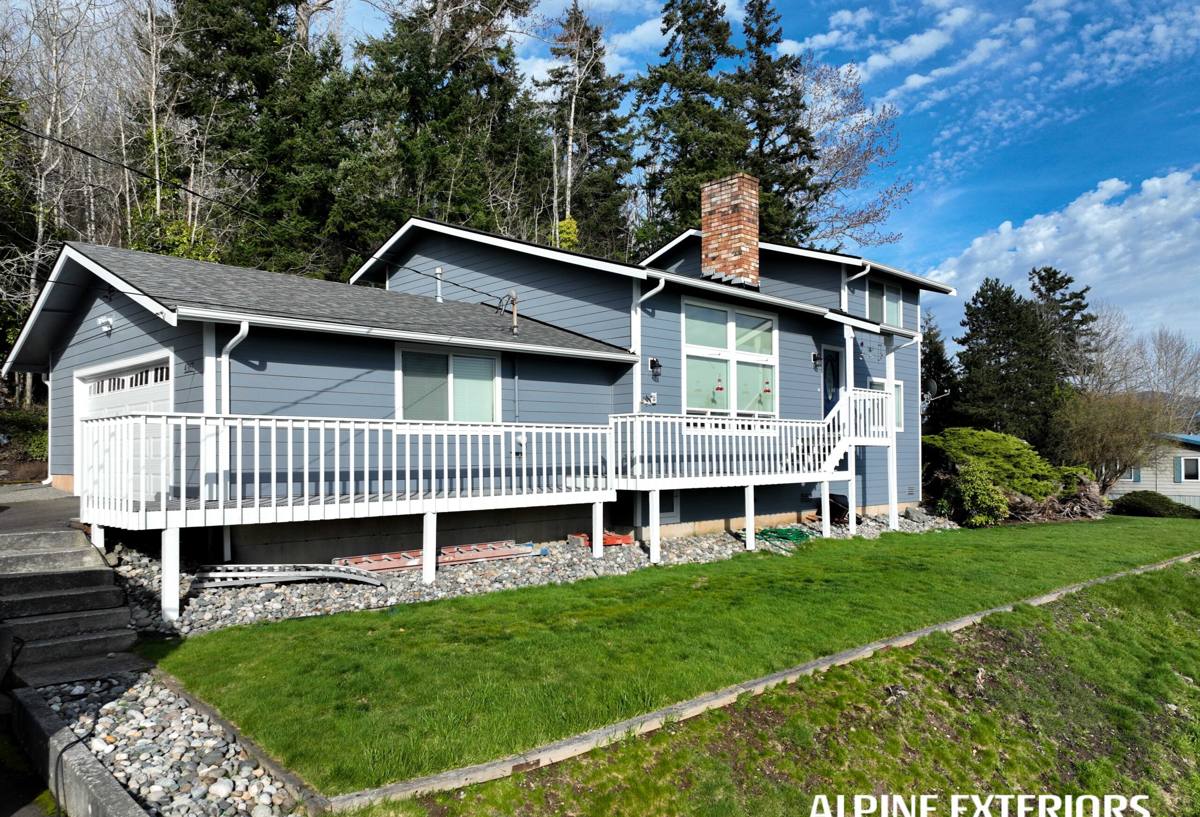
What Salt Air, Driving Rain, and Moss Actually Do to a Roof
Salt Air
Airborne salt from Boundary Bay settles on every exterior surface, roofs included. Over years, it accelerates corrosion on exposed metal — fasteners, flashing, gutter hardware, and any exposed screws or nail heads. A roof detailed for an inland home, with standard fasteners and minimal flashing coverage, corrodes faster here. It's not dramatic; it's slow, and it shows up first at the small metal details most homeowners never think to check.
Driving Rain
Storms coming off the water don't just fall straight down — wind pushes rain sideways and up under laps, edges, and flashing that would shed water fine in a calmer setting. This is why underlayment coverage, flashing laps, and fastening patterns matter more here than the shingle brand on the label. A roof that's watertight in a straight-down rain can still leak in a wind-driven one if the details underneath weren't built for it.
Moss Season
Whatcom County's wet season runs long, and shaded, north-facing, or tree-adjacent roof sections at Semiahmoo Resort often stay damp for weeks at a stretch. That's exactly the environment moss needs. Moss holds moisture against the roofing surface, works into laps and granule surfaces, and — left unchecked — lifts shingles and shortens the life of whatever's underneath. A roof replacement out here should be planned with the property's actual sun and shade pattern in mind, not just its square footage.
Signs Your Semiahmoo Resort Roof Is Telling You It's Time
- Granule loss showing up in gutters or at downspout discharge points
- Moss or dark algae streaking on north-facing or shaded slopes
- Curling, cupping, or cracked shingles, especially on wind-exposed slopes facing the water
- Rusting or discolored flashing around chimneys, vents, and skylights
- Soft spots or sagging when walked, which usually means deck moisture underneath
- Daylight visible through the attic decking, or damp insulation after a storm
- A roof approaching or past the manufacturer's expected service life for this climate
Any one of these on its own might just mean a repair. Several at once, or a roof already past 18–20 years in this environment, usually means repair costs start competing with replacement costs — and replacement wins on value.
Choosing a Roofing System for a Salt-Air, Marine Site
There's no single "best" roofing material for every home — it depends on the roof's pitch, the home's architecture, the budget, and how much of the wind-and-salt exposure a given slope actually sees. Here's how the common options stack up for a property like Semiahmoo Resort specifically:
| Material | How it handles salt air & wind-driven rain | Moss resistance | Typical lifespan here |
|---|---|---|---|
| Architectural asphalt shingle | Good, with the right underlayment and flashing detail; standard on most Whatcom County homes | Moderate — benefits from zinc/copper strips on shaded slopes | 20–25 years |
| Standing seam metal | Excellent when finished with a marine-grade coating and stainless or coated fasteners | Very good — sheds moss more readily than a granulated surface | 40+ years |
| Synthetic/composite shake | Good; doesn't absorb moisture the way wood shake does | Good | 30–40 years |
| Natural wood shake | Poor without disciplined maintenance — absorbs marine moisture | Poor — high maintenance burden in this climate | Highly maintenance-dependent |
We're straightforward with Semiahmoo Resort homeowners about wood shake: it can look great, but it demands a maintenance schedule most owners underestimate once they're dealing with this much sustained moisture and salt exposure. If you want that look, a synthetic shake product gets you closer to it without the upkeep burden. That's a professional judgment call on our part, not a knock on the material itself — it's simply the trade-off this site presents.
What a Correct Roof Replacement Actually Involves
A roof replacement is more than swapping old shingles for new ones. On a marine-exposed site like this, the work under the surface matters as much as what's visible from the street.
Tear-Off and Deck Inspection
Full tear-off to the deck, not an overlay. Overlaying traps moisture that's already worked its way into the old system — a real risk on a site that stays damp this long. Once the deck is exposed, we inspect for soft or delaminated sheathing and replace it before anything goes back down.
Ice and Water Shield at Vulnerable Points
Eaves, valleys, and any low-slope transitions get self-adhering waterproof membrane, not just standard felt or synthetic underlayment. This is the backup layer that keeps wind-driven rain from becoming a leak if it gets past the primary roofing surface.
Underlayment Across the Full Field
A synthetic underlayment rated for extended UV and moisture exposure covers the whole deck, with generous overlap at seams — sized for a roof that may sit exposed to weather during install longer than a drier-climate job would.
Flashing Details
Step flashing at walls, counter-flashing at chimneys, and properly lapped valley flashing, all in corrosion-resistant metal appropriate for salt exposure. This is the single most common failure point we find on older Semiahmoo Resort roofs — flashing that was adequate when installed but wasn't specified for salt air.
Ventilation
Balanced intake and exhaust ventilation keeps the attic dry and temperature-stable, which reduces condensation on the underside of the deck and extends the life of whatever roofing material sits above it. On homes with additions or complex rooflines, we check that older ventilation upgrades weren't left mismatched.
Fasteners and Hardware
Corrosion-resistant fasteners throughout, sized and spaced to the manufacturer's high-wind installation instructions given this site's wind exposure — not the minimum spec.
Our Process for a Semiahmoo Resort Roof Replacement
- On-site assessment — we walk the roof, check the deck condition where accessible, and note sun/shade patterns that affect moss risk on specific slopes.
- Material and system recommendation — matched to the home's architecture, budget, and actual exposure, with the trade-offs explained plainly.
- Written estimate — scope, materials, and pricing spelled out before any work starts, so there are no surprise line items mid-project.
- Tear-off and deck repair — full removal, deck inspection, and replacement of any compromised sheathing.
- Waterproofing and flashing installation — ice and water shield, underlayment, and all flashing detail work done before the finish roofing goes down.
- Finish roofing installation — installed to manufacturer spec for the wind exposure at this location.
- Final walkthrough — we review the completed roof with you, including gutter tie-ins and any ventilation changes.
What Affects the Cost of a Roof Replacement Here
| Factor | Why it moves the price |
|---|---|
| Roof size and number of planes | More material and more labor hours; complex rooflines take longer to flash correctly |
| Deck condition | Sheathing replacement is discovered once tear-off starts and is priced separately from the base roof |
| Material choice | Asphalt, synthetic shake, and standing seam metal carry different material and labor costs |
| Pitch and access | Steeper slopes and limited equipment access near the water increase labor time |
| Flashing and ventilation scope | Chimneys, skylights, and multiple valleys add detail work that's worth doing right |
| Tear-off layers | Removing more than one existing roofing layer adds disposal and labor time |
We give a firm, written number after seeing the roof — not a phone estimate — because deck condition and flashing scope genuinely change what a correct job costs.
Why Hiring a Crew That Already Works Semiahmoo Resort Matters
A roofing crew that mostly works inland Whatcom County jobs isn't necessarily wrong about materials, but they may not default to marine-grade fasteners, extended flashing coverage, or the ventilation strategy that a spit-side property actually needs. Crews already familiar with Semiahmoo Resort know which slopes on this kind of site tend to hold moss, how the wind typically drives rain against these rooflines, and what corrosion looks like on a five-year-old roof here versus one inland. That familiarity shows up in fewer callbacks and a roof that performs the way it's supposed to for its full expected life.
It also matters for anything requiring coordination with the resort community's design standards or HOA-style review, where applicable — a local crew that has already been through that process moves faster than one starting from scratch.
Keeping a New Roof Performing Once It's Installed
- Have gutters and downspouts cleared at least twice a year — clogged gutters back water up under eave flashing
- Watch shaded, north-facing slopes for early moss growth and address it before it spreads
- Trim back overhanging branches that keep sections of the roof shaded and damp
- After major windstorms, do a visual check for lifted shingles or displaced flashing
- Keep an eye on exposed metal fasteners and flashing for early corrosion, especially in the first few years
- Schedule a professional inspection every couple of years rather than waiting for a visible leak
None of this is complicated, but skipping it is the most common reason a well-installed roof underperforms its expected lifespan on a site like this.
If your Semiahmoo Resort roof is showing its age or you're planning ahead rather than reacting to a leak, we're happy to take a look and give you a straight, no-pressure estimate — just fill out the form below.