 Semiahmoo Siding
 Siding on a Spit: Why Semiahmoo Resort Is a Different Job
Semiahmoo Resort sits out on the sand spit between Semiahmoo Bay and Drayton Harbor, near Blaine in Whatcom County — about as exposed a stretch of siding real estate as you'll find in this part of Washington. Homes and condos here take weather from open water on more than one side, with very little tree cover or terrain to break the wind before it hits the wall. That combination of constant salt air, driving rain off the Strait, and a moss season that runs long into the shoulder months means the siding on a Semiahmoo Resort home works harder than siding almost anywhere else in the county.
This page is specifically about fiber cement siding for homes and units in the Semiahmoo Resort area — what the local exposure demands, what a correct installation looks like out here, and why we install James Hardie fiber cement and nothing else.
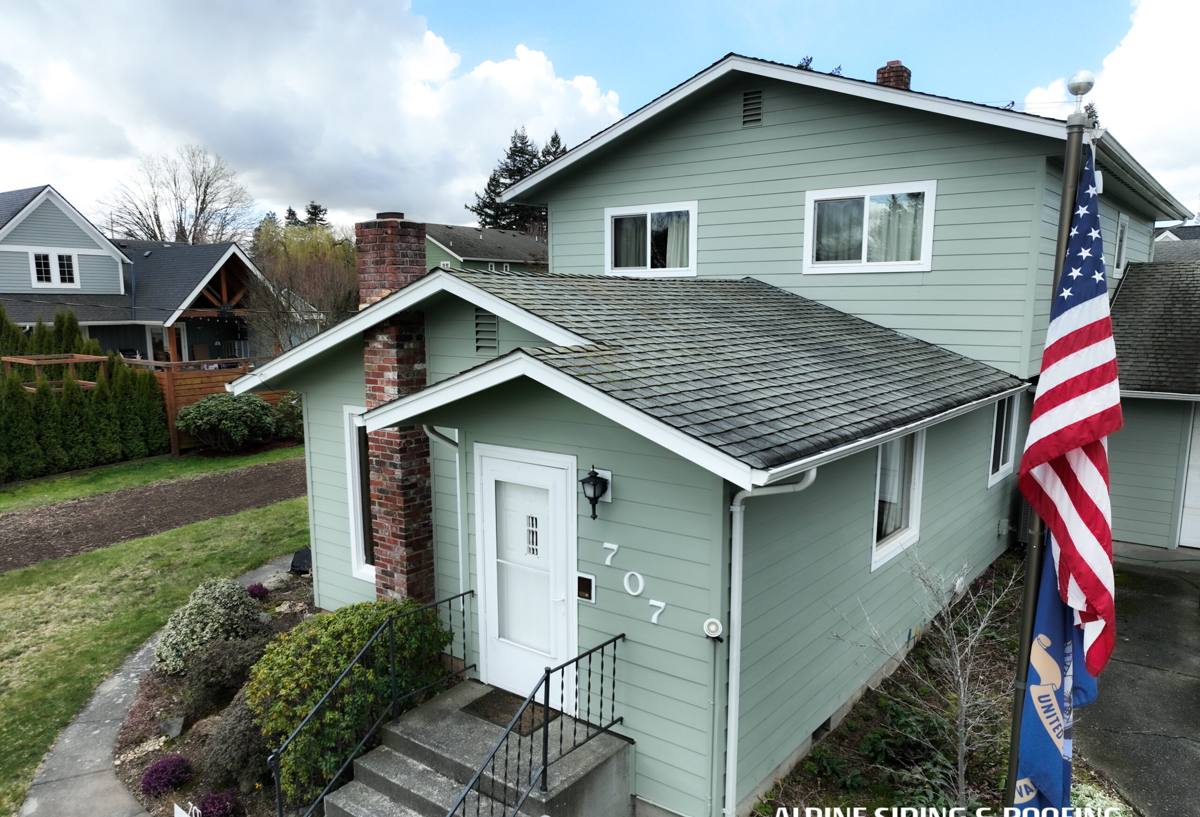
What Salt Air, Driving Rain, and Moss Season Actually Do to a Wall
Salt Air
Salt-laden air doesn't just sit on the surface of a wall — it works into fasteners, trim joints, and any exposed wood grain over time. On a spit like Semiahmoo, that exposure is close to constant rather than occasional, which is hard on paint films, caulk, and any siding material that depends on an intact painted surface to stay protected. Fasteners and trim details that would be fine a few miles inland can corrode or fail faster this close to open salt water.
Driving Rain
Wind off the water doesn't let rain fall straight down — it drives it sideways into the wall, which pushes water into every lap, seam, and penetration that isn't detailed correctly. On an exposed peninsula, wind-driven rain is a normal condition, not a storm-day exception, so the siding assembly needs to shed water even when it's arriving horizontally.
Long Moss Season
Whatcom County's marine climate keeps north- and water-facing walls damp for long stretches of the year, and Semiahmoo's open exposure and moisture load stretch that moss-friendly window even further. Moss and algae hold moisture against the siding surface, and on materials that aren't dimensionally stable or that rely on a thin field-applied coating, that constant damp contact is where premature wear tends to start.
Why Fiber Cement Is the Right Material for This Exposure
Fiber cement is a cement, sand, and cellulose fiber composite — it doesn't rot, it isn't attractive to insects, and it doesn't expand and contract with moisture the way wood-based products do. On a site like Semiahmoo Resort, that dimensional stability matters more than almost anywhere: a material that swells and shrinks with every wet-dry cycle eventually opens up joints and seams, and joints that open are exactly where wind-driven rain finds its way in.
We install James Hardie fiber cement exclusively, for reasons that matter specifically in this climate:
- Non-combustible core — doesn't contribute fuel to a fire, an increasingly relevant consideration as wildfire smoke and dry-season risk have become more common even in western Washington.
- ColorPlus factory finish — a baked-on finish applied under controlled conditions, which holds up to UV and salt exposure more consistently than a field-applied coat of paint over primed material.
- HardieZone HZ5 engineering — Hardie's Pacific Northwest product formulation is built for the freeze-thaw and moisture cycling common to this region, rather than a one-size-fits-all national product.
- Dimensional stability — resists the swell, warp, and cup that wood-based sidings develop under constant marine moisture.
- Transferable warranty — backed by the manufacturer, which matters if a Semiahmoo Resort property changes hands, as resort-area homes and condos often do.
How Fiber Cement Compares for a Property Like This
| Factor | Vinyl | Cedar / Wood | LP SmartSide (engineered wood) | James Hardie Fiber Cement |
|---|---|---|---|---|
| Salt air resistance | Can chalk, fade, and become brittle | Vulnerable without diligent maintenance | Vulnerable at cut edges and joints | Cement-based core, not organic |
| Wind-driven rain performance | Depends heavily on lap and fastening detail | Prone to cupping and joint movement | Swelling risk if moisture reaches the substrate | Stable dimensions hold tight laps |
| Moss / algae exposure | Surface growth, hard to fully clean | Absorbs moisture, feeds growth | Moisture at exposed edges is a known failure point | Coating resists growth; core doesn't feed it |
| Finish durability | Color baked in but can fade/chalk | Needs recurring paint/stain | Factory-treated but edge-sensitive | Factory ColorPlus finish, long recoat interval |
| Fire behavior | Melts/deforms under heat | Combustible | Combustible (wood-based) | Non-combustible |
Every material on that list has legitimate uses somewhere. On an open, salt-exposed spit like Semiahmoo Resort, though, the trade-offs stack up against anything that depends on an organic substrate or a thin surface coating to stay watertight.
What a Correct Installation Involves Out Here
Fiber cement performs the way it's supposed to only when it's installed to the manufacturer's specification — and on a high-exposure site, the margin for shortcuts is smaller than it would be on a sheltered inland lot. A correct job includes:
Water Management Before the Siding Goes On
A weather-resistant barrier, correctly lapped and taped, with flashing at every window, door, and penetration — installed so water is directed out and down, not trapped behind the cladding. On a wall taking driving rain from open water, this layer is doing as much work as the siding itself.
Clearances and Gaps
Hardie's spec calls for specific clearances from grade, roofing, decks, and other trim, plus gaps at butt joints and terminations that are then sealed with the right sealant — not caulked shut with no gap at all. Skipping these details is one of the most common ways fiber cement jobs fail early, and it's avoidable.
Fasteners and Trim
Corrosion-resistant fasteners, set to the correct depth and pattern, are non-negotiable this close to salt water — a fastener that starts rusting will eventually stain and loosen the siding around it. Trim details matter just as much as the field panels; poorly flashed trim is where most water intrusion actually starts.
Factory-Finished, Not Field-Painted
We install ColorPlus prefinished product wherever it's available for the job, rather than relying on a field-applied paint coat that has to be maintained and recoated on a shorter cycle in this exposure.
Our Process for Semiahmoo Resort Properties
Resort and marina-adjacent communities like Semiahmoo often come with their own architectural guidelines, HOA or resort association review, and site-access considerations that don't apply to a standard residential street — narrower staging areas, shared access roads, and sometimes seasonal timing tied to resort activity. We plan around those realities rather than treating every property like a standard suburban lot:
- Confirm any HOA, resort association, or architectural review requirements before ordering material or colors.
- Schedule around the drier windows in the local weather pattern to keep the wall assembly protected during the open period of the job.
- Detail every water-management layer to spec before the first course of siding goes up — not just the visible finish.
- Use corrosion-resistant fasteners and hardware throughout, standard on every job this close to salt water.
- Walk the finished job with the homeowner and point out anything they should watch for given the site's specific exposure.
Maintaining Fiber Cement Siding at Semiahmoo Resort
Fiber cement is low-maintenance compared to wood or vinyl, but "low-maintenance" in this exposure still means a bit more attention than it would inland. A simple annual routine keeps it performing:
- Rinse the exterior yearly to clear salt residue and organic buildup, especially on water-facing walls.
- Inspect caulking at trim, window, and door joints for cracking or separation and re-seal as needed.
- Watch north-facing and shaded walls for early moss or algae growth and address it before it spreads.
- Keep gutters and downspouts clear so runoff isn't sheeting directly down the wall face.
- Trim back vegetation that holds moisture against the siding.
Why Local Experience on This Exposure Matters
Siding specs written for a generic climate zone don't automatically account for wind-driven rain off open water or a moss season that runs longer than most of the county. A crew that has actually installed and maintained fiber cement on Semiahmoo's spit and similar Whatcom County waterfront sites knows where the exposure typically finds weak points — trim terminations, deck ledger flashing, north walls — and details those areas accordingly rather than following a generic checklist and hoping it holds.
If you own a home or unit at Semiahmoo Resort and want a straight assessment of your current siding or a plan for a James Hardie fiber cement installation built for this exposure, we're glad to take a look. Request a free, no-pressure estimate using the form below.