 Semiahmoo Siding
 Why Windows Take More Punishment at Semiahmoo Resort
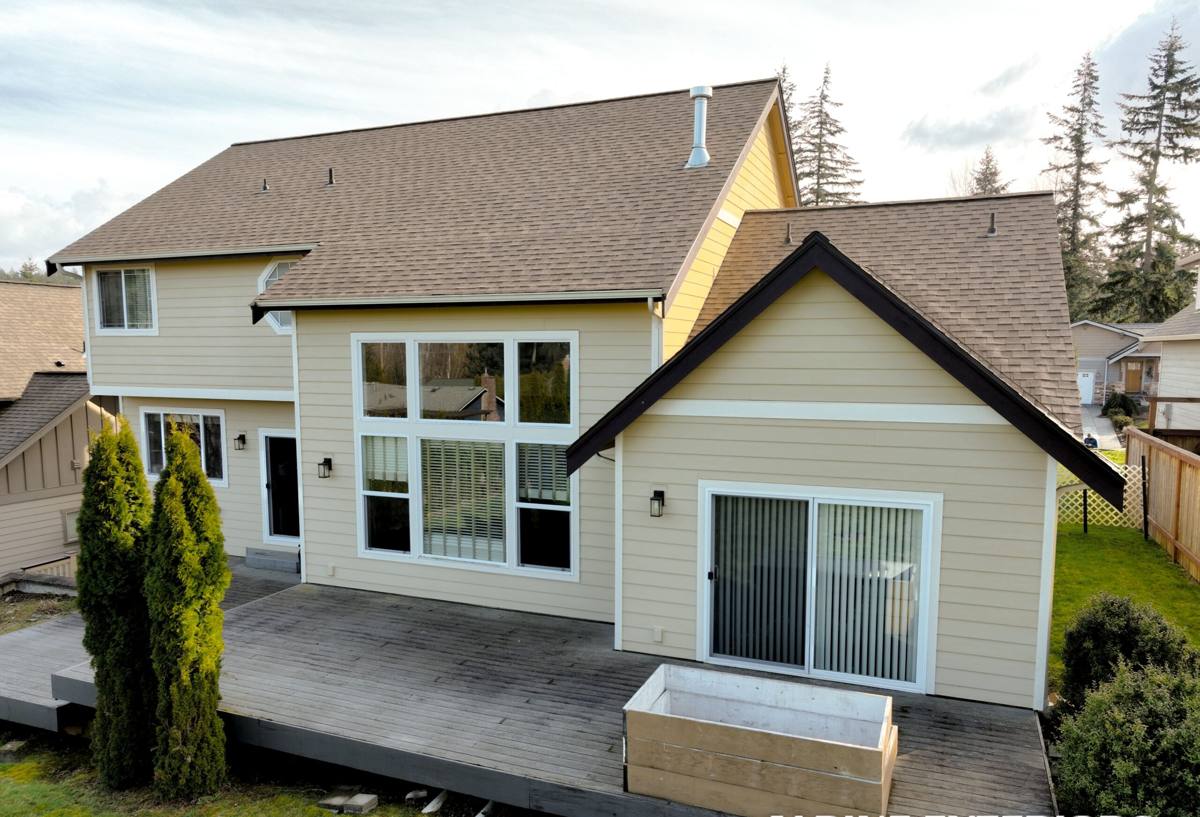
Semiahmoo Resort sits out on the spit, with water on multiple sides and very little standing between the homes and whatever weather is moving through Semiahmoo Bay and Drayton Harbor. That exposure is a big part of what makes the neighborhood desirable — the views, the light, the sense of openness. It's also exactly why windows here fail faster than they do a few miles inland in Blaine or elsewhere in Whatcom County. Builder-grade aluminum and early-generation vinyl windows that might last decades in a sheltered subdivision often show corrosion, fogging, and air leakage well ahead of schedule when they're facing open water day after day.
An energy-efficient window replacement out here isn't just about lowering a heating bill, though that matters. It's about choosing products and installation details that can actually take the salt, the wind, and the rain this location gets, without turning into a maintenance headache or a moisture problem inside the wall.
What the Local Climate Does to Ordinary Windows
Salt Air and Metal Corrosion
Airborne salt from the bay settles on everything, including window hardware, screen frames, and any exposed metal components. Over time it pits and corrodes hardware that isn't rated for coastal exposure — locks stick, cranks seize, and finishes chalk out faster than they would inland. Aluminum-clad and lower-grade vinyl hardware are especially prone to this if the manufacturer didn't spec coastal-grade fasteners and coatings.
Wind-Driven Rain and Water Intrusion
Rain that falls straight down is easy to shed. Rain that's being pushed sideways by wind off the water is a different problem — it gets forced into gaps, under trim, and around openings that would stay dry in a calmer setting. Most window leaks we find in this kind of location aren't a bad window; they're a flashing detail or sealant joint that wasn't built to handle water arriving horizontally instead of vertically.
Long Moss Season and Trapped Moisture
Whatcom County's wet season runs long, and anywhere shaded or north-facing tends to grow moss on trim, sills, and siding for months at a stretch. Moss and the organic debris around it hold moisture against wood trim and window frames far longer than bare siding would. If a window's drainage path is blocked or its exterior trim isn't detailed to shed water, that constant dampness is what eventually rots sills and lets water find its way to the sheathing behind the window.
What "Energy-Efficient" Should Mean for a Coastal Home Here
Energy efficiency on paper — a good U-factor and solar heat gain coefficient — only pays off if the window and its installation also survive the environment. For Semiahmoo Resort, we weigh three things together: thermal performance, how the frame material handles salt and moisture, and how much upkeep the homeowner is signing up for.
| Frame Material | Coastal Durability | Maintenance | Typical Fit |
|---|---|---|---|
| Vinyl (coastal-rated) | Good — won't corrode or rot, UV-stable formulas hold color | Low — occasional wash-down | Value-focused replacements, rentals, secondary homes |
| Fiberglass | Very good — dimensionally stable, resists salt and moisture well | Low | Homes with more temperature swing or larger openings |
| Wood-clad | Fair to good, entirely dependent on cladding and joinery quality | Higher — cladding seams and interior wood need monitoring | Owners prioritizing a specific interior wood look |
| Bare aluminum | Poor in this setting — prone to pitting and corrosion near salt water | High | Not something we recommend for this location |
We're not against wood-clad or aluminum categorically — they have their place. But on a spit with this much salt exposure, we steer homeowners toward vinyl or fiberglass products with coastal-rated hardware, because that's what holds up with the least fuss over the years the homeowner actually owns the house.
Installation Details That Matter More Here Than Inland
Flashing and Weather Barrier Integration
A window is only as good as the flashing around it. In a location that regularly gets wind-driven rain, we pay close attention to how the window's flange integrates with the house wrap or weather barrier — proper shingle-lap sequencing, sill pan flashing to catch and direct any water that does get past the frame, and head flashing that actually sheds water outward instead of behind the trim. This is standard best practice everywhere, but it's the difference between a dry wall cavity and a slow leak in a spot exposed like this one.
Sealant Choice and Joint Design
We use sealants rated for exterior, UV, and marine exposure, not general-purpose caulk that hardens and cracks within a couple of seasons. Joints are designed with the expectation that they'll move — temperature swings, building settling, and wind loading all put stress on the perimeter seal, and a joint that's too rigid or under-sized fails faster than one built with the right depth and backer rod.
Our Window Replacement Process for Semiahmoo Resort Homes
- On-site assessment — we look at existing window condition, framing, trim, and any signs of moisture or corrosion before recommending anything.
- Measurement and product selection — exact opening measurements, then matching frame material and glass package to that opening's sun and wind exposure.
- Architectural review, if applicable — resort and HOA communities often have architectural guidelines on exterior appearance; we account for that in product and color selection so there are no surprises.
- Removal and prep — old units come out carefully, and we inspect the rough opening and sheathing for hidden rot or damage before anything new goes in.
- Flashing, install, and sealing — new window set, flashed, and sealed to shed wind-driven rain, not just rainfall from directly overhead.
- Trim and cleanup — interior and exterior trim finished to match, site cleaned up, old units hauled away.
- Walkthrough — we go over operation, hardware, and basic upkeep with the homeowner before calling the job done.
Choosing the Right Glass Package for This Microclimate
Glass is where most of a window's energy performance actually comes from. For a home facing open water, we typically look at:
Low-E coatings tuned to the window's orientation — a water-facing window getting strong afternoon sun benefits from a different coating balance than a north-facing window that mostly needs to hold heat in during our wet months.
Argon gas fill between panes, which is standard on most quality double-pane units now and adds a meaningful bump in insulating value for a modest cost difference.
Double- versus triple-pane — triple-pane adds real value on north- or water-facing exposures that take the brunt of wind and cold, but isn't always worth the added weight and cost on more sheltered elevations of the same house. We'll walk through where it makes sense on your specific home rather than applying it blanket-wide.
Condensation control — homes with big view windows facing the water often deal with interior condensation in winter if the glass package and interior humidity aren't matched well. A properly specified Low-E/argon unit reduces this significantly compared to older single-pane or early dual-pane glass.
Keeping Windows Performing Season After Season
Even a well-installed, coastal-rated window benefits from basic upkeep in this environment. A short seasonal routine goes a long way:
- Rinse salt residue off frames, tracks, and hardware every few months, especially after storms with strong onshore wind
- Clear moss and organic debris off sills and nearby trim before it holds moisture against the frame
- Check weep holes on the bottom track to make sure they're clear and draining, not clogged with debris
- Lubricate locks and cranks with a light, non-gumming lubricant if they start to feel stiff
- Inspect exterior sealant joints once a year for cracking or separation and have them addressed before they become a leak
- Wipe down interior sills after heavy condensation events to prevent long-term moisture staining
Why Local Experience in Semiahmoo Resort Matters
Working in a resort community brings a few practical considerations that a crew unfamiliar with the area might not plan for. Architectural guidelines common to resort and waterfront communities can affect frame color and style choices, so it helps to know that going in rather than ordering the wrong product. Site access on the spit can also be tighter than a typical suburban lot, and scheduling around the area's wet, windy stretches matters for getting a clean, dry install rather than fighting the weather mid-job. None of this is complicated, but it's the kind of local knowledge that keeps a window replacement from turning into a longer, messier project than it needs to be.
Ultimately, the goal on a home like this is the same as anywhere: windows that keep the weather out, keep the heat in, and don't need constant attention. Getting there on the Semiahmoo spit just takes a little more attention to material choice and installation detail than it would a few miles inland — and that's exactly where an experienced local crew earns its keep.
If you're weighing a window replacement for a Semiahmoo Resort home, we're happy to take a look and give you a straightforward, no-pressure estimate — just fill out the form below.