 Semiahmoo Siding
 Why Blaine Roofs Wear on Their Own Schedule
Blaine sits close enough to Semiahmoo Bay and the Strait of Georgia that homes here deal with a different mix of stress than roofs even a few miles inland in Whatcom County. Salt-laden air off the water accelerates corrosion on exposed metal fasteners, flashing, and vent caps. Wind-driven rain off the Strait doesn't just fall straight down — it gets pushed sideways and up under laps and edges that a calmer climate would never test. And the long, damp shoulder seasons here mean moss, moisture, and organic growth get more time to work into a roof system than they would in a drier part of the state.
None of that means Blaine roofs fail faster than average. It means they fail differently, and a replacement done without that context in mind — using generic details instead of ones suited to a coastal, high-moisture, moss-prone environment — tends to show problems again within a few years instead of holding up for decades.
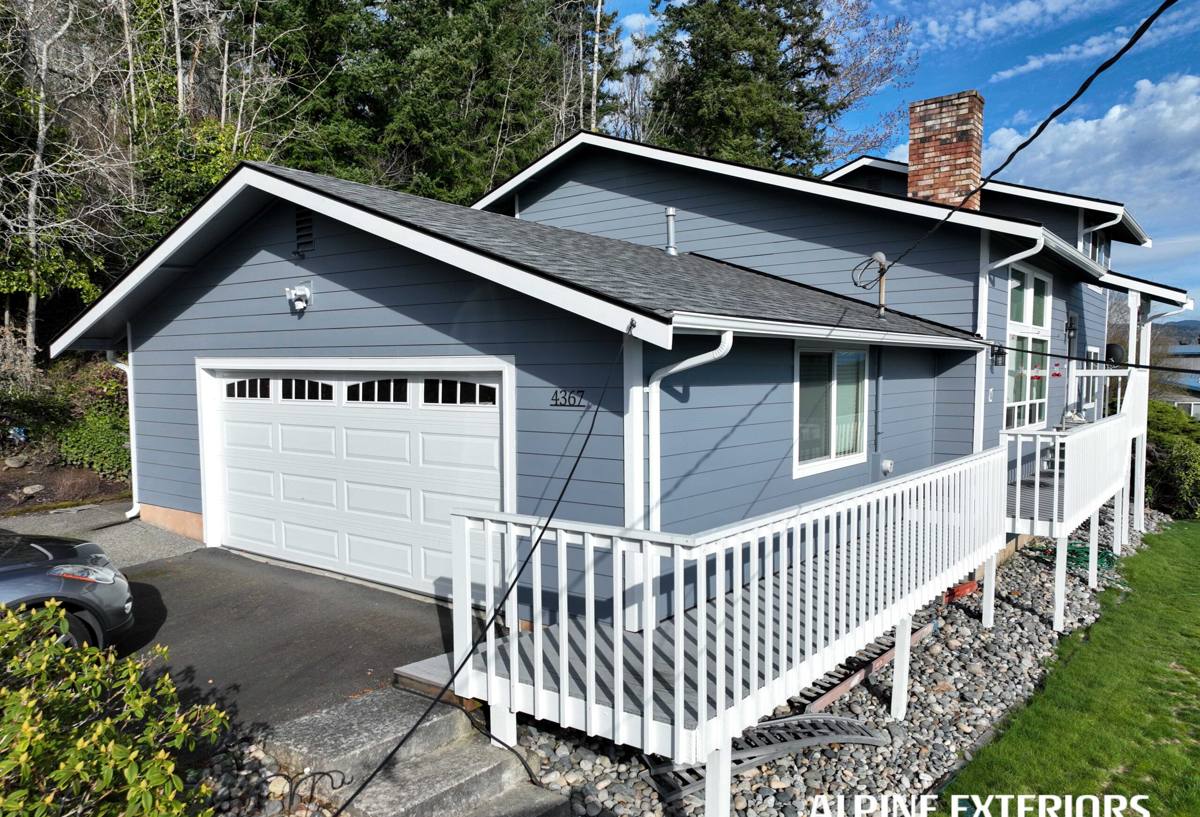
Signs a Blaine Roof Needs Replacement, Not Just Repair
Repair makes sense when a roof has isolated damage on a system that's otherwise sound. Replacement becomes the honest recommendation when the underlying materials are worn out everywhere, not just where you happen to see a leak. Common signals we look for on Whatcom County roofs include:
- Granule loss heavy enough that shingles look patchy or shiny in spots, especially on south- and west-facing slopes that take the most weather
- Moss and algae growth that keeps returning within a year or two of cleaning, which usually means the surface is already degraded enough to hold moisture
- Soft, spongy decking felt underfoot during an inspection — a sign water has been getting past the surface for a while
- Curling, cracking, or lifted shingle edges, particularly along ridges and rake edges exposed to prevailing wind
- Rusted or failing metal flashing around chimneys, vents, and valleys — often the first thing to go in salt air
- Daylight visible through the roof deck from inside the attic, or consistent staining on attic sheathing
- A roof approaching or past 20-25 years old on standard asphalt composition, which is close to the realistic service life in this climate rather than the optimistic manufacturer number
If a roof is showing two or three of these at once, patch repairs usually turn into a pattern of recurring service calls rather than a real fix.
What a Correct Replacement Actually Involves
Full Tear-Off, Not Overlay
We don't recommend installing new shingles over an old layer. In a marine climate, trapped moisture between layers has nowhere to go, and a second layer hides the condition of the deck underneath — which is exactly what you need to see before committing to new material. A full tear-off lets us inspect the decking, framing, and existing flashing directly.
Deck Inspection and Repair
Once the old roofing is off, we check the sheathing for soft spots, delamination, or rot, particularly around valleys, chimneys, and any past leak points. Damaged sections get replaced before anything new goes down — new shingles over a compromised deck just hide the problem for another cycle.
Underlayment Built for Wind-Driven Rain
Given how often rain here arrives at an angle instead of straight down, we pay close attention to underlayment coverage and lap direction, plus self-adhered ice-and-water membrane at eaves, valleys, and roof penetrations — the areas most likely to see wind-forced water intrusion.
Flashing That Accounts for Salt Air
Flashing choice and detailing matter more here than in a drier inland climate. We favor corrosion-resistant metals and take extra care sealing and lapping flashing at chimneys, skylights, and wall-to-roof transitions, since these are the first places salt air and driving rain find a weakness.
Ventilation That Matches the Home
Proper intake and exhaust airflow keeps the attic dry and temperature-balanced, which slows moss regrowth on the new roof and protects the deck from the inside out. We evaluate existing ventilation rather than assuming the old setup was adequate — a lot of older Blaine-area homes are under-vented for how wet the climate actually is.
Material Options for a Coastal Climate
There's no single "best" roofing material for every home — it depends on budget, roof pitch, architectural style, and how long you plan to own the house. Here's how the common options compare for a salt-air, high-moisture environment like Blaine's:
| Material | Typical Lifespan Here | Coastal Considerations |
|---|---|---|
| Architectural asphalt shingle | 20-25 years | Good value, wide style range; needs quality underlayment and ventilation to perform well in this climate |
| Standing seam metal | 40-50+ years | Sheds wind-driven rain very well; fasteners and finish should be rated for coastal/salt exposure |
| Synthetic composite (slate/shake look) | 30-50 years | Resists moisture absorption better than natural wood shake; good option where wood shake is desired but its upkeep isn't |
| Cedar shake | 20-30 years with upkeep | Traditional look, but ongoing moss and moisture maintenance is heavier in this climate than in drier regions |
We'll walk through which material fits your home, your roofline, and your budget honestly — including the maintenance commitment each one carries, not just the upfront cost.
What Drives the Cost of a Blaine Roof Replacement
Every roof is priced on its own specifics, but the same handful of factors move the number up or down on most jobs we quote in this area:
| Factor | Why It Matters |
|---|---|
| Roof size and number of planes | More squares and more valleys/hips mean more material and labor time |
| Current layer count and deck condition | Multiple old layers or rotten decking add tear-off and repair time |
| Pitch and access | Steeper roofs and tricky access (tight lots, tall trees) increase labor and safety setup |
| Material selected | Asphalt, metal, and synthetic composites carry different material and installation costs |
| Flashing and ventilation upgrades | Bringing older flashing and vents up to current standards adds cost but reduces future callbacks |
| Chimneys, skylights, and penetrations | Each one adds detailing time and flashing material |
We'd rather walk your roof and give you real numbers than quote a range that doesn't reflect your actual house.
Our Process, Start to Finish
- On-site inspection. We walk the roof and attic, check current material condition, ventilation, and flashing, and take real measurements.
- Written estimate. You get a clear scope of work and price — what's being torn off, what's going back on, and what materials are included.
- Scheduling around the weather. We plan installation windows with Whatcom County's rain patterns in mind and stage materials to keep the deck protected if weather shifts mid-job.
- Tear-off and deck inspection. Old roofing comes off, decking is inspected and repaired as needed before anything new goes down.
- Installation. Underlayment, flashing, ventilation, and finish material are installed to spec, with valleys, edges, and penetrations getting the extra attention this climate demands.
- Cleanup and walkthrough. Site is cleaned, debris and nails are cleared, and we walk the finished roof with you before calling the job done.
Why a Crew That Already Works Blaine and Semiahmoo Matters
A roofing crew that regularly works this stretch of Whatcom County has already seen how the local combination of salt air, wind direction, and moss growth plays out on real homes — not in a manual. That shows up in small decisions: which flashing details hold up longest near the water, where moss tends to establish first on a given roof style, how much ventilation a typical Blaine-area attic actually needs versus what's usually installed. It also means we're a known, reachable crew if a question comes up after the job — not a company that was in town for one project and gone.
Questions to Ask Before You Hire
Whoever you choose for a roof replacement, these are reasonable things to ask upfront:
- Are you licensed and insured to do roofing work in Washington State?
- Will the estimate specify full tear-off, or is overlay being considered?
- What underlayment and flashing materials are included, and are they suited to a coastal climate?
- How is attic ventilation being evaluated as part of the job, not just the shingles?
- What's the manufacturer's warranty, and what's covered under your workmanship warranty separately?
- Do you have a plan for protecting the home and landscaping during tear-off?
A contractor who answers these clearly and specifically, rather than in general terms, is usually one who's done this work enough times to know exactly what's involved.
Get a Straightforward Estimate
If your roof is showing wear, or you just want an honest read on how many years it has left, we're happy to take a look. There's no pressure and no pushy sales pitch — just a clear inspection and a straight answer about what your roof needs. Fill out the form below to request a free estimate for your Blaine-area home.