 Semiahmoo Siding
 Building Decks for Semiahmoo Resort's Coastal Conditions
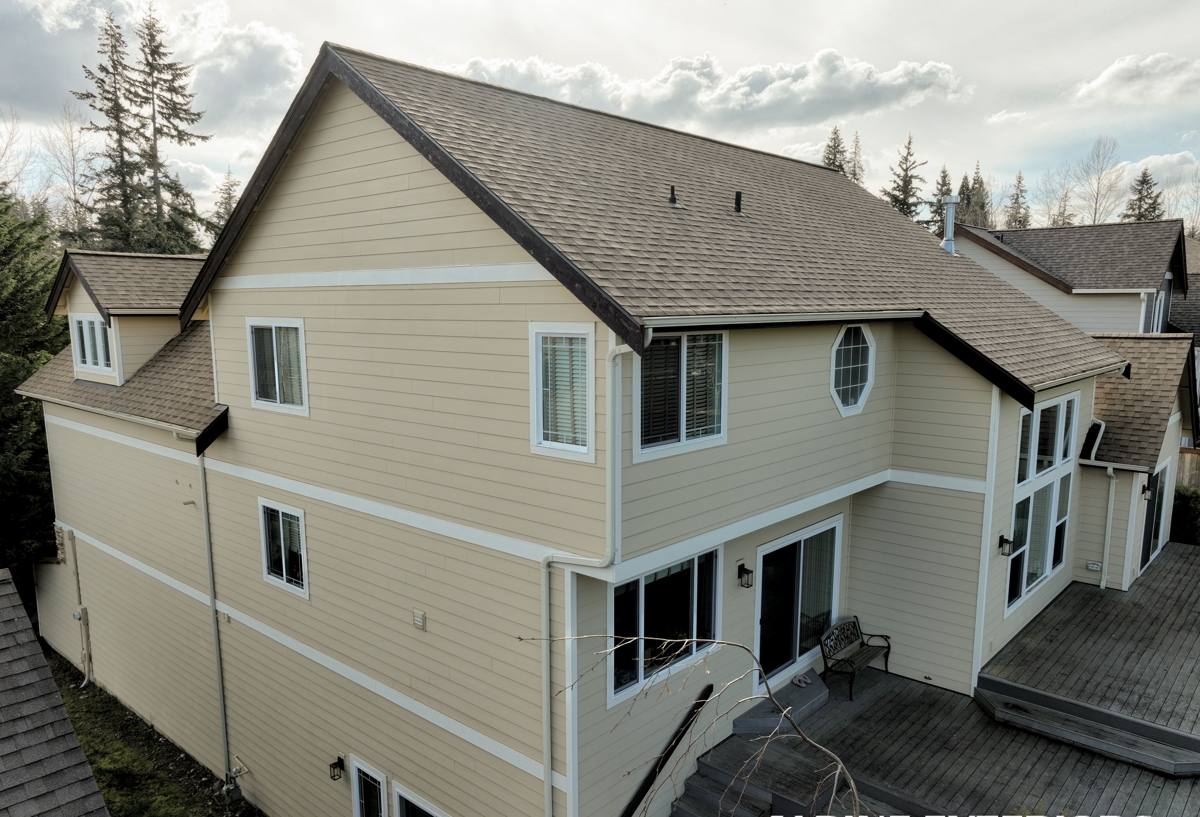
Semiahmoo Resort sits right on the water in northern Whatcom County, and that location is exactly what makes deck-building here different from a typical inland project. Homes on or near Semiahmoo Bay deal with salt-laden air blowing off the water almost year-round, driving rain that comes in sideways during winter storms, and a moss season that can stretch from October through May in shaded, north-facing yards. A deck built to a generic spec sheet will show its age fast in this environment — loose fasteners, graying and splitting boards, slick green film on walking surfaces, and soft spots where water has been sitting instead of draining. A deck built for this specific stretch of coastline holds up the way it should.
We've worked on homes throughout this part of Whatcom County long enough to know which shortcuts cause callbacks two winters later. This page walks through what actually matters when you're putting in a custom deck near Semiahmoo Resort — not marketing language, just what a correct build involves and why it costs what it costs.
What Salt Air, Rain, and Moss Actually Do to a Deck
Salt Air and Hardware
Salt air accelerates corrosion on anything metal — screws, joist hangers, bolts, railing brackets. Standard electro-galvanized fasteners that are perfectly fine forty miles inland can start rusting within a couple of seasons this close to the bay. Once a fastener corrodes, it loses holding strength long before it looks obviously bad, which is how you end up with a railing post that feels solid until it suddenly isn't.
Driving Rain and Water Intrusion
Whatcom County's Pacific storms don't just fall straight down — wind-driven rain gets pushed sideways and upward into places a dry-climate deck design never has to account for: behind ledger boards, under railing post bases, into end-grain cuts that weren't sealed. The ledger board connection, where a deck attaches to the house, is the single most common failure point we see on older decks in this area, because water worked its way behind poorly flashed ledgers for years before anyone noticed the rot underneath.
Moss and Shade
Decks tucked under mature trees or on the north/east side of a house stay damp for days after a storm, which is exactly what moss and algae need to take hold. Beyond the slip hazard, moss holds moisture against the decking surface, which shortens the life of wood and can trap grit that wears into composite and PVC surfaces over time.
What a Correct Deck Build Involves Here
None of this is exotic — it's standard best practice applied consistently, which is where a lot of budget builds cut corners.
- Ledger flashing done right: proper flashing tape, a metal drip cap, and a clear gap or flashing system that keeps water from ever reaching the house's sheathing behind the deck attachment.
- Corrosion-rated hardware: stainless steel or heavy hot-dip galvanized fasteners and structural connectors rated for coastal/marine exposure, not the standard-grade hardware used on inland builds.
- Joist tape on framing: a self-adhering waterproof membrane over the tops of joists and beams so screw penetrations don't become entry points for rot.
- Footings sized for our soil and frost line: concrete footings poured below frost depth and sized to the actual load, not guessed at.
- Positive drainage: decking gapped and sloped slightly so water sheds off the surface instead of pooling, and no framing members sitting in standing water.
- Ventilation underneath: enough clearance and airflow below the deck that the framing can actually dry out between rain events instead of staying damp all winter.
Choosing a Decking Material for This Climate
There isn't one "correct" decking material — there's a right trade-off for your budget, your maintenance appetite, and how exposed the deck is to salt air and shade. Here's how the common options actually perform in Semiahmoo Resort's conditions:
| Material | How It Handles Salt Air & Moisture | Moss/Slip Behavior | Maintenance |
|---|---|---|---|
| Cedar (wood) | Naturally rot-resistant but still needs sealing; end grain and fastener holes are vulnerable points | Can host moss in shaded spots if not cleaned; texture helps traction some | Annual cleaning and re-sealing/staining |
| Pressure-treated fir/pine | Treatment resists rot but cut ends and hardware still need protection | Similar to cedar; prone to moss without upkeep | Regular sealing; watch for checking/splitting |
| Composite decking | Doesn't absorb moisture the way wood does; won't rot | Can still grow surface algae/moss film in constant shade — needs periodic washing | Low — occasional wash, no sealing/staining |
| PVC/capped polymer | Fully moisture-resistant, best choice for very exposed or shaded areas | Same as composite — surface film needs washing, but structure is unaffected | Lowest — wash as needed |
For decks with heavy tree cover or facing directly into the bay's weather, we lean toward steering clients away from bare wood decking surfaces — not because wood is a bad material, but because in constant shade and salt exposure it demands more upkeep than most homeowners actually want to keep up with. That's a maintenance conversation, not a knock on wood as a product; plenty of homeowners are happy to re-seal every year for the look of real cedar.
Railings and Framing Materials
The framing underneath almost always makes sense as pressure-treated lumber regardless of what decking goes on top, since it's protected from direct weather once the deck is built. For railings, powder-coated aluminum and stainless cable systems tend to outperform basic wood or untreated metal railings in salt air — they don't need repainting and they don't develop the surface rust you'll eventually see on standard hardware left exposed to bay winds.
Our Process for a Semiahmoo Resort Deck Project
- On-site assessment: we look at sun/shade exposure, existing drainage, soil conditions, and how close the deck sits to prevailing weather off the bay before recommending materials.
- Design and quote: a clear scope covering framing, decking, railing, and hardware choices, with the trade-offs explained rather than buried in a line item.
- Permitting: we handle the permit and inspection requirements that apply to your project — deck permitting requirements vary by height, size, and attachment method, and we'll confirm what's needed for your build.
- Demolition of the old deck (if applicable): including a check of the ledger area and rim joist behind it for hidden rot before anything new goes up.
- Framing with coastal-rated hardware and flashing: the structural work described above, done to hold up through Whatcom County winters, not just to pass a quick look.
- Decking, railing, and finish work: installed to the manufacturer's spec (fastener spacing, gapping, expansion allowances) so warranties stay intact.
- Final walkthrough: we go over care and maintenance specific to your materials and site before we consider the job done.
Maintaining a Deck Near the Water
Even a correctly built deck needs some seasonal attention in this climate. A short list that actually matters:
- Rinse or sweep debris off the deck surface before it composts into organic buildup that feeds moss.
- Clean shaded and north-facing sections more often — that's where moss and algae take hold first.
- Check fastener heads and railing connections once a year for early corrosion, especially on older or lower-grade hardware.
- Keep gutters and downspouts near the deck clear so runoff isn't dumping extra water onto or under the structure.
- Re-seal or re-stain wood decking on the schedule the product actually needs — skipping a year in this rainfall is how boards start graying and checking.
- Trim back overhanging branches where practical to cut down on shade, leaf litter, and moisture retention.
Why Hire a Crew That Already Works This Area
A deck contractor who mostly builds inland, in drier or less salt-exposed conditions, isn't wrong about general deck-building — but they may not default to marine-grade hardware, may not think twice about ledger flashing in a driving rain, and may not flag a shaded, moss-prone site as a reason to steer toward a lower-maintenance decking material. Those aren't dramatic differences on day one; they show up two or three winters in, as loosening railings, soft ledger areas, or a surface that's slick every morning from October through spring.
Working regularly in and around Semiahmoo Resort and the rest of Whatcom County means we're not guessing at what this coastline does to a structure over time — it's the baseline we build to on every project here, not an upcharge or a special request.
Cost Factors to Expect
Every deck is priced around size, framing complexity, decking material, and railing choice, but a few things specifically push cost up or down on a Semiahmoo Resort project:
| Factor | Effect on Cost |
|---|---|
| Height off grade / need for stairs | More framing, footings, and code requirements increase cost |
| Decking material (wood vs. composite vs. PVC) | Wood is typically lower upfront cost; composite/PVC cost more initially but less in upkeep over time |
| Corrosion-rated hardware and flashing package | A modest upcharge over standard-grade hardware, offset by avoiding early repairs |
| Site access and existing deck removal | Tight waterfront lots or extensive demo add labor time |
| Railing system (wood, aluminum, cable) | Cable and aluminum systems generally cost more than basic wood railing but need less maintenance |
We'd rather walk a homeowner through these trade-offs honestly during the estimate than have them find out the hard way which corners were cut.
If you're planning a new deck or replacing an aging one near Semiahmoo Resort, we're glad to come take a look and give you a straightforward, no-pressure estimate using the form below.