 Semiahmoo Siding
 Board & Batten on a Spit Surrounded by Water
Semiahmoo Resort sits about as exposed to the elements as a residential setting in Whatcom County gets. The homes and condominiums here face open water on more than one side, catch wind with almost nothing to break it, and sit close enough to salt water that airborne salt is part of daily weather, not an occasional event. Board and batten siding — vertical panels with raised battens covering the seams — has become a popular choice in this setting because the style reads as coastal and clean, works well on both traditional and contemporary homes, and, when built with the right material, sheds water more efficiently than some horizontal profiles thanks to its vertical lines. But the style only performs as well as what it's made of and how it's installed. On a site like Semiahmoo Resort, that distinction matters more than almost anywhere else in the region.
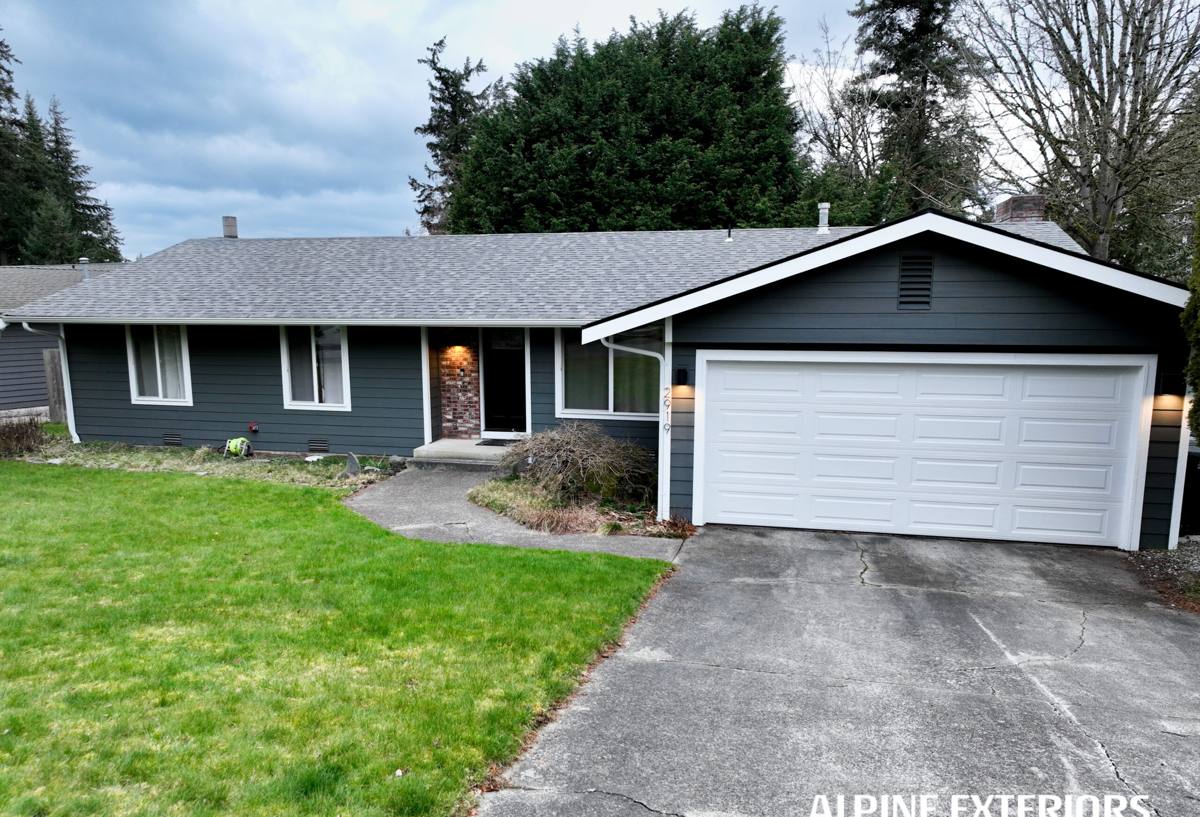
What the Semiahmoo Climate Actually Does to Siding
Three conditions define this stretch of Whatcom County, and all three attack siding in different ways:
- Salt air: Constant low-level salt exposure accelerates corrosion of exposed fasteners, degrades unprotected wood fiber, and breaks down paint films faster than it would a few miles inland.
- Driving rain: Wind off the water doesn't just fall on siding — it drives rain sideways into joints, seams, and batten edges. Any gap in the water-resistive barrier or flashing detail becomes an entry point.
- A long moss season: Cool, damp, shaded conditions for much of the year mean moss and algae get a real foothold on any siding surface that stays wet or holds organic debris, especially near roof lines and on north-facing walls.
None of these conditions are unique to Semiahmoo Resort individually, but the combination — constant salt, sustained wind-driven moisture, and a moss-friendly microclimate — is more intense here than in most of Whatcom County. Siding that's marginal in a sheltered inland neighborhood can fail outright here.
Why We Only Install James Hardie for This Style
Board and batten can be built from several materials, but not all of them belong on a marine site like this one. We install James Hardie fiber cement exclusively, and for board and batten specifically that means HardiePanel vertical siding paired with HardieTrim battens, finished in factory-applied ColorPlus color.
Why fiber cement instead of wood or engineered wood
Traditional board and batten was often built from cedar or primed spruce boards. Both look right for the style, but both are wood-based products that absorb moisture at cut edges and panel joints — exactly the areas that take the brunt of wind-driven rain here. In a salt-air, high-moisture environment, that moisture absorption shows up as swelling, cupping, and eventually rot, usually first at the bottom courses and around window and door openings. Engineered wood siding closes some of that gap but is still a wood-strand product with a moisture threshold; once water gets past the coating, deterioration can move fast.
Why James Hardie specifically
James Hardie fiber cement is manufactured for climate zones like this one — the HZ5 formulation used in the Pacific Northwest is engineered for cold, wet, coastal conditions rather than a one-size-fits-all mix. It's non-combustible, doesn't absorb moisture the way wood does, and holds a factory-baked ColorPlus finish that resists fading and doesn't need the recoating cycle a field-painted product does. For a vertical batten system especially — where there are more seams and more edges than a typical lap job — starting with a substrate that isn't going to swell or rot at those seams removes the single biggest long-term risk.
What a Correct Board & Batten Installation Involves
Board and batten has more failure points than lap siding if it's rushed, because every batten strip creates a seam that has to be flashed and fastened correctly. On a site with this much wind-driven rain, cutting corners here shows up as a leak within a few winters, not decades. A correct installation includes:
- A continuous, properly lapped weather-resistive barrier behind the panels, with all penetrations sealed before panels go up
- Rainscreen furring or a drainage gap where conditions call for it, so any moisture that does get behind the panel can drain and dry instead of sitting against the sheathing
- Correct panel-to-panel and panel-to-trim gaps, caulked with a product rated for the exposure, not just gapped and left
- Battens fastened through the panel into framing at manufacturer-specified spacing, not just tacked to the panel face
- Proper head flashing over every window and door, integrated with the barrier, not siding butted directly against the frame
- Corrosion-resistant fasteners appropriate for a coastal environment — this matters more at Semiahmoo Resort than almost anywhere inland
- Factory-cut and field-cut edges sealed per James Hardie's published specifications, since an unsealed cut edge is a moisture entry point regardless of how good the panel itself is
Every one of those steps is easy to skip and hard to notice from the ground once the job is finished. It only becomes obvious two or three wet seasons later, when water has already found its way behind the cladding.
Board & Batten Compared to Other Siding Approaches Here
Homeowners at Semiahmoo Resort often ask how board and batten stacks up against the horizontal lap siding that's more common elsewhere in the area, or against re-siding with a different material entirely. The honest answer depends on the home's style and exposure, but here's the general comparison for this specific climate:
| Approach | Water shedding in wind-driven rain | Moss/algae resistance | Long-term fit for salt air |
|---|---|---|---|
| James Hardie board & batten | Strong when flashed and battened correctly; vertical lines help shed water fast | Good; factory finish resists organic growth better than field-painted wood | Engineered for coastal exposure (HZ5) |
| James Hardie lap siding | Very strong; more forgiving of minor installation variance than batten seams | Good; same ColorPlus finish | Engineered for coastal exposure (HZ5) |
| Cedar or primed spruce board & batten | Weak at seams and cut edges once coatings age | Poor without frequent maintenance | Requires ongoing sealing and repainting |
| Vinyl vertical siding | Moderate; prone to gapping and flexing in high wind | Fair, but can trap moisture behind panels | UV and impact-brittleness concerns over time |
Board and batten remains a good choice for the right home at Semiahmoo Resort — the vertical profile suits many of the contemporary and coastal-style homes in the area — as long as it's built from a material and detailed with an installation that can actually handle the exposure.
Our Process for a Semiahmoo Resort Board & Batten Project
Because we already work in this area, we start with what the site itself is telling us rather than a generic checklist:
- On-site assessment: We walk the home's exposure — which elevations take the most direct wind and rain, where moss has already established, where existing siding shows salt or moisture damage — and use that to plan detailing, not just color and panel layout.
- Sheathing and barrier inspection: Before any new siding goes up, we check what's underneath. Wind-driven rain over time can compromise the barrier or sheathing, and that has to be addressed before it's covered again.
- Panel and batten layout: We plan batten spacing and panel seams around the home's actual dimensions and openings, not just a default pattern, so seams land in sensible places relative to windows, corners, and trim.
- Installation to spec: Weather barrier, flashing, fastening, and sealing follow James Hardie's published installation guidelines for this climate zone, not a shortcut version.
- Final walkthrough: We go over the finished work with the homeowner, including what basic maintenance looks like going forward.
Living With Board & Batten in a Moss-Prone, Salty Environment
A correctly installed James Hardie board and batten system is low-maintenance, not no-maintenance. What actually needs attention here:
- Rinsing salt residue and organic debris off the siding periodically, especially on shaded or north-facing walls where moss takes hold fastest
- Keeping gutters and downspouts clear so water isn't sheeting down the siding face during heavy rain
- Trimming back vegetation and tree cover that keeps siding damp and shaded longer than it needs to be
- Watching caulked joints and touch-up areas over the years and addressing any cracking before it becomes a leak path
None of this is heavy work, but skipping it in an environment like Semiahmoo Resort's shortens the life of any siding product, Hardie included. The difference is that Hardie's factory finish and fiber cement substrate give you a much longer runway before neglect turns into a real problem.
What Board & Batten Typically Costs to Consider
Exact pricing depends on the home's size, elevation complexity, existing wall condition, and how much of the old siding and barrier needs to come off first. In general terms, homeowners should expect these factors to move the number most:
| Factor | Effect on project scope |
|---|---|
| Wall square footage and elevation count | More surface area and more corners/seams increase material and labor |
| Condition of existing sheathing/barrier | Repair or replacement adds time before new siding can go on |
| Batten spacing and panel pattern | Tighter batten spacing means more trim material and more fastening labor |
| Window and door trim detailing | More openings mean more flashing and finish work per elevation |
| Site access and staging | Waterfront and resort-area lots can add setup complexity |
We give a real, project-specific number after seeing the home — not a phone estimate — because guessing at any of these factors from a distance isn't useful to a homeowner making a real decision.
Why Local Experience at Semiahmoo Resort Matters
A siding crew that mostly works inland neighborhoods can install board and batten competently and still get the details wrong for a site like this one — under-flashing a window that would be fine in a sheltered location, or skipping a drainage gap that only matters where wind-driven rain is a regular occurrence. Working this stretch of Whatcom County regularly means knowing which elevations of a Semiahmoo Resort home take the worst of the weather before the first panel goes up, and detailing accordingly instead of learning it the hard way after a callback.
If you're weighing board and batten for a home at Semiahmoo Resort, we're glad to walk the property, look at what your current siding is telling us, and put together a straightforward, no-pressure estimate using James Hardie's fiber cement system built specifically for this coastline.