 Semiahmoo Siding
 Point Roberts Windows Work Harder Than Most
Point Roberts sits on its own peninsula, surrounded on three sides by Boundary Bay and the Strait of Georgia, which means almost every home there takes on some amount of direct marine exposure. Add in Semiahmoo's own waterfront position and the wider pattern across Whatcom County — wind-driven winter storms, long stretches of damp weather, and a moss season that can run from fall through spring — and you have a climate that is genuinely tougher on window systems than what you'd find further inland. Salt-laden air, standing moisture, and repeated freeze-thaw-damp cycles don't just affect old windows; they shorten the life of new ones that weren't installed with this specific exposure in mind.
A window that's rated well and installed correctly in a dry inland town can still fail early here if the installer didn't account for salt air and driving rain. This page focuses specifically on what window installation needs to look like for Point Roberts homes, and why the details matter more here than almost anywhere else in the county.
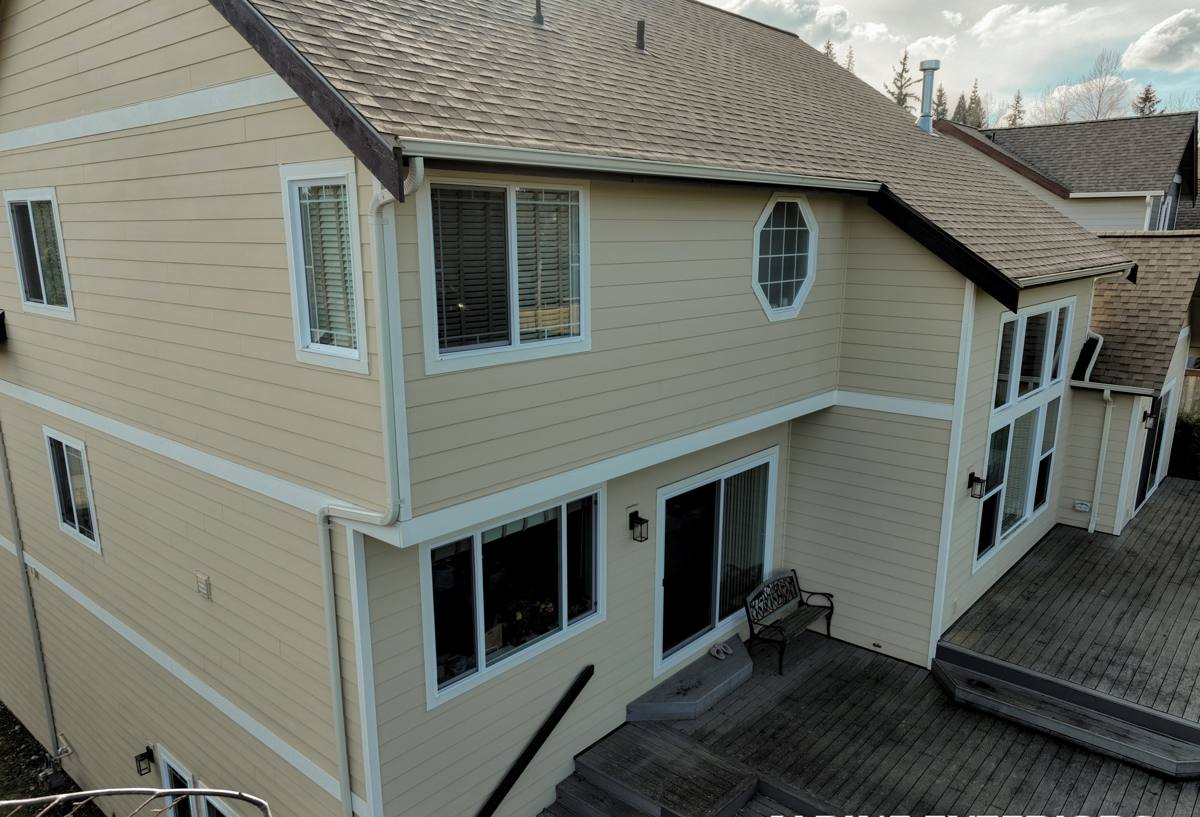
How Coastal Exposure Actually Damages a Window
Salt Air and Hardware Corrosion
Airborne salt doesn't need a storm to do damage — it settles quietly on window hardware, screens, and fasteners day after day. Over time it accelerates corrosion on locks, hinges, and cranks, and it breaks down lower-grade metal components years before a manufacturer's warranty would suggest. This is one of the most common reasons we see hardware failing on windows that are otherwise structurally fine.
Wind-Driven Rain and Water Intrusion
Rain that falls straight down is fairly easy for any window to shed. Rain that's being pushed sideways by wind off the water is a different problem — it finds gaps at the sill, the head flashing, and the trim joints that would never see water in a calmer climate. Once water gets behind the exterior cladding around a poorly flashed window, it can sit there for months before anyone notices a stain or soft spot.
Moss, Algae, and Trapped Moisture
Whatcom County's long wet season is ideal moss and algae growth conditions, especially on north-facing walls and horizontal surfaces like sills and trim caps that don't dry out quickly. Moss holds moisture directly against wood and painted surfaces, which is exactly the condition that leads to rot and finish failure. A window installed with proper slope and clearance sheds water and dries out between rain events; one installed flat or tight against trim gives moss and algae a permanent foothold.
Signs It's Time to Replace Rather Than Repair
Not every window problem calls for full replacement, but certain signs point to a system that's past the point of patching, especially in a marine climate:
- Fogging or haze between the panes of a double- or triple-pane window — the seal has failed and can't be fixed, only replaced
- Soft, spongy, or discolored wood at the sill or bottom corners of the frame
- Corroded, seized, or badly pitted hardware that no longer locks or operates smoothly
- Visible moss or dark staining building up on the sill or exterior trim year after year despite cleaning
- A persistent draft or cold spot at the frame even with the window fully latched
- Paint or finish that keeps failing in the same spot no matter how often it's touched up
What a Correct Window Installation Involves
Sill Pan Flashing and Drainage
Every window opening should have a sloped sill pan that directs any water that does get past the window itself back outside the wall — not down into the framing. This is a step that's easy to skip and impossible to check once the trim is back on, which is exactly why it matters who's doing the installing.
Fasteners and Hardware Choices for Salt Air
In a coastal-exposed setting like Point Roberts, fastener and hardware quality isn't a place to cut corners. Corrosion-resistant screws and properly rated hardware cost more up front but avoid the early failures that plain steel components see within just a few seasons of salt exposure.
Sealant and Backer Rod, Not Just Caulk
A correct installation uses backer rod to control sealant depth and a quality exterior-grade sealant at the right joints — not a bead of caulk smeared over gaps as an afterthought. Sealant is a backup to good flashing and fit, not a substitute for it, and it needs to be reapplied on a maintenance schedule rather than treated as permanent.
Choosing a Window Frame Material for This Climate
Frame material affects how a window handles years of salt air, rain, and humidity. There's no single right answer for every home — it depends on your budget, your home's style, and how much upkeep you want to take on.
| Frame Material | Coastal Durability | Maintenance | Typical Trade-Off |
|---|---|---|---|
| Vinyl | Good — won't rust or rot | Low | Limited color/finish options, can look plain on some home styles |
| Fiberglass | Very good — stable in temperature swings, resists corrosion | Low | Higher upfront cost than vinyl |
| Aluminum | Fair — strong but prone to corrosion pitting near salt air over time | Moderate | Thermal performance is weaker unless thermally broken |
| Wood-clad | Fair to good depending on cladding — wood core still vulnerable if seals fail | Higher | Best traditional look, but moisture management has to be near-perfect |
For most Point Roberts homes, we lean toward vinyl or fiberglass frames specifically because they don't corrode and don't give moisture a foothold the way bare wood or unprotected metal can. That's a professional judgment based on how these materials behave in this exact climate, not a knock on any manufacturer.
Our Installation Process
- On-site assessment of existing openings, framing condition, and any signs of water damage or rot behind the current trim
- Honest recommendation on frame material, glass package, and whether repair or full replacement makes sense for each opening
- Careful removal of old windows with inspection of the rough opening before anything new goes in
- Correction of any framing or sheathing issues found — this is where hidden rot or old flashing mistakes get caught
- Installation of sloped sill pan flashing, proper integration with the water-resistive barrier, and correct shimming and leveling
- Sealing with backer rod and exterior-grade sealant at the appropriate joints, plus corrosion-resistant fastening
- Final trim work and a walkthrough so you understand how to operate and maintain the new windows
Why Local Experience on the Point Roberts Peninsula Matters
Point Roberts is separated from the rest of Whatcom County by water and by an international border, which makes it a genuinely different place to schedule and deliver a construction project than a job in Blaine or Bellingham. Crews and material deliveries generally have to plan around a border crossing to reach the peninsula, and that adds a logistics step that out-of-area contractors often underestimate or don't plan for at all. A crew that already builds Point Roberts into its regular schedule shows up on time and doesn't treat your project as an afterthought squeezed in around a longer drive.
There's also a climate-knowledge side to it. A contractor who mostly works drier, more sheltered inland areas may not default to sill pan flashing, corrosion-resistant hardware, or the sealant details this exposure calls for — not out of carelessness, but because it simply isn't their everyday standard. Working Semiahmoo, Point Roberts, and the surrounding Whatcom County coastline regularly means those details are just how we build, every time, not a special request.
Maintenance After Installation
Even a correctly installed window benefits from a little seasonal attention in this climate. A few minutes a couple times a year goes a long way:
- Rinse salt residue off frames and glass, especially after winter storms off the water
- Check exterior sealant joints annually for cracking or separation and have them redone before they fail completely
- Clear moss or algae from sills and trim promptly rather than letting it build up over a season
- Operate locks and cranks periodically so hardware doesn't seize from disuse
- Keep gutters and downspouts clear so runoff isn't sheeting directly across window openings
Cost Factors for Point Roberts Homeowners
There's no single price that applies to every home, but the main factors that move a window installation estimate up or down are consistent from house to house:
| Factor | Effect on Cost |
|---|---|
| Number of openings and window size | More and larger openings mean more material and labor |
| Frame material chosen | Vinyl typically costs less than fiberglass or wood-clad |
| Condition of existing framing | Hidden rot or old water damage adds repair work before the new window goes in |
| Glass package | Upgraded Low-E coatings or triple-pane glass add cost but improve comfort and durability |
| Access and site conditions | Second-story or hard-to-access openings take more time to complete safely |
If you'd like a clear, no-pressure estimate for your Point Roberts home, the short form below is the fastest way to get one — we'll look at your specific windows and give you honest options rather than a one-size-fits-all quote.