 Semiahmoo Siding
 Decking Built for Point Roberts, Not Just Sold There
Point Roberts sits on its own peninsula at the southern tip of the Semiahmoo area, surrounded on three sides by saltwater. That location is part of what makes it a beautiful place to have a deck — and part of what makes decking fail faster there than it does twenty miles inland. Salt-laden air, near-constant marine moisture, and a moss season that can stretch from October well into spring put real stress on outdoor structures. A deck built with the wrong materials, or built correctly but for the wrong climate, can start showing problems in just a few seasons.
We work throughout the Semiahmoo area and know Point Roberts specifically — the exposure differences between a waterfront lot and a more sheltered inland lot, the way wind-driven rain behaves on an unprotected deck, and what actually holds up out here versus what looks good in a showroom. This page covers composite decking for Point Roberts homes: what the climate demands, what a correct installation involves, and what to look for in a contractor before you sign anything.
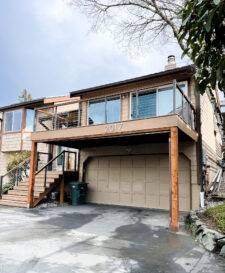
Why Point Roberts' Climate Is Hard on Decks
Salt Air and Metal Fasteners
Being surrounded by saltwater means airborne salt settles on every exterior surface, including deck boards, fasteners, and railing hardware. Standard hardware corrodes faster here than in non-coastal parts of Whatcom County. Fasteners that aren't rated for coastal exposure can start staining or weakening years before a homeowner expects a problem, sometimes showing up as rust streaks bleeding through the deck boards themselves.
Driving Rain and Moisture Intrusion
Storms coming off the water push rain sideways, not just down. That matters for decking because water doesn't just land on the surface — it drives into board gaps, fastener holes, and any seam that isn't detailed correctly. Over time, water that gets trapped under boards or into ledger connections is what causes rot in the framing underneath, even when the visible decking looks fine.
Moss, Algae, and a Long Wet Season
Point Roberts gets a moss and algae season that runs longer than it does in drier parts of the Pacific Northwest, thanks to the marine layer and persistent humidity. Moss on a deck surface isn't just cosmetic — it holds moisture against the board, and on any surface with texture or grain, it becomes a slip hazard well before it's visually obvious. Deck boards with a smooth, tightly capped surface shed moss growth far better than boards with an open, wood-like texture.
Why We Recommend Composite Over Wood for This Location
We install both wood and composite decking, and for most Point Roberts properties — especially anything with direct or partial water exposure — composite is the more sensible long-term choice. This isn't a knock on wood decking as a product; it's about matching the material to the site conditions.
- Moisture behavior: Quality composite boards don't absorb water the way wood does, so they're far less prone to the swelling, cupping, and splintering that coastal humidity causes in untreated or under-maintained wood.
- Maintenance burden: Wood decking in this climate needs regular sanding, staining, or sealing to keep moisture and moss from getting a foothold. Composite needs periodic washing but no refinishing.
- Consistency over time: Wood's performance depends heavily on how well it's maintained year over year. Composite's performance is more consistent regardless of homeowner upkeep, which matters if you're not planning to re-stain a deck every couple of summers.
- Installation sensitivity: Composite is less forgiving of sloppy fastening and hidden-clip spacing than wood, so it requires a crew that installs it correctly the first time — this is a trade-off in favor of composite's long-term look, but only if the install is done right.
We're not going to tell you wood decking is a bad product — it isn't, and plenty of homeowners prefer its look and are willing to maintain it. But for a Point Roberts deck with real salt and rain exposure, composite's moisture resistance and lower maintenance demand generally make it the more practical choice, and it's what we recommend by default here.
What a Correct Composite Deck Install Involves
The Framing Comes First
The decking material only performs as well as what's underneath it. Before any composite boards go down, we look at joist spacing, ledger attachment, and flashing at the house connection — this is the part of the job that determines whether water gets managed properly or ends up trapped against the structure. On a re-decking project, this is also where we find out whether the existing framing is sound enough to build on, or whether it needs repair first.
Fasteners and Hardware Rated for Coastal Exposure
Given the salt air, we use fasteners and structural hardware rated for coastal or marine-grade exposure, not standard interior-grade hardware. This is a small cost difference at install time and a significant difference in how the deck holds up over ten-plus years.
Board Spacing for Drainage
Composite boards need consistent gapping to let water drain through rather than pool on the surface. Gaps that are too tight trap moisture and debris; gaps that are inconsistent look unfinished and can create trip hazards as boards expand and contract with temperature.
Railing and Structural Connections
Railing posts need to be through-bolted into properly blocked framing, not just screwed into a rim joist. This matters everywhere, but it matters more on an exposed, windy site where railings take more lateral load over time.
Composite Decking Cost Factors for Point Roberts
Every deck is different, so we won't quote a number without seeing the site, but these are the main factors that move the price up or down on a typical Point Roberts project:
| Factor | Why It Matters |
|---|---|
| Existing framing condition | Rotted or undersized framing needs repair or replacement before new decking goes down — this is common on older re-decking jobs and isn't always visible until boards come up |
| Deck size and shape | Square footage plus the number of corners, stairs, and picture-frame border details all add labor |
| Composite board tier | Composite lines range from basic capped boards to premium multi-tone lines with longer warranties — material cost varies accordingly |
| Railing system | Composite or metal railing systems cost more than basic wood or cable but generally match the low-maintenance goal of a composite deck |
| Site access | Waterfront and hillside lots around Point Roberts sometimes mean harder material staging and longer install time |
| Height and stairs | Elevated decks require more substructure, footings, and code-compliant stair and guard details |
New Build vs. Re-Decking an Existing Structure
A lot of the calls we get in Point Roberts are for re-decking — replacing worn wood boards with composite on framing that's otherwise structurally sound. This is often more affordable than a full rebuild, but it only works if the framing underneath actually is sound. We check for soft spots, rot at the ledger, and undersized joists before recommending a re-deck versus a rebuild. Telling a homeowner they need a full rebuild when a re-deck would do is a waste of their money; telling them a re-deck is fine when the framing is compromised is a safety problem. We'd rather take the extra ten minutes to check than guess either way.
Our Process
- On-site walkthrough: We look at the existing deck or build site, check framing condition where applicable, and talk through what you want out of the space.
- Written estimate: A clear breakdown of materials, labor, and timeline — no vague allowances you find out about later.
- Material selection: We'll walk you through composite board and railing options that fit both your budget and the site's exposure level.
- Installation: Framing repair or build-out first, then decking, railing, and stairs, with attention to fastener spacing and drainage throughout.
- Final walkthrough: We go over the finished deck with you before calling the job done.
What to Check Before Hiring a Deck Contractor Here
- Do they carry current Washington contractor licensing and insurance, and will they show you proof without being asked twice?
- Do they have actual experience on the Semiahmoo peninsula and Point Roberts specifically, or is this their first coastal job?
- Do they inspect existing framing before quoting a re-deck, or just measure the surface and price boards?
- Do they specify coastal-rated fasteners and hardware in writing, or leave it vague?
- Is the estimate itemized, or one lump number with no breakdown?
- Do they explain warranty terms on both materials and labor before you ask?
Get a Straight Answer About Your Deck
If you're dealing with a wood deck that's past its prime, planning a new deck for a Point Roberts property, or just want an honest read on whether your current framing is still sound, we're glad to take a look. We'll give you a clear estimate and a straight answer about what your site actually needs — no pressure, no upsell on materials you don't need. Fill out the form below to schedule a free estimate.