 Semiahmoo Siding
 Roofing Point Roberts: A Different Kind of Job
Point Roberts sits at the tip of a small peninsula that technically makes it a U.S. exclave — the only way to reach it by land is through Canada. That geography doesn't just affect how residents get groceries; it affects how roofing projects get planned. Material deliveries, crew scheduling, and even permit coordination all have to account for a border crossing that a typical Whatcom County job never has to think about. A roofing crew that already works this area on a regular basis has that logistics problem solved before your project ever starts.
Beyond the border, the roof itself has to deal with a coastal climate that's harder on materials than most inland Washington homes see: salt-laden air off the water, driving rain that comes in sideways during winter storms, and a moss season that, thanks to persistent marine humidity and shaded tree cover, runs longer here than it does even twenty miles inland.
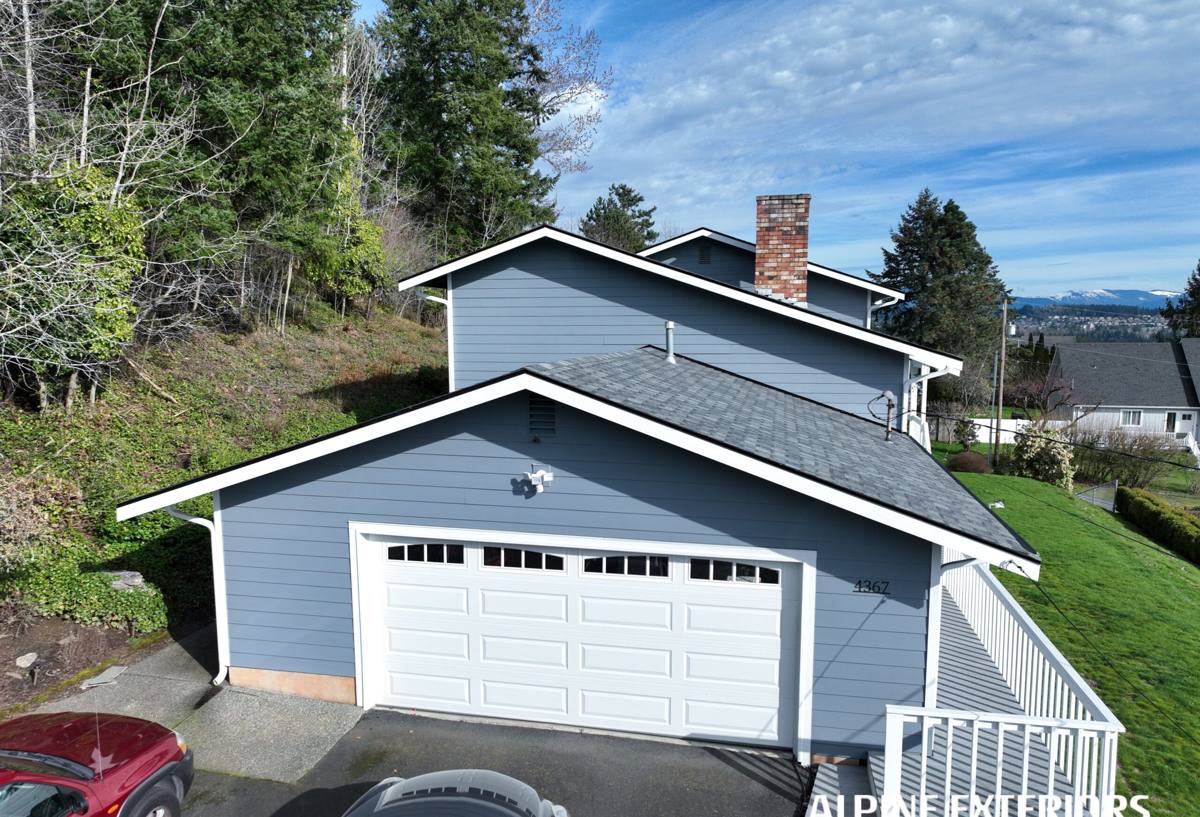
What the Climate Actually Does to a Roof Here
Salt Air and Metal Fatigue
Salt air accelerates corrosion on anything metal — nails, flashing, valley metal, vent stacks, and drip edge. On a standard-grade roof, that shows up as rust streaking, loosened fasteners, and premature flashing failure years before the shingles themselves are worn out. It's one of the most common reasons we find leaks around chimneys and skylights on older Point Roberts roofs: the field of the roof is fine, but the metal details corroded first.
Driving Rain and Wind-Driven Water
Storms off the Strait of Georgia and Boundary Bay don't just drop rain straight down — wind pushes it sideways and up under shingle edges, especially at eaves, rakes, and low-slope transitions. A roof built to a minimum-code standard for a drier climate simply isn't detailed for that kind of water intrusion. Underlayment coverage, fastener pattern, and edge treatment all matter more here than they would on a roof going up somewhere dry and calm.
Moss, Shade, and a Long Growing Season
Moss needs moisture and shade to establish, and this stretch of coastline offers plenty of both for much of the year. Once moss gets a foothold, it holds water against the roof surface, lifts shingle edges, and works its way under flashing. On an aging roof, moss isn't just cosmetic — it's actively shortening the roof's remaining life.
What a Correctly Installed Roof Looks Like Out Here
"Correct" isn't just laying new shingles over what's there. A roof built for this specific environment starts at the deck and works up through several layers that each do a specific job against wind, water, and salt.
Starting From the Deck Up
- Deck inspected and any soft, delaminated, or water-stained sheathing replaced before anything new goes down
- Self-adhered ice-and-water membrane at eaves, valleys, and around every penetration — the areas most exposed to wind-driven rain
- Synthetic underlayment across the full field for a second line of defense under the shingles
- Corrosion-resistant flashing and fasteners at chimneys, skylights, vent stacks, and roof-to-wall transitions
- Proper nailing pattern and fastener count matched to the wind exposure of the site, not just the manufacturer's minimum
- Balanced intake and exhaust ventilation so the attic isn't trapping moisture that feeds moss and rot from underneath
Material Choices That Hold Up to Salt Air
We steer homeowners away from bargain-grade 3-tab shingles and standard electroplated fasteners in this area — not because they're bad products everywhere, but because they aren't built for sustained salt exposure and driving rain. Our standard is corrosion-resistant fastener hardware (stainless or hot-dip galvanized) paired with a shingle or metal system rated for the wind and moisture conditions this stretch of coastline actually sees.
| Material | How It Handles Salt Air & Rain | Maintenance Burden | Typical Lifespan Here |
|---|---|---|---|
| Standard 3-tab asphalt | Adequate short-term, edges lift faster under wind-driven rain | Higher — more frequent moss and edge repair | Shorter end of asphalt range in this climate |
| Architectural (laminate) asphalt | Heavier profile resists wind uplift and edge lifting better | Moderate — periodic moss treatment recommended | Longer end of asphalt range |
| Standing seam metal | Sheds water fast, minimal seams for wind-driven rain to exploit | Low — occasional fastener and sealant check | Longest of the common options, higher upfront cost |
The Point Roberts Logistics Piece Most Roofers Overlook
Because Point Roberts is only reachable by land through Canada, a roofing job here isn't quite the same as a job in Blaine or Ferndale. Delivery trucks, dumpster drop-offs, and crew vehicles all have to clear a border crossing, which means timing has to be planned around that reality rather than assumed away. A crew that hasn't worked the area before often underestimates this — leading to delayed material deliveries or scheduling gaps mid-project.
Working Point Roberts regularly means we already know how to sequence deliveries and crew days so the border crossing is a planning detail, not a surprise that stalls your project halfway through a tear-off with your roof deck exposed to the weather.
Our Process for a Point Roberts Re-Roof
- On-site inspection. We check the deck, flashing, ventilation, and current moss/rot condition, and we're honest about whether repair is a reasonable option or replacement is the smarter long-term move.
- Written scope and estimate. Materials, fastener spec, flashing detail, and ventilation plan spelled out — no vague line items.
- Scheduling around logistics. Material delivery and crew days planned with the border crossing and typical marine weather windows in mind, so a rain system doesn't catch an open roof deck exposed.
- Tear-off and deck repair. Old roofing removed, deck inspected board by board, and any compromised sheathing replaced before anything new goes on.
- Installation. Ice-and-water membrane, underlayment, flashing, and roofing material installed to the spec discussed up front — not a downgraded version of it.
- Final walkthrough. We go over the finished roof with you, including ventilation and any moss-prevention steps worth knowing for the years ahead.
Ventilation and Moss: The Maintenance Piece That Extends the Roof's Life
A new roof still needs airflow underneath it. Attics that can't exhaust warm, moist air properly trap condensation against the roof deck from below — which speeds up moss growth and rot from the inside just as effectively as rain does from the outside. Balanced intake and exhaust ventilation is part of a correct installation here, not an upsell.
Once the new roof is on, keeping tree limbs trimmed back and doing an occasional gentle moss treatment (not pressure washing, which can strip granules and shorten shingle life) goes a long way toward protecting the investment through Whatcom County's wetter months.
Signs a Point Roberts Roof Needs Replacement, Not Just a Patch
- Granule loss heavy enough that shingles look bald or patchy in sunlight
- Curling, cupping, or lifted shingle edges, especially near eaves and rakes
- Rust staining or visibly corroded flashing around chimneys, skylights, or vents
- Moss established across large sections rather than a light surface dusting
- Daylight visible through the attic roof deck, or water staining on attic sheathing
- Multiple past repairs in different spots rather than one isolated issue
- The roof is nearing or past the expected lifespan for its material type
One or two of these on their own might mean a repair is enough. Several together, especially on an older roof, usually means the underlying materials are past the point where patching is the economical choice.
Why a Crew That Already Works Point Roberts Matters
Anyone can quote a roof from a set of photos. Getting it right here means understanding how salt air treats metal, how wind off the water drives rain up under shingle edges, how long moss season actually runs in the shade along this coastline, and how to move materials and crews across a border crossing without losing a week to logistics. A crew based in the Semiahmoo area that regularly works Point Roberts has already worked through those variables on real jobs — it's not a first attempt at figuring out what this specific stretch of coastline requires.
Get a Straightforward Estimate
If your Point Roberts roof is showing its age or you just want an honest read on where it stands, we're happy to take a look. The estimate is free, there's no pressure to commit on the spot, and we'll tell you plainly whether you're looking at a repair or a full replacement. Use the form below to get in touch and we'll schedule a time to come out.