 Semiahmoo Siding
 Building New in Point Roberts Means Building for the Water
Point Roberts sits on its own peninsula at the very bottom of the Tsawwassen Peninsula, cut off from the rest of Whatcom County by water and by the border. Every house here is close to the Strait of Georgia, and that proximity is the single biggest factor in how a new-construction window package should be specified, flashed, and installed. Salt-laden air, wind-driven rain off the water, and a long, damp moss season put more stress on window openings here than on a comparable home twenty miles inland. When we frame in windows on a new build in Point Roberts, we're not just following code minimums — we're building in margin for a climate that doesn't forgive shortcuts.
New-construction window work is different from a replacement job. There's no old frame to work around and no existing siding to patch back. That's an advantage — it means the window opening, the flashing, and the water-resistive barrier can all be integrated correctly from the start, in the right order, with no compromises forced by what's already there. Get it right at this stage and the house stays dry and low-maintenance for decades. Get it wrong and you're chasing rot and stains behind the siding within a few years.
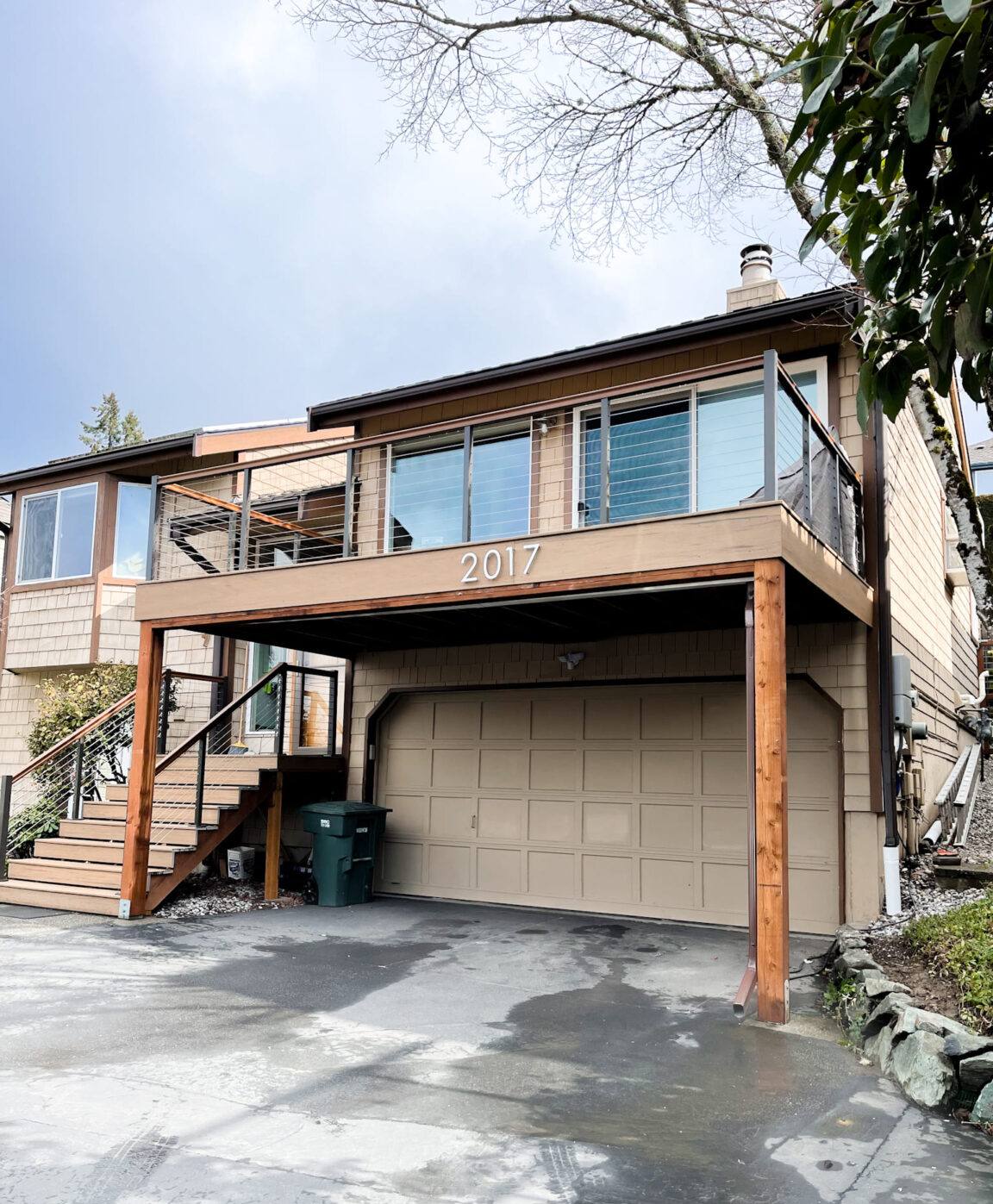
What the Local Climate Actually Does to Windows and Openings
Three things define window performance on the water side of Whatcom County, and they all show up in Point Roberts:
- Wind-driven rain: storms off the Strait push rain sideways into wall assemblies, not just straight down. Flashing that only sheds water downward isn't enough — it needs to handle water forced upward and sideways at the sill and jambs.
- Salt air: airborne salt accelerates corrosion on fasteners, hinges, and cheaper hardware, and it degrades some finishes and sealants faster than a standard warranty assumes.
- Extended moss and mildew season: the same damp, mild conditions that grow moss on roofs and north-facing siding also keep window sills and lower sashes wet longer between dry spells, which matters for sill pan design and drainage.
None of this means windows fail quickly in Point Roberts. It means the details that are easy to skip — sill pans, back-dammed flashing, sealant selection, corrosion-resistant fasteners — matter more here than they would in a drier, more sheltered part of the county.
New-Construction vs. Replacement: Why the Method Matters
In new construction, the window's nail fin gets integrated directly into the water-resistive barrier (WRB) before siding goes on. Done correctly, water that gets past the siding is directed out and away from the framing at every layer — a shingled, lapped system where each layer sheds onto the one below it. This is the correct time to build in redundancy: a sloped sill pan, self-adhered flashing membrane at the jambs and head, and a properly lapped WRB integration.
We bring this up because it's common on new builds — especially when window installation gets treated as a fast, "install and move on" trade — for the flashing sequence to get shortchanged. A window that looks fine on install day can still leak two winters later if the sill pan was skipped or the WRB wasn't lapped over the top flashing. On a Point Roberts build facing open water exposure, that mistake shows up faster than it would somewhere more sheltered.
The Flashing Sequence We Follow
- Rough opening is checked for square, level, and correct dimensions before any window arrives on site.
- A sloped or back-dammed sill pan flashing is installed first, so any water that reaches the sill drains back out over the WRB, not into the framing.
- Jamb flashing goes on next, lapping over the sill pan legs.
- The window is set, shimmed plumb and level, and fastened per the manufacturer's schedule — not a generic pattern.
- Head flashing goes on last, lapping over the jamb flashing and integrated with the housewrap above it so water is always directed outward, never trapped.
- Sealant is applied only where the manufacturer specifies it — sealing the wrong joint can trap water instead of keeping it out.
Choosing the Right Window Frame Material for This Climate
Frame and glazing choice affects how a window handles salt air, moisture, and temperature swings off the water. There's no single "best" option — it's a trade-off between upfront cost, maintenance, and long-term performance.
| Frame Material | Salt/Moisture Behavior | Maintenance | Typical Trade-Off |
|---|---|---|---|
| Vinyl | Won't corrode or rot; performs well in salt air | Low — occasional cleaning | Lower upfront cost; frame color and size options are more limited than fiberglass |
| Fiberglass | Excellent — dimensionally stable, resists salt exposure and swelling | Low | Higher upfront cost than vinyl; strong long-term value on exposed sites |
| Wood-clad | Exterior cladding protects the wood, but any breach in the cladding lets moisture reach the wood core | Higher — cladding and any exposed wood joints need monitoring | Best interior appearance; more installation-sensitive in a wet, salty climate |
| Aluminum | Conducts heat and cold quickly; prone to condensation without thermal breaks | Moderate | Strong but not our first recommendation for residential coastal builds without a thermal break |
For most new-construction homes in Point Roberts, we steer clients toward vinyl or fiberglass for exterior exposures facing the water, and reserve wood-clad for more protected elevations where the homeowner wants that interior look and understands the added upkeep. This is a matter of matching the product to the exposure, not a knock on any manufacturer — every material on this list performs well when it's specified for the right location and installed correctly.
Glazing and Condensation: What to Ask For
Double-pane, low-E glazing with argon fill is standard for new construction in this climate and handles the temperature swings between damp Whatcom County winters and warmer summer days without excessive interior condensation. On more exposed, water-facing walls, we'll talk through whether a higher-performance glazing package makes sense for comfort and to reduce condensation buildup on the sill — a common nuisance in homes near the water during the wetter months.
Our Process on a New-Construction Build
- Plan review: we look at window schedule, rough opening sizes, and elevation exposure before ordering anything.
- Product selection: we walk through frame material, glazing package, and hardware finish based on which walls face the water and prevailing weather.
- Coordination with the framing and siding trades: window installation has to happen at the right point in the build sequence — after the WRB is up, before siding closes in the opening.
- Flashing and installation: sill pan, jamb flashing, window set, head flashing, WRB integration — in that order, every time.
- Fastener and hardware check: corrosion-resistant fasteners and hardware appropriate for salt air exposure, not generic interior-grade hardware.
- Final inspection: operation, seal, and flashing lap are checked before we sign off and the siding crew closes in around the opening.
Why It Matters to Hire a Crew That Already Works This Area
Point Roberts is a peninsula reached only by water, air, or by crossing the border through Canada — building materials, crews, and equipment all have to be planned and staged accordingly. A contractor unfamiliar with that logistics reality can add delay and cost to a build simply from underestimating travel and material scheduling. We build Point Roberts trips into our scheduling from the start, so material deliveries, crew availability, and inspection timing don't become the bottleneck on your build.
Beyond logistics, familiarity with the specific exposure of a lot — how close it sits to the water, which direction the prevailing weather comes from, how much wind-driven rain a given elevation actually sees — shapes real decisions about flashing detail and glazing package. That's local knowledge built from doing this work on this peninsula, in Whatcom County's coastal conditions, not from a general new-construction checklist.
What to Expect After Installation
Correctly installed new-construction windows in this climate need very little from a homeowner. A short seasonal check is enough to catch anything early:
- Check that weep holes (if present on the frame style) are clear of debris, dirt, and moss buildup.
- Wipe down sills periodically, especially after the wetter months, to prevent standing moisture and moss growth.
- Look for any cracking or separation in exterior sealant joints once a year — sealant is a wear item, even when the flashing behind it is sound.
- Operate each window through its full range at least once a season to catch hardware issues early, before salt-air corrosion can set in unnoticed.
- Watch for any staining or soft spots on interior trim near window openings, which can be an early sign of a flashing issue worth catching before it spreads.
Getting Started
If you're framing a new build or planning one in Point Roberts, we're glad to walk the plans with you, talk through frame and glazing options for your lot's exposure, and give you a straightforward estimate — no pressure, no upsell. Use the form below to request a free estimate and we'll follow up to schedule a time that works around the logistics of getting out to the peninsula.