 Semiahmoo Siding
 Why Point Roberts Windows Face a Tougher Job Than Most
Point Roberts sits on its own peninsula off the Tsawwassen coast, surrounded by water on three sides and exposed to weather that comes straight off the Strait of Georgia with nothing to slow it down. Homes here take a steadier beating from salt-laden air, wind-driven rain, and the long damp stretch of fall through spring that keeps moss growing on anything that holds moisture. Windows are one of the first parts of a house to show that wear — chalky or pitted frames, hardware that seizes up, sashes that swell and stick, and seals that fail years before they should.
Custom windows for a home like this aren't just about matching an odd-sized opening or getting a look you like. They're about picking materials and installation details that are actually suited to a marine climate, not just whatever's cheapest to stock. That's the difference between a window that looks right for five years and one that performs right for twenty-five.
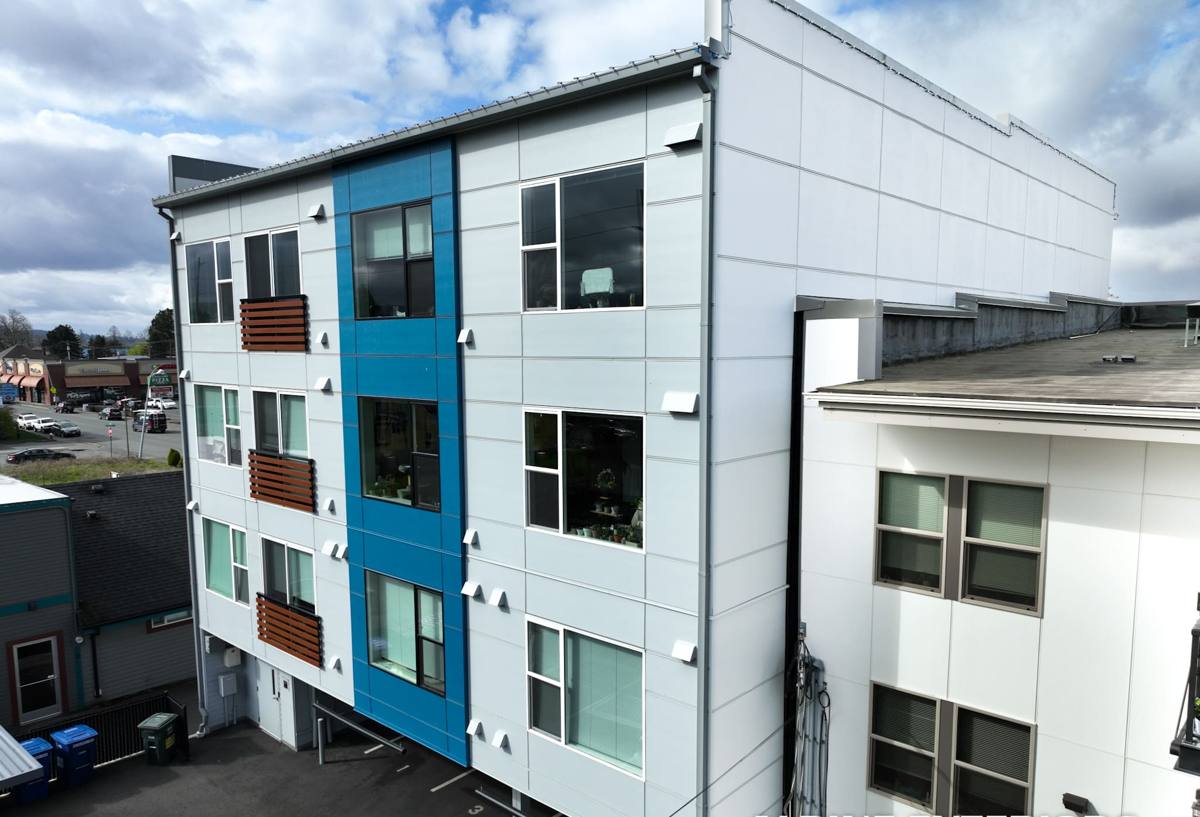
What Salt Air, Rain, and Moss Actually Do to a Window
Salt air
Airborne salt is corrosive to unprotected metal. Over time it attacks exposed fasteners, weep hole screens, balance hardware, and lower-grade aluminum components, leaving pitting and corrosion that make windows harder to open, close, and lock properly. It also dulls and chalks vinyl and painted finishes faster than it would inland.
Driving rain
Wind off open water doesn't just fall — it pushes rain sideways and up under sills and trim. A window that would be fine in a sheltered inland yard can leak here if the flashing detail, sill pan, or sealant joint isn't built for wind-driven water. Most leaks we find in coastal homes trace back to the installation, not the window unit itself.
Moss and prolonged dampness
A long moss season means wood trim, sills, and any organic material around a window stays damp longer each year. That accelerates rot in untreated wood, feeds mold growth in poorly ventilated cavities, and breaks down caulk and sealant faster than in a drier climate. It's a slow problem — you often don't see it until the trim is already soft.
Choosing the Right Window Frame Material
There's no single "best" frame material — the right choice depends on your budget, your home's exposure, and how much upkeep you want to take on. Here's how the common options hold up specifically against salt air, rain, and moss:
| Frame Material | Coastal Durability | Maintenance | Trade-Offs |
|---|---|---|---|
| Vinyl | Good — won't rot or corrode | Low | Can't be painted easily if you want a color change later; quality varies a lot between manufacturers |
| Fiberglass | Very good — dimensionally stable, resists warping in temperature swings | Low | Higher upfront cost than vinyl |
| Aluminum | Fair — needs marine-grade coatings or it corrodes and pits in salt air | Moderate | Thermally conductive, so condensation risk is higher without a thermal break |
| Wood-clad | Good on the exterior (clad side), but any exposed or damaged wood is vulnerable to rot | Higher | Best look for some homes, but the interior wood still needs care |
For most homes in this area, vinyl or fiberglass cover the majority of needs at a reasonable cost. Wood-clad windows still make sense on homes where the look matters and the owner is willing to keep up with finish maintenance — we just make sure clients understand that trade-off going in rather than after the fact.
Glass and Glazing Options for a Marine Climate
Glass matters as much as the frame. A few things worth understanding before you choose:
- Dual or triple pane with argon fill — improves insulation and reduces interior condensation, which matters when humidity stays high for long stretches
- Low-E coatings — help control heat loss and can reduce fading on interior furnishings from UV exposure
- Warm-edge spacers — the material separating the panes affects how well the seal holds up over years of temperature swings; cheaper aluminum spacers tend to fail sooner than warm-edge alternatives
- Impact-resistant or laminated glass — worth considering on the most wind- and rain-exposed elevations of a home, though it's not necessary on every window
We'll walk through which combination actually makes sense for your home's exposure rather than upselling the most expensive option across the board.
What a Correct Custom Window Installation Involves
The window unit itself is maybe half the job. The other half — the part that determines whether it leaks or lasts — is the installation detail. A correct install in this climate should include:
- Full removal of the old unit and inspection of the framing underneath for hidden rot or water damage before anything new goes in
- A properly sloped sill pan so water sheds outward instead of pooling against the frame
- Correctly lapped flashing tape integrated with the house wrap or building paper, not just caulk alone
- Closed-cell foam or backer rod and sealant at the perimeter gap — sized correctly, not overpacked or underfilled
- Exterior caulking rated for movement and UV exposure, applied to a clean, dry surface
- Interior air sealing so conditioned air isn't leaking out around the frame
- Hardware and fasteners rated for coastal/corrosive environments, not standard interior-grade hardware
Skip any one of these steps and you can end up with a brand-new window that still leaks or fogs within a few years — the unit gets blamed, but the install was the actual failure point.
Our Process for Point Roberts Jobs
Point Roberts is a bit of a unique place to work — it's only reachable by road through Canada, or by water or air, which means material deliveries and crew scheduling need to be planned ahead rather than handled on the fly. A crew that's used to working this area builds that into the timeline from the start instead of running into it mid-project.
Typical steps
- On-site measurement and assessment of existing framing, sill condition, and any signs of past water intrusion
- Recommendation on frame material, glass package, and any custom sizing needed for your openings
- A written estimate with a clear scope — what's included, what's not
- Materials ordered and staged before the crew arrives, so the crossing and delivery logistics don't stall the job once it starts
- Installation with attention to flashing, sealing, and hardware suited to the coastal exposure
- Final walkthrough and cleanup before we call it done
Cost Factors Worth Understanding
We won't quote a number without seeing the job, but here are the factors that actually move the price, so you know what you're paying for:
| Factor | Why It Matters |
|---|---|
| Frame material | Vinyl is typically the most affordable; fiberglass and wood-clad cost more upfront but bring different durability and maintenance profiles |
| Glass package | Triple-pane, upgraded coatings, and impact-resistant glass all add cost but can be worth it on exposed elevations |
| Opening condition | Rot repair or reframing found once the old window is out adds labor that can't always be predicted beforehand |
| Number and size of openings | Larger or custom-shaped windows cost more to manufacture and install than standard sizes |
| Access and logistics | Delivery scheduling and site access in Point Roberts can factor into project timing and cost |
Maintenance to Protect Your Investment
Even a well-installed custom window still needs some upkeep in this climate. A short annual routine goes a long way:
- Rinse frames and hardware periodically to clear salt residue, especially on homes with direct water exposure
- Clear moss and debris from sills, tracks, and weep holes so water can drain properly
- Inspect exterior caulking each year and re-caulk any cracked or separated joints before wet season
- Lubricate locks and moving hardware to prevent seizing from corrosion
- Check for soft spots in any exposed wood trim and address them before rot spreads
Why Local Experience in Point Roberts Matters
A window contractor who mostly works inland can install a technically fine window that still isn't right for this exposure — wrong hardware grade, a flashing detail that assumes less wind-driven rain than this area actually gets, or a timeline that doesn't account for how deliveries and scheduling work out here. Working this part of Whatcom County regularly means knowing which materials actually hold up on this peninsula, not just on paper, and planning the logistics of an exclave job correctly from day one instead of discovering the problem mid-install.
If your windows are showing their age — sticking, fogging, drafty, or just past their years — we're happy to take a look and give you a straight assessment of what's actually needed. Reach out for a free, no-pressure estimate using the form below.