 Semiahmoo Siding
 Windows Built for Drayton Harbor's Salt Air and Wet Winters
Homes around Drayton Harbor sit close enough to Semiahmoo Bay that salt air is part of daily life, not an occasional nuisance. Add Whatcom County's long wet season, driving rain off the water, and months of low sun angle that keep north- and west-facing walls damp, and you have a climate that is genuinely hard on window assemblies. Frames corrode faster near the shoreline. Seals that would last two decades inland can start failing in twelve or fifteen years here. Moss and algae find a foothold on any surface that stays shaded and damp, including window sills and trim.
Energy-efficient windows are not just about lower heating bills, though that matters. In this location, the bigger issue is often moisture management and material durability. A window that is efficient on paper but poorly suited to salt exposure or wrong for our rain patterns will underperform within a few years, regardless of its energy rating. Our approach to Drayton Harbor window work starts with that reality, not with a catalog page.
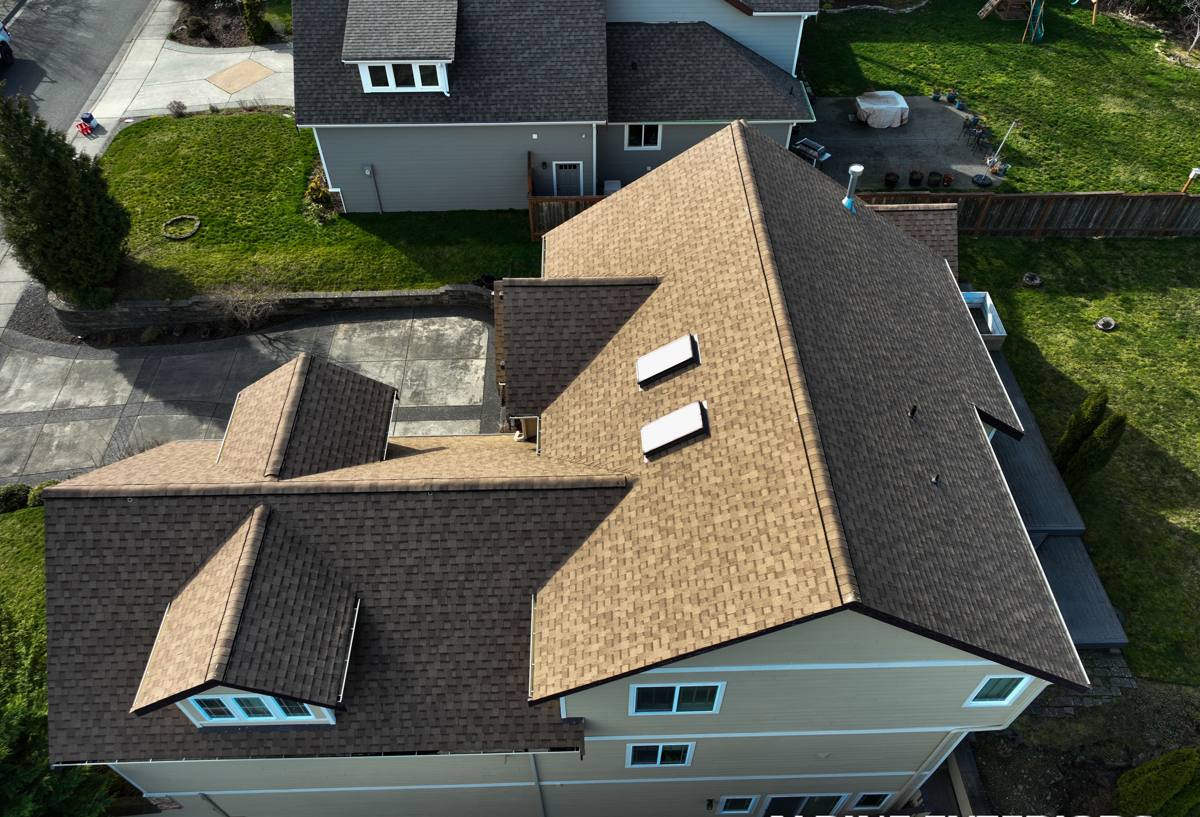
What Local Homes Actually Need
Most of the window problems we see in this area trace back to three things: condensation and seal failure from age and moisture cycling, frame degradation from salt-laden air, and heat loss through single-pane or early double-pane glass that was standard decades ago. A correct energy-efficient window replacement addresses all three at once, not just the glass.
Moisture and Seal Failure
Insulated glass units rely on a sealed air or gas gap between panes. Once that seal breaks, you get fogging between the panes, and no amount of interior cleaning fixes it. Salt air and constant humidity swings accelerate seal breakdown compared to drier inland climates. Newer window assemblies use improved spacer systems and sealants designed to hold up longer under exactly this kind of coastal moisture cycling.
Frame and Hardware Corrosion
Aluminum hardware, exposed fasteners, and lower-grade vinyl compounds all show their age faster near Semiahmoo Bay. We pay close attention to hardware material and frame reinforcement when we spec windows for this neighborhood, because a window that looks fine in a showroom in Bellingham may not hold up the same way three blocks from the water.
Heat Loss and Comfort
Whatcom County winters are mild by national standards but long and consistently damp, which means heating systems run for extended stretches rather than short bursts. Old single-pane or early dual-pane windows lose heat steadily through that whole season. Homeowners often notice the difference in comfort — fewer cold drafts near the glass, less condensation on the inside of the pane on cold mornings — before they notice it on a utility bill.
What Goes Into a Correct Installation
Window replacement is often sold as a product decision, but the installation is where most long-term performance is won or lost. This is especially true near the water, where a poorly flashed or sealed window opening becomes an entry point for wind-driven rain within a season or two.
- Full removal of the old window and inspection of the rough opening for hidden rot or moisture damage before anything new goes in
- Proper flashing integration with the existing siding or house wrap so water sheds outward, not into the wall cavity
- Correct shimming and leveling so the sash operates smoothly and the seal compresses evenly around the full frame
- Low-expansion foam and backer rod at the perimeter, not just caulk, to control both air leakage and moisture
- Exterior trim and caulking matched to the existing siding profile so the finished look is clean, not patched-in
- A final operation check on every window — smooth glide, full latch engagement, no binding — before we call the job done
Skipping any one of these steps can leave a window that looks correct from the street but leaks, sticks, or fails early. Given how much moisture this area sees, flashing and sealing details matter more here than in drier parts of the state.
Glass and Frame Options Worth Understanding
Homeowners don't need to become window engineers, but a few basic distinctions make the conversation with any contractor easier.
| Feature | What It Does | Why It Matters Here |
|---|---|---|
| Double vs. triple pane | More panes and gas fill add insulation value | Double pane is typically sufficient for our winter severity; triple pane adds cost with modest extra benefit in this climate |
| Low-E coating | Reflects radiant heat while letting visible light through | Helps in both directions — keeps winter heat in and reduces summer solar gain on south-facing walls |
| Argon or krypton gas fill | Denser gas between panes slows heat transfer versus plain air | Argon is standard and cost-effective; adds real value for the modest upcharge |
| Frame material | Vinyl, fiberglass, or clad-wood each handle moisture and expansion differently | Frame durability matters as much as glass performance this close to salt air |
| Spacer system | Separates the panes and holds the seal | Warm-edge spacers resist condensation and seal failure better in humid coastal conditions |
Our Process, Start to Finish
We keep the process straightforward because most homeowners just want to know what happens and when.
1. On-Site Assessment
We walk the exterior and interior of each window being considered, checking for existing rot, seal failure, drafts, and how the current flashing was done. This tells us whether it's a straightforward swap or whether there's underlying moisture damage to address first.
2. Honest Recommendation
We explain what we're seeing and what options make sense for the home's exposure — a window on the bay-facing side of a house often warrants a different spec than one tucked under an eave on the sheltered side.
3. Measurement and Ordering
Windows are measured precisely for the existing openings. We don't guess or use rough estimates here — an ill-fitting window undermines every other step in the process.
4. Installation
Our crew removes, flashes, sets, and seals each window following the checklist above, working room by room so the home isn't fully opened up to the weather at once.
5. Final Walkthrough
We check operation, sealing, and trim work with the homeowner present before considering the job finished.
Why a Crew That Already Works Drayton Harbor Matters
A contractor who mainly works drier, inland parts of the county may not think twice about hardware grade or spacer material — those choices simply matter less somewhere that doesn't get salt spray and near-constant winter rain. Working this specific stretch of coastline regularly means we've seen which details hold up over years, not just at the walkthrough. We know which frame materials handle the humidity well, where moss tends to establish itself on sills and trim, and how wind-driven rain behaves against different siding types common in this neighborhood.
That local pattern recognition is hard to replace with a product spec sheet. It's also why we're straightforward about trade-offs — if a particular window style or lower-cost frame option is likely to underperform given a specific home's sun and wind exposure, we say so before the order goes in, not after.
Maintenance That Extends the Life of New Windows
Even a well-installed, high-quality window benefits from basic upkeep in this climate. A short seasonal routine goes a long way toward protecting the investment.
- Rinse sills and frames periodically to clear salt residue, especially on bay-facing elevations
- Keep weep holes clear of debris and moss so water drains out instead of pooling
- Check exterior caulking annually for cracking or separation, particularly after a hard winter
- Wipe down interior condensation on cold mornings to prevent moisture from sitting on the sill or frame
- Operate each window through its full range a few times a year to keep hardware and seals from sticking
Common Signs It's Time to Replace
Not every window needs replacing just because it's old. These are the signals worth acting on:
- Persistent fogging or haze between panes that doesn't clear
- Visible gaps, soft spots, or discoloration in the frame or sill
- Noticeable drafts near the glass even with the window fully latched
- Difficulty opening, closing, or locking that hardware adjustment hasn't fixed
- Rising heating costs without a clear cause elsewhere in the home
Any one of these on its own might just need a repair. Several together, especially on the same elevation, usually points to full window replacement being the more sensible long-term move.
Get a Straightforward Estimate
If you're weighing window replacement for a home near Drayton Harbor, we're glad to take a look and give you a clear, no-pressure assessment of what your windows actually need. Use the form below to request a free estimate, and we'll walk you through the options that make sense for your home's exposure and budget.