 Semiahmoo Siding
 New Roof Installation for Peace Arch Homes
Peace Arch sits close enough to the water and the border that its roofs take a different kind of beating than homes even a few miles inland. Salt-laden air drifting off Semiahmoo Bay, long stretches of driving rain off the Strait, and a moss season that can run eight months out of the year all shorten the working life of a roof that wasn't built or installed with those specific conditions in mind. A new roof installation here isn't just about picking a shingle color and nailing it down. It's about material selection, flashing detail, and ventilation choices that account for what this exact stretch of Whatcom County throws at a house.
We install new roofs for homeowners in the Peace Arch area on a regular basis, which means we're not guessing at what holds up here. We know which details get skipped on a rush job and show up as a leak eighteen months later, and we build every installation around avoiding that outcome.
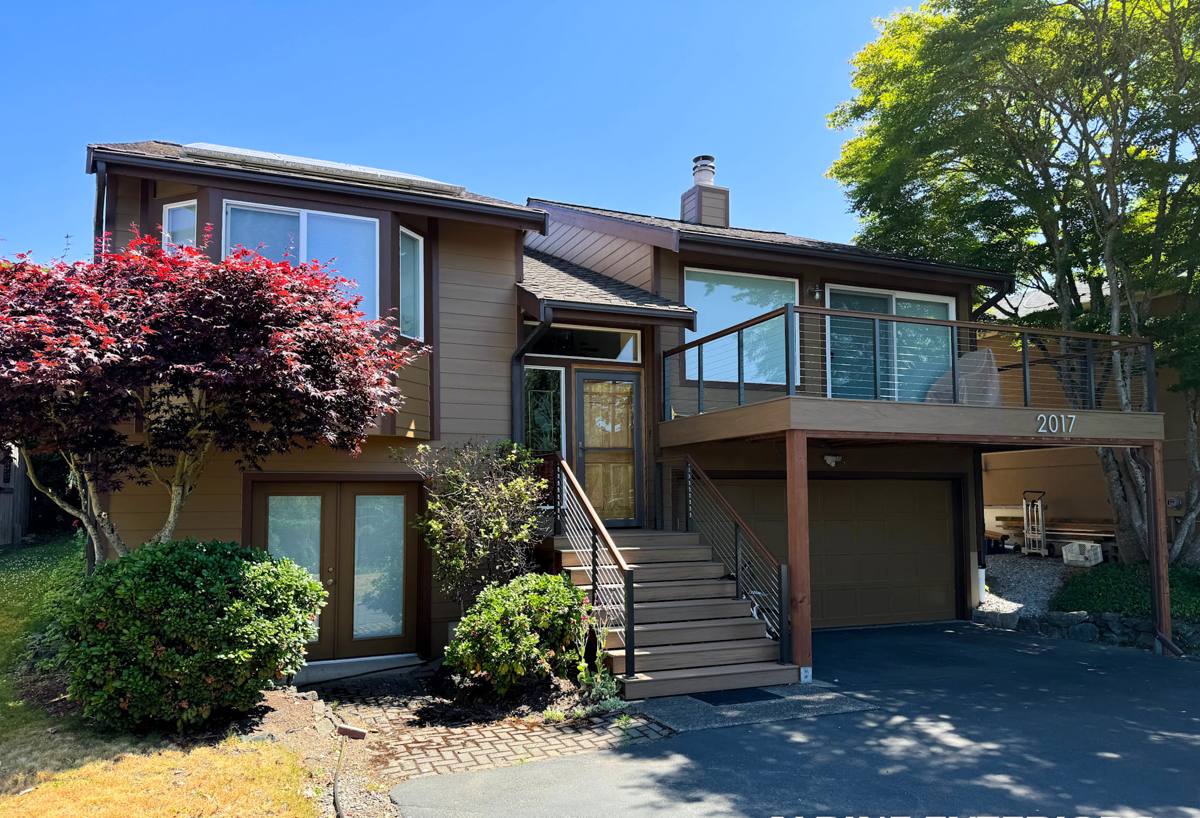
What Whatcom County's Coastal Climate Does to a Roof
Three factors define roofing conditions near Semiahmoo, and each one demands a different response during installation.
Salt Air
Homes near Semiahmoo Bay sit close enough to salt water that airborne salt settles on roofing materials and accelerates corrosion of any exposed metal — nails, flashing, vents, and fasteners. Standard galvanized fasteners can start showing rust streaks well before the shingles above them are due for replacement. Material and hardware choices need to account for this from day one, not as an afterthought.
Driving Rain
Storms coming off the Strait of Georgia and Georgia Strait don't just fall straight down — wind-driven rain gets pushed sideways under shingle edges, around vents, and into any gap in flashing that a calmer climate could tolerate. Underlayment coverage and flashing laps that would be adequate in a drier region aren't sufficient here.
Moss Season
Whatcom County's mild, wet winters and shaded, tree-heavy lots around Semiahmoo create ideal moss growing conditions for much of the year. Moss holds moisture against the roof surface, works its way under shingle tabs, and can lift edges enough for wind and rain to get underneath. A roof designed with moss resistance in mind — proper slope, some shade management, and zinc or copper strips where appropriate — lasts noticeably longer than one that ignores the issue.
Signs a Peace Arch Home Needs a New Roof, Not Another Repair
Repair makes sense when a problem is localized — a few damaged shingles after a windstorm, a single failed flashing point. A full new roof installation becomes the right call when the damage is systemic rather than isolated. Common indicators we see on homes in this area include:
- Granule loss heavy enough that you can see bare asphalt across multiple areas of the roof, not just one section
- Moss coverage that has spread across most of the roof rather than a shaded corner or two
- Soft or spongy spots in the decking when walked, which usually means moisture has already reached the wood
- Shingles cupping, curling, or losing their seal in multiple locations at once
- Repeated leaks in different spots each winter, rather than the same spot every time
- A roof at or past the manufacturer's rated lifespan combined with any of the above
If a roof is showing two or more of these at once, patch repairs tend to become a cycle of chasing new leaks every wet season rather than solving the underlying problem.
What a Correct New Roof Installation Actually Involves
Tear-Off and Deck Inspection
We remove the existing roofing down to the deck rather than installing over old layers. That's the only way to actually see the condition of the plywood or plank decking underneath — soft spots, old water staining, or delaminated sheathing all need to be replaced before anything new goes on. Roofing over a compromised deck just hides the problem under a new surface.
Underlayment and Water Barrier
Given how much wind-driven rain this area sees, we pay close attention to underlayment coverage, particularly at eaves, valleys, and low-slope transitions where water is most likely to be pushed backward under the surface layer. Ice-and-water shield membrane at vulnerable points adds a layer of protection beyond what basic felt or synthetic underlayment provides on its own.
Flashing Details
Flashing around chimneys, skylights, vent pipes, and roof-to-wall transitions is where most roof leaks actually originate — not in the field of the shingles themselves. We use corrosion-resistant metal appropriate for a salt-air environment and make sure laps and step-flashing are sequenced correctly rather than caulked over as a shortcut.
Ventilation
Proper intake and exhaust ventilation keeps the attic space at a consistent temperature and moisture level, which matters twice over in this climate: it prevents condensation buildup during cold, damp winters and helps shingles last through the moss season by keeping the deck itself drier from underneath.
Material Installation
Whatever material is chosen, manufacturer nailing patterns, exposure, and fastener spacing get followed precisely — this is where corners get cut on rushed jobs, and it's the difference between a roof that holds through its first real windstorm and one that doesn't.
Material Options for Peace Arch Homes
Material choice should weigh salt-air durability, moss resistance, and long-term maintenance against upfront cost. Here's how the common options compare for this specific setting:
| Material | Salt Air / Moisture Behavior | Moss Resistance | Typical Lifespan |
|---|---|---|---|
| Architectural asphalt shingle | Good with corrosion-resistant fasteners and flashing | Moderate; benefits from zinc/copper strips | 25-30 years |
| Standing seam metal | Excellent when properly coated and fastened | High; sheds moss growth better than textured surfaces | 40-60 years |
| Synthetic composite (cedar-look) | Good; doesn't absorb moisture like wood | Moderate to high | 30-50 years |
| Natural cedar shake | Requires more upkeep in a wet, salty climate | Lower without regular maintenance | 20-25 years with upkeep |
We don't push one material as universally "best" — a lot depends on the home's roof pitch, budget, and how much long-term maintenance the owner wants to take on. What we do steer away from is any product or installation shortcut that trades short-term cost savings for moisture problems down the road in an environment this wet.
Our Installation Process, Start to Finish
- On-site assessment — we inspect the current roof, decking condition, ventilation setup, and any problem areas specific to the home's exposure and tree cover.
- Material and scope discussion — we walk through material options and cost factors in plain terms, based on what actually fits the home rather than a one-size-sales pitch.
- Written estimate — covering material, labor, disposal, and any deck repair contingencies identified during the assessment.
- Tear-off and deck inspection — old roofing removed, decking checked and repaired as needed.
- Underlayment, flashing, and ventilation installation — the parts of the job that determine whether the roof actually performs in this climate.
- Final material installation — shingles, metal panels, or composite product installed to manufacturer spec.
- Cleanup and walkthrough — site cleared of debris and old material, final inspection with the homeowner before we consider the job done.
Why a Crew That Already Works Peace Arch Matters
A roofing crew that regularly works this specific stretch near Semiahmoo has already worked out which flashing details, fastener grades, and ventilation approaches actually hold up here — not through guesswork, but through repeatedly seeing what fails and what doesn't in this exact combination of salt air, rain, and shade. That local pattern recognition shows up in small decisions: which side of a roof needs extra underlayment because of prevailing wind direction, where moss tends to establish first on a given roof style, and how Whatcom County permitting and inspection expectations apply to a reroof.
It also matters for accountability. A crew based in and around this area has a reputation to maintain with neighbors, not just a single job to finish and move on from.
Cost Factors for New Roof Installation
Total cost for a new roof installation varies by home size, roof pitch, material, and the condition of the decking underneath. Rather than quote a number that won't apply to your actual roof, here are the factors that most affect the final price:
- Total roof square footage and number of roof planes
- Roof pitch and accessibility — steep or complex roofs take longer to work safely
- Material selected, from standard asphalt shingle up through metal or composite products
- Extent of deck repair needed once old roofing is removed
- Number and complexity of flashing points — chimneys, skylights, dormers, valleys
- Ventilation upgrades needed to bring an older attic up to current standards
- Disposal and hauling of old roofing material
An accurate number only comes from an on-site look at the actual roof — anything else is a guess.
Maintaining a New Roof Through Moss Season
A correctly installed roof still benefits from basic upkeep in this climate. Keeping gutters clear so water doesn't back up under eave edges, trimming back overhanging branches that shade sections of the roof and keep them damp, and having moss growth addressed early before it spreads across shingle tabs all extend the life of the installation. None of this replaces a correct install — it just protects the investment once the roof is on.
If your Peace Arch home needs a new roof, we're glad to come take a look and give you a straightforward, no-pressure estimate — just fill out the form below.