 Semiahmoo Siding
 Roof Repair Built for the Peace Arch Climate
Peace Arch sits close enough to Semiahmoo Bay and the Strait that salt-laden air is part of daily weather, not an occasional event. Add Whatcom County's long, wet fall-through-spring stretch and the moss season that comes with it, and roofs here age differently than roofs fifty miles inland. A repair that would hold up fine in a dry climate can fail in a year or two out here if it doesn't account for salt exposure, constant moisture, and the freeze-thaw cycles that hit this corner of Washington in cold snaps off the water.
This page is about one thing: roof repair for Peace Arch homes specifically. Not a general roofing overview, not a sales pitch for full replacement when a repair will do the job. We'll walk through what actually damages roofs in this area, what a correct repair looks like, and how to tell the difference between a patch that buys you a few good years and a roof that's telling you it's done.
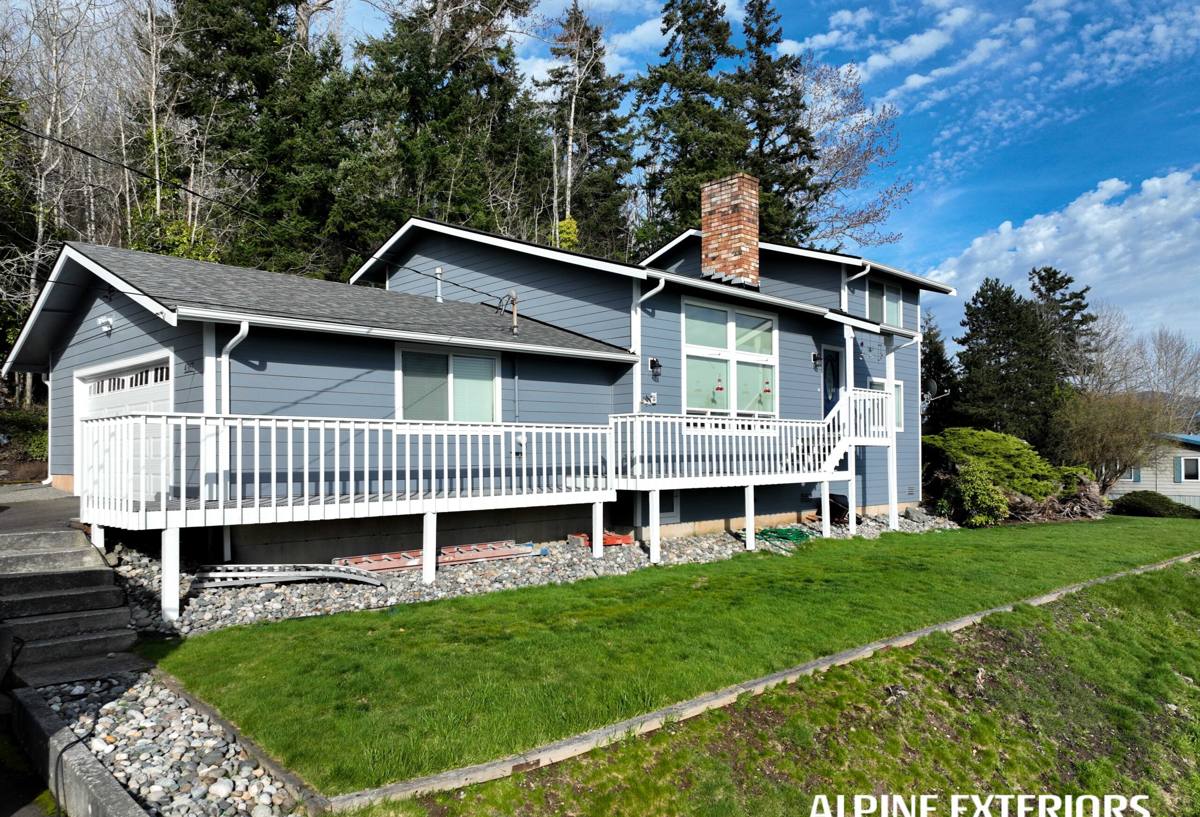
What Salt Air, Rain, and Moss Actually Do to a Roof
Salt Air
Airborne salt accelerates corrosion on every metal component of a roof — nails, flashing, valley metal, vent boots, gutter hardware. On a lot of roofs, the shingles or panels themselves are the last thing to fail; the fasteners and flashing corrode first, and that's where leaks start. A repair that only addresses the visible shingle damage but ignores corroded flashing or fasteners underneath is a repair that comes back.
Driving Rain
Whatcom County storms coming off the water tend to bring rain sideways, not straight down. That matters for repair work because wind-driven rain finds its way under shingles, around vent penetrations, and through nail holes that would never leak in a calm, straight-down rain. Roofs here need underlayment, flashing laps, and fastening details that assume the rain won't always fall the "easy" way.
Moss and Organic Growth
Peace Arch's shaded lots, tree cover, and long damp season give moss a long runway to establish itself. Moss isn't just cosmetic — it holds moisture against the roofing material, works into shingle laps and granule surfaces, and over time lifts shingle edges enough for wind and rain to get underneath. Roofs with heavy moss buildup often have hidden moisture damage well beyond what's visible from the ground.
Signs a Peace Arch Roof Needs Repair — Not Full Replacement
Most roofs don't fail all at once. They show localized signs first, and catching those early is usually the difference between a repair bill and a replacement bill.
- Water staining on ceilings or in the attic near a specific spot, especially near chimneys, skylights, or roof valleys
- Missing, cracked, or curling shingles concentrated in one area rather than spread across the whole roof
- Rusted or lifted flashing around vents, chimneys, or where the roof meets a wall
- Thick moss mats, especially on north-facing slopes that stay shaded and damp longer
- Granules collecting in gutters, which signals shingle wear even before leaks appear
- Soft or spongy decking felt underfoot in one section, rather than the whole roof
- Daylight visible through the roof deck from inside the attic at a specific point
If damage is localized and the decking underneath is still sound, a targeted repair is almost always the right call. If we find widespread decking rot, multiple failed sections, or a roof that's simply past its expected service life, we'll say so plainly and explain why — not push a repair that won't hold.
What a Correct Roof Repair Actually Involves
A roof repair that's done right isn't just laying a patch over a leak. It's a sequence of checks and steps that address the cause, not just the symptom.
- Find the actual source. Water often travels along the underlayment or decking before it shows up as a stain, so the visible drip point and the actual entry point can be several feet apart. We trace it back before cutting into anything.
- Remove damaged material fully. Cutting a hole just big enough to cover the leak leaves surrounding damaged shingles, felt, or decking in place — which fails again soon after. We pull back enough material to reach sound substrate on all sides.
- Inspect the decking. Any soft, delaminated, or rotted plywood or sheathing gets replaced. Patching over compromised decking is one of the most common shortcuts we see undone on older repairs, and it's the fastest way for a "fixed" roof to fail again.
- Replace underlayment in the repair zone. Given how much wind-driven rain this area gets, underlayment condition matters as much as the shingles on top of it.
- Correct or replace flashing. Given salt-air corrosion, we check flashing condition on every repair call, not just where the visible leak is — corroded flashing nearby is often the next leak waiting to happen.
- Match materials as closely as possible. New shingles won't be an exact color match to sun-faded existing ones, but we match style, profile, and quality so the repair blends reasonably and performs identically.
- Re-seal and re-fasten to code. Correct nail placement and sealant application matter more here than in drier climates — under-fastened or improperly sealed repairs are the ones that come back after the next big blow off the water.
Common Peace Arch Roof Repairs
| Issue | Typical Cause Here | What the Fix Involves |
|---|---|---|
| Valley leaks | Wind-driven rain overwhelming worn valley flashing or debris damming water flow | Clear debris, inspect and replace valley metal, re-lace shingle courses |
| Vent boot leaks | Rubber boot collars cracking from age and salt-air exposure | Replace boot, check surrounding shingles and decking for water travel |
| Chimney flashing leaks | Corroded step or counter-flashing, or sealant that's dried out | Rebuild flashing system, re-seal masonry joint, verify cricket if needed |
| Moss-related lifting | Long-term moss growth prying shingle edges up over time | Careful moss removal, assess shingle condition, replace where damaged |
| Fastener corrosion | Salt air degrading nail heads over years, causing shingle slip | Re-fasten with corrosion-resistant hardware, replace displaced shingles |
| Gutter-line rot | Standing moisture at roof edge from clogged or undersized gutters | Repair fascia/decking edge, correct drainage, replace drip edge |
Repair vs. Replacement: How We Help You Decide
Nobody wants to pay for a full roof replacement when a repair would do, and nobody wants to keep patching a roof that's genuinely at the end of its life. We walk through it with you honestly, using a few practical factors.
| Factor | Leans Toward Repair | Leans Toward Replacement |
|---|---|---|
| Age of roof | Under roughly 15-18 years for asphalt shingle | Approaching or past manufacturer's expected service life |
| Extent of damage | Localized to one section or penetration | Spread across multiple slopes or the whole roof |
| Decking condition | Sound, dry substrate under the damaged area | Widespread soft spots, rot, or repeated past patch failures |
| Moss/algae extent | Surface growth, removable without shingle damage | Moss has already lifted or degraded shingles broadly |
| Repair history | First or second repair on this roof | Recurring leaks in different spots each season |
When a roof is in the gray zone, we'll tell you what we'd do in your position, including the trade-offs — a repair now with the understanding that replacement is a few years out, versus replacing now to avoid interior damage risk through another wet season.
Our Repair Process, Start to Finish
Every roof repair call in Peace Arch follows the same basic sequence, adjusted for what we actually find on your roof.
- Inspection first. We look at the roof from the ground, from the roof surface itself, and from the attic side where accessible, so we're diagnosing the real cause before quoting anything.
- Written scope and estimate. You get a clear explanation of what's damaged, why, and what the repair covers — no vague line items.
- Weather-aware scheduling. Given how much of the year brings rain here, we schedule repair work around dry windows when possible and use proper temporary protection if a job has to start before a storm clears.
- The repair itself. Removal of damaged material, decking check, underlayment and flashing correction, and matched replacement material as outlined above.
- Cleanup and debris removal. Old shingles, moss debris, and nails are cleared from the roof, gutters, and ground — magnet-swept for stray fasteners.
- Walkthrough. We show you what was found and fixed, including anything worth watching going forward.
Maintenance That Extends the Life of a Repair
A correct repair only stays correct if the roof around it is maintained. In a moss-prone, salt-air climate like Semiahmoo's, a few habits go a long way toward protecting both the new work and the rest of the roof.
- Clear moss and debris from valleys and shaded slopes at least once a year, more often under heavy tree cover
- Keep gutters and downspouts clear so water isn't sitting at the roof edge during the wet season
- Trim back overhanging branches to reduce shade, debris, and abrasion on the roof surface
- Have flashing around chimneys, vents, and skylights checked periodically, since these are the first points salt-air corrosion tends to hit
- Address small leaks quickly — a small repair now is almost always cheaper than the decking and interior repair that follows a delay
Why Local Repair Experience Matters in Peace Arch
A crew that works this specific stretch of Whatcom County knows which roof details tend to fail first here — vent boots and flashing from salt exposure, north-facing valleys from moss buildup, and fastening details that hold up against wind-driven rain off the water. That's different knowledge than a crew that mostly works dry, inland roofs, and it shows up in which fixes actually last.
It also matters for practical reasons: knowing local permitting requirements, being available for follow-up if a repair needs adjustment after the next storm, and being a known, reachable contractor rather than a one-time crew that's hard to track down later. For a repair — something that should be a contained, one-time fix — that local accountability is worth as much as the materials.
Get a Straight Answer on Your Roof
If you're dealing with a leak, moss damage, or flashing that's seen better years, we'll come take an honest look and tell you what it actually needs — repair, and what kind, or a clear reason if replacement makes more sense. There's no pressure and no charge for the estimate; fill out the form below and we'll get back to you to schedule a time to take a look at your Peace Arch roof.