 Semiahmoo Siding
 Board & Batten Siding in the Peace Arch Area
Board and batten is one of the most recognizable siding profiles in the Pacific Northwest — vertical boards with narrow battens covering the seams, giving a home a clean, linear look that reads as both classic farmhouse and modern coastal. It shows up often in the homes and cottages around Semiahmoo and the Peace Arch area, where the style fits the mix of older coastal properties and newer builds along the border. But board and batten is also one of the least forgiving siding profiles when it's installed wrong. The vertical orientation, the number of seams, and the way water moves down a vertical board make this a style where installation quality matters more than almost any other siding pattern.
This page is specifically about board and batten siding for homes in the Peace Arch area near Semiahmoo — what the local climate does to this particular profile, what a correct installation actually involves, and why the details matter more here than they would in a drier inland climate.
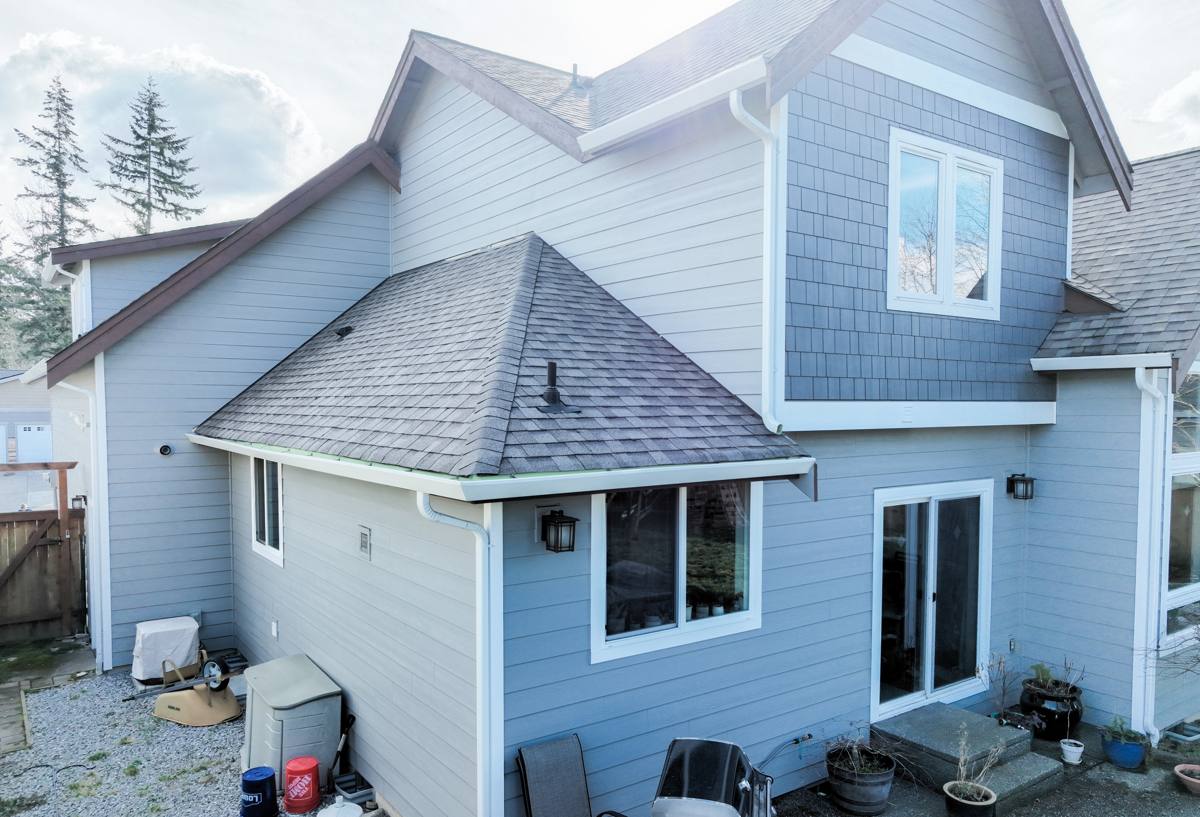
What Semiahmoo's Climate Does to Vertical Siding
Whatcom County's coastal position near the border puts homes in the Peace Arch and Semiahmoo area under a specific combination of stresses: salt-laden air off the water, driving rain that comes in sideways during winter storms, and a long moss season where shaded, damp surfaces stay wet for weeks at a time. Each of these interacts with board and batten siding differently than it would with a flat lap profile.
- Salt air accelerates corrosion on fasteners, flashing, and any exposed metal trim — and board and batten has more linear feet of fastener exposure per square foot of wall than lap siding does.
- Driving rain hits vertical board faces directly and tracks downward along the battens, concentrating water at the base of each board and at every horizontal joint or window head.
- Extended moss and moisture season means north-facing and shaded wall sections stay damp longer, which matters most where the siding material itself can absorb or hold moisture.
None of this makes board and batten a bad choice for this area. It's a proven regional style. But it does mean the installation has to account for these conditions specifically, not just follow a generic siding spec sheet.
Why Board & Batten Needs a Different Installation Approach
Board and batten isn't just lap siding turned sideways. The physics of how water moves on the wall changes, and so does the installation method that keeps water out.
Drainage Plane and Rain Screen
Behind the boards, there needs to be a functioning water-resistive barrier and a drainage gap that lets any water that gets past the surface run down and out instead of sitting against the sheathing. On a coastal wall exposed to driving rain, skipping or shortcutting this layer is the single most common cause of hidden rot behind board and batten siding.
Fastening at the Battens, Not Guessing at the Field
Correct board and batten fastening follows the manufacturer's engineered pattern — fasteners land where the battens cover them, keeping penetrations out of open water paths. Fastening through open board faces, or using the wrong fastener spacing, creates entry points that salt-air corrosion and driving rain will find over time.
Flashing at Every Transition
Window heads, deck ledgers, roof-to-wall intersections, and the base of the wall all need proper flashing detail. On a vertical profile, water that isn't diverted at these points doesn't just run off the surface — it can track straight down behind a board.
Why We Install James Hardie for Board & Batten Applications
We install James Hardie fiber cement exclusively, and board and batten is one of the profiles where that choice matters most. Hardie's vertical board and batten products are engineered specifically for this pattern — non-combustible, dimensionally stable, and finished with a factory-applied ColorPlus finish that's baked on rather than field-painted. That matters in a climate with this much moisture exposure: field-applied paint on a vertical board is one of the first things to fail under repeated wetting and salt exposure, while a factory finish is formulated and cured to hold up to UV and moisture cycling.
Fiber cement also doesn't absorb water the way engineered wood products can, and it doesn't require the same ongoing sealing and touch-up that raw wood or primed products need to stay watertight. On a coastal, moss-prone wall, that difference shows up in years of service life, not just in appearance the first season.
What a Correct Installation Involves, Start to Finish
- Tear-off and inspection. Remove existing siding and inspect the sheathing for hidden rot or moisture damage before anything new goes up — this is where problems from a prior bad install usually surface.
- Repair and prep. Replace any damaged sheathing, address the framing underneath, and confirm the wall is ready for a new weather-resistive barrier.
- Water-resistive barrier and drainage gap. Install the WRB and a rain-screen gap so any moisture that reaches the back of the siding has somewhere to go.
- Flashing at all penetrations. Windows, doors, roof lines, and any wall-mounted fixtures get flashed before the siding covers them.
- Board installation. Vertical boards are set with correct spacing and fastening per the manufacturer's engineered installation instructions.
- Batten installation. Battens go over the board seams, fastened into the framing, covering and protecting the fastener line beneath.
- Trim, caulking, and finish details. Corner boards, trim, and sealant are finished to manufacturer spec — this is also where a rushed job tends to cut corners.
- Final inspection and walkthrough. We check the completed work against the install spec before calling the job done.
Our Process for Peace Arch Projects
Every board and batten project in this area starts with an on-site look at the specific wall exposures — which sides face the prevailing weather, where moss and moisture already show, and what condition the existing siding and sheathing are in. From there we walk through material, budget, and timeline before any work starts.
| Factor | Why It Affects Your Project |
|---|---|
| Wall exposure to wind-driven rain | Exposed sides need extra attention to flashing and drainage detail |
| Existing sheathing condition | Hidden rot from a prior install adds repair scope before new siding goes up |
| Board width and reveal | Wider boards and battens change fastener counts and material quantities |
| Trim and window count | More transitions mean more flashing detail and labor time |
| Access and site conditions | Slopes, landscaping, and setback affect staging and scaffolding needs |
Maintenance Expectations After Installation
Fiber cement board and batten is low-maintenance compared to wood alternatives, but "low-maintenance" doesn't mean "no maintenance," especially in a moss-prone coastal climate. A few simple habits go a long way toward protecting the investment:
- Rinse the exterior periodically to clear salt residue and organic buildup before moss gets a foothold, especially on shaded, north-facing walls.
- Keep gutters and downspouts clear so water isn't overflowing directly onto siding runs below.
- Trim back vegetation that keeps wall sections shaded and damp longer than the rest of the house.
- Inspect caulking at trim and window transitions every year or two, and have any cracked or missing sealant addressed promptly.
- Watch for soft spots, staining, or persistent moss growth at the base of walls, which can signal a drainage or flashing issue worth checking.
Signs Your Current Siding Needs Attention
Whether you have board and batten now or are considering it for a re-side, these are the warning signs worth acting on before they become bigger repairs:
- Soft or spongy boards, especially near the base of walls or below windows
- Peeling or bubbling paint, which often points to moisture trapped behind the surface
- Persistent moss or algae that returns quickly after cleaning
- Visible gaps or cracking at seams, corners, or trim
- Rust streaking from fasteners, a common sign of corrosion in salt-air environments
- Warping or cupping boards, which usually means moisture has already gotten into the material
Why It Matters to Hire a Crew That Already Works This Area
Board and batten installation isn't complicated in concept, but it's unforgiving of shortcuts, and the consequences of a rushed drainage plane or skipped flashing detail don't show up until months or years later — usually as hidden rot that costs far more to fix than it would have to do right the first time. A crew that regularly works the Peace Arch and Semiahmoo area already understands the specific exposure patterns of coastal Whatcom County homes: which wall orientations take the worst of the driving rain, how aggressively moss establishes itself in shaded corners, and how quickly salt air can compromise the wrong fastener or flashing choice. That local pattern recognition, combined with disciplined adherence to manufacturer installation specs, is what separates board and batten siding that looks good for a season from siding that holds up for decades.
If you're weighing board and batten for a home in the Peace Arch area, we're happy to take a look and walk you through what your specific walls need. Reach out for a free, no-pressure estimate — there's a form below to get started.