 Semiahmoo Siding
 Why Semiahmoo Resort Roofs Wear on a Different Timeline
Semiahmoo Resort sits right at the edge of Semiahmoo Bay, which means every roof out here is doing more work than a roof ten miles inland. Salt-laden air off the water settles on shingles, flashing, and fasteners year-round. Add Whatcom County's long wet season, driving rain that comes in sideways off the Strait, and shaded, moisture-holding lots that never fully dry out between storms, and you get a roofing environment that's genuinely tougher than the regional average. Roofs here don't fail because the materials were bad. They fail because they were installed as if the site were a typical suburban lot instead of a marine-exposed, moss-prone one.
A correct new roof installation for a Semiahmoo Resort home has to account for all three stressors at once: corrosion resistance for the salt air, water-shedding detail work for the wind-driven rain, and a ventilation and material strategy that slows moss and algae growth instead of feeding it. That's the focus of this page — not roofing in general, but what it actually takes to put a roof on a home in this specific setting and have it perform for its full warranty life.
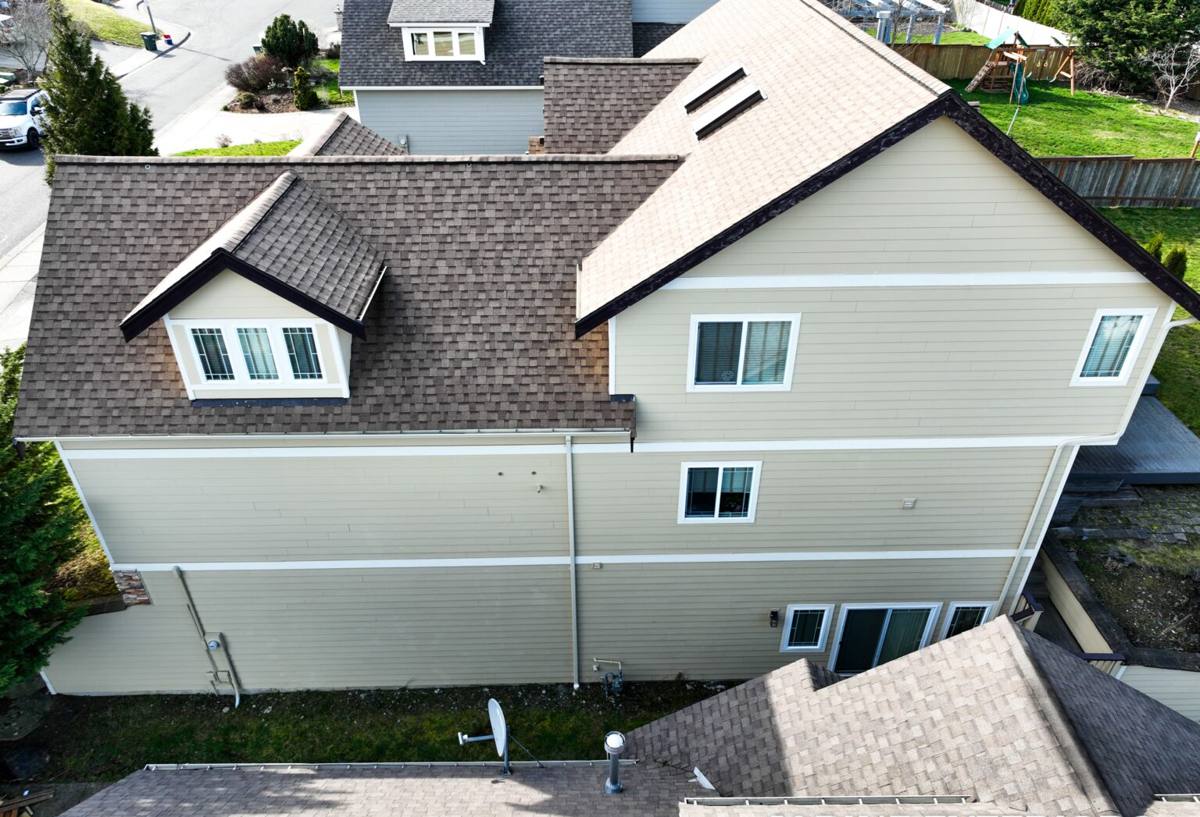
What Salt Air, Rain, and Moss Actually Do to a Roof
Salt Air and Corrosion
Airborne salt accelerates corrosion on anything metal — nail heads, flashing, drip edge, and the fasteners holding shingles or panels down. Standard galvanized fasteners can start showing rust streaks and weakening well before an inland roof would. This isn't cosmetic; a corroded fastener loses its grip strength, and a compromised flashing seam is one of the most common places a roof starts leaking. Anywhere near Semiahmoo Bay, fastener and flashing material selection matters more than it does on a typical build.
Driving Rain
Rain that falls straight down is relatively easy for a roof to handle — gravity does most of the work. Wind-driven rain off the Strait of Georgia is a different problem. It can push water sideways and even slightly upward under shingle tabs, around vents, and behind flashing that would be perfectly adequate in a calmer setting. This is why underlayment coverage, flashing overlap, and sealed penetrations matter so much more here than the shingle brand on top of them.
Moss and Shade
Many Semiahmoo Resort lots have mature tree cover, which is part of the appeal of living here but also means roofs stay damp longer after every rain. Moss doesn't just look bad — its root structure lifts shingle edges, holds moisture against the roof deck, and accelerates granule loss. Left unmanaged over a few seasons, moss growth can shorten a roof's usable life by years.
Signs a Semiahmoo Resort Home Needs a New Roof, Not a Repair
- Granules collecting in gutters or at downspout outlets, especially after wind or heavy rain
- Moss established at the ridge or in shaded valleys that keeps returning after cleaning
- Curling, cupping, or cracked shingles, particularly on south- and west-facing slopes
- Rusted or lifting flashing around chimneys, skylights, and vent boots
- Daylight visible through the roof deck from the attic, or damp insulation after storms
- A roof approaching or past 20-25 years old, regardless of how it looks from the ground
- Multiple past repairs to the same area — a sign the underlying problem was never fixed
Choosing the Right Roofing System for This Site
There's no single "best" roofing material for every home — the right choice depends on the home's exposure, roof pitch, tree cover, and budget. For a Semiahmoo Resort property, we weigh options against salt exposure, moisture resistance, and long-term moss resistance specifically.
| Material | Salt Air Performance | Moss Resistance | Typical Lifespan |
|---|---|---|---|
| Architectural asphalt shingle | Good, with corrosion-resistant fasteners | Moderate; benefits from algae-resistant granules | 25-30 years |
| Standing seam metal | Excellent with marine-grade coatings and fasteners | Strong; sheds moisture quickly, little for moss to grip | 40-50+ years |
| Synthetic/composite shake | Good; doesn't corrode, check fastener spec | Good; low water absorption | 30-40 years |
| Wood shake | Requires diligent maintenance near salt air | Poor without regular treatment; holds moisture | 20-30 years with upkeep |
We don't install every product on this list on every home. Wood shake, for example, can look beautiful, but on a shaded, salt-exposed lot it demands a maintenance schedule most owners don't want to keep up with — and when that upkeep lapses, moisture gets trapped against the deck. We'll tell you honestly when a material isn't a good match for your specific roof, even if it costs us the upsell.
What a Correct New Roof Installation Actually Involves
Full Tear-Off, Not Overlay
We remove the existing roofing down to the deck rather than layering new shingles over old. Overlaying traps moisture, hides deck damage, and voids most manufacturer warranties. It's also the only way to actually inspect the deck itself, which matters a great deal in a wet climate like this one.
Deck Inspection and Repair
Every square foot of exposed decking gets checked for soft spots, delamination, or rot — common in older Semiahmoo Resort homes where a slow leak may have gone unnoticed for years under moss cover. Damaged sections are replaced before anything new goes down; installing a new roof over a compromised deck just resets the clock on the same failure.
Ice-and-Water and Underlayment Strategy
Given the wind-driven rain this area sees, we extend self-adhering ice-and-water membrane further into vulnerable zones — eaves, valleys, and around every penetration — than a bare-minimum installation would. Synthetic underlayment across the rest of the deck adds a secondary water barrier beneath the roofing material itself.
Flashing and Fastener Selection
Around chimneys, skylights, sidewalls, and vent penetrations, we use corrosion-resistant flashing and fasteners rated for coastal exposure, not standard-grade hardware. This single decision is one of the biggest predictors of whether a roof stays leak-free near Semiahmoo Bay for its full expected life.
Ventilation
Balanced intake and exhaust ventilation keeps the attic space closer to outdoor temperature and humidity, which reduces condensation on the underside of the deck and helps the roof shed heat evenly — both of which slow moss and algae growth on the surface above.
Our Installation Process
- On-site assessment — we walk the roof and attic, check current ventilation, note tree cover and shading patterns, and identify problem areas specific to your property.
- Written scope and material recommendation — a clear plan covering material choice, underlayment strategy, flashing details, and ventilation, with an honest explanation of the trade-offs.
- Tear-off and deck inspection — full removal of old roofing, deck checked and repaired as needed before anything new is installed.
- Underlayment and flashing installation — extended ice-and-water protection at vulnerable zones, corrosion-resistant flashing throughout.
- Roofing material installation — installed to manufacturer spec, with fastening patterns adjusted for wind exposure common on this stretch of coastline.
- Ventilation check and final walkthrough — intake/exhaust balance confirmed, site cleaned, and the finished roof reviewed with you before we consider the job done.
Moss and Debris: Building Long-Term Defense Into the Roof
You can't eliminate moss risk on a shaded Semiahmoo Resort lot, but you can install a roof that resists it far better than a stock installation would. That includes using algae-resistant shingle granules where applicable, installing zinc or copper strips near the ridge on shingle roofs (the runoff naturally inhibits moss growth downslope), and making sure valleys and low-slope sections are detailed to shed water and debris quickly rather than let it sit. None of this replaces periodic roof cleaning and gutter maintenance, but it meaningfully extends the time between them.
What Drives Cost on a Semiahmoo Resort Roof
| Factor | Why It Matters Here |
|---|---|
| Roof size and pitch | Steeper pitches and larger footprints require more material and labor time |
| Material choice | Metal and composite systems cost more upfront but reduce salt-air maintenance |
| Deck condition | Rot or soft decking found during tear-off adds repair cost before roofing begins |
| Number of penetrations | Chimneys, skylights, and vents each require careful, time-consuming flashing work |
| Tree cover and access | Heavy shading and limited equipment access can affect labor and cleanup time |
| Fastener and flashing grade | Marine-grade hardware costs more than standard but avoids early corrosion failures |
Because of these variables, we don't quote roofing jobs sight-unseen. A roof on a heavily shaded, salt-exposed Semiahmoo Resort lot with a complex roofline is simply a different job than the same square footage on an open, inland roof — and pricing should reflect the actual work, not a generic per-square estimate.
Why Hiring a Crew That Already Works Semiahmoo Resort Matters
Roofing crews who mostly work inland don't always account for salt air corrosion or wind-driven rain until they've seen a few premature failures firsthand. We work throughout Whatcom County, including the marine-exposed properties around Semiahmoo Bay, and we build that experience into every material and fastener decision on a job like this. That means better flashing choices, more conservative underlayment coverage in wind-exposed areas, and a fastener spec that's actually suited to the site — not corners cut to hit a lower bid.
It also means we can talk through trade-offs honestly. If a material you're considering isn't a good fit for your roof's shade and exposure, we'll say so and explain why, along with what we'd recommend instead.
What to Expect From Us
- A written scope that specifies material, underlayment coverage, flashing type, and ventilation plan — not just "shingles and labor"
- Straight answers about which materials suit your specific roof and which don't, and why
- A full tear-off and deck inspection on every replacement, no overlay shortcuts
- Corrosion-resistant flashing and fasteners appropriate for a coastal property
- A cleanup and final walkthrough before we consider the job complete
If your roof is showing its age, holding onto moss no matter how often it's cleaned, or you're just planning ahead before the next wet season sets in, we're happy to take a look. Reach out for a free, no-pressure estimate — we'll walk the roof, answer your questions honestly, and give you a clear picture of what your home actually needs.