 Semiahmoo Siding
 Why Decks Wear Out Faster in Point Roberts
Point Roberts sits out on its own peninsula, surrounded by water on three sides, which means every deck in the area takes a beating that decks twenty miles inland simply don't. Salt-laden air off the water gets into fasteners and framing connectors. Wind-driven rain finds its way under ledger boards and around post bases. And because so many lots here are wooded or sit close to the water where fog lingers, decks spend a good part of the year damp and shaded. None of this is unusual for Whatcom County's marine climate, but Point Roberts gets a concentrated version of it, and that shows up in how fast an aging deck starts to fail.
Salt Air and Corrosion
Salt air speeds up corrosion on anything metal — nails, screws, joist hangers, post brackets. On a lot of older decks we open up, the wood itself is still sound but the hardware holding it together is badly rusted or has lost most of its holding strength. That's a structural problem hiding behind a cosmetic one, and it's one of the main reasons we won't simply re-deck over old framing without inspecting what's underneath.
Driving Rain and Moisture Intrusion
Storms coming off the water don't fall straight down — they come in sideways. That matters at every horizontal seam and joint on a deck: ledger-to-house connections, stair stringers, rail post bases, and butt joints in the decking itself. Water pushed sideways will find any gap that wasn't flashed or sealed correctly, and once it's inside the framing it doesn't dry out quickly in our climate.
Moss, Algae, and the Long Shade Season
Between fall and spring, a lot of Point Roberts properties get long stretches of shade, damp air, and little direct sun to dry surfaces out. That's exactly what moss and algae need to take hold. Beyond making a deck slippery and unattractive, moss holds moisture directly against wood fibers or composite surfaces for weeks at a time, which accelerates rot in wood decking and can dull or stain lower-grade composite products.
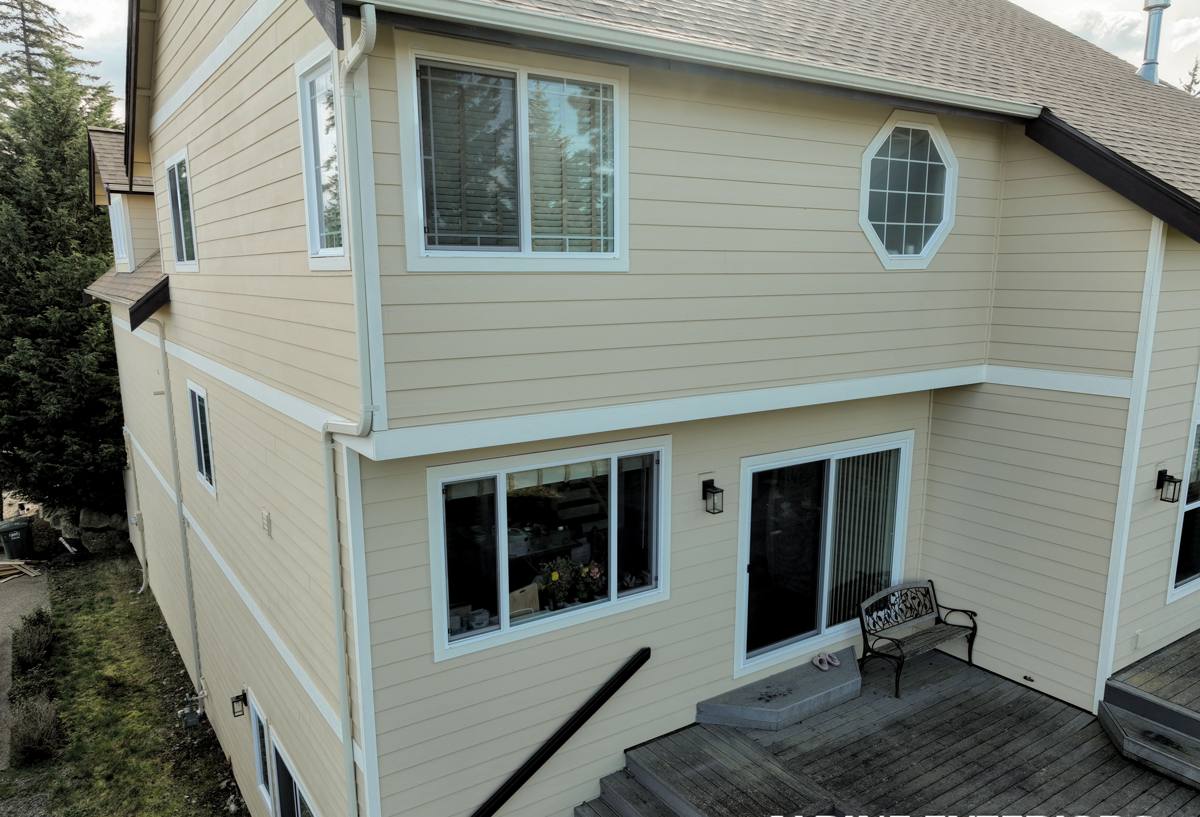
Signs Your Deck Needs Replacing — Not Just Repairing
Not every tired-looking deck needs a full replacement. But there's a point where patching boards or re-staining stops being a real fix and starts being a way to delay a bigger problem. Here's what we look for when deciding whether repair still makes sense:
- Soft, spongy, or dark-stained spots in the decking boards, especially near the house or at board ends
- Rust streaks running down from screws, joist hangers, or post brackets
- Any give or bounce in the frame when you walk across it, not just in one board
- Rot or discoloration where the ledger board meets the house siding
- Posts that have shifted, cracked, or show rot at the base where they meet the ground or a footing
- Railings that feel loose or flex when leaned on
- Persistent moss or algae that comes back within weeks of cleaning
If the framing and ledger connection are sound and it's really just the surface boards showing age, a resurface can be a reasonable option. Once the structure itself is compromised, replacement is the honest recommendation — patching a failing frame just moves the problem a year or two down the road.
What a Correct Deck Replacement Actually Involves
A deck replacement done right is mostly about what you can't see once it's finished. The decking boards get the attention because they're visible, but the framing, flashing, and fasteners underneath are what determine whether the deck lasts eight years or twenty-five in this climate.
Framing and Structural Connections
We check post spacing, joist spans, and footing condition against current code requirements, not just what was there before — a lot of older decks in this region were built to standards that have since been tightened up, especially around ledger attachment and guardrail strength. Where a deck is attached to the house, proper ledger flashing is non-negotiable; it's the single most common failure point we find in older decks here.
Fasteners and Hardware
Given how hard salt air is on metal, we use fasteners and structural connectors rated for coastal or corrosive environments rather than standard-grade hardware. It costs a little more up front and makes a real difference in how long the connections stay tight.
Drainage and Airflow
Water needs somewhere to go, and air needs to move underneath the deck to let framing dry out between rain events. We pay attention to board spacing, ground clearance, and grading below the deck so moisture doesn't just sit and soak in.
Choosing the Right Decking Material for This Climate
There's no single "best" decking material — the right choice depends on how much upkeep you want to do, your budget, and how much sun or shade the deck actually gets. Here's how the common options stack up for a property like yours in Point Roberts:
| Material | Moisture & Moss Resistance | Maintenance | Typical Lifespan |
|---|---|---|---|
| Pressure-treated wood | Fair — needs sealing to perform well | Annual cleaning and re-sealing | 10–15 years |
| Cedar | Good natural resistance, but surface needs upkeep | Periodic staining/sealing | 15–20 years with care |
| Composite decking | Very good — won't rot or splinter | Occasional washing, no sealing | 25–30+ years |
| PVC/capped polymer | Excellent — fully moisture-sealed surface | Occasional washing | 25–30+ years |
In a shaded, damp environment, composite and capped polymer boards generally give the least trouble with moss and staining over time, since they don't have exposed wood fibers for algae to grip. Wood species remain a reasonable choice for homeowners who prefer the natural look and are comfortable staying on top of sealing and cleaning — it's a maintenance trade-off, not a right-or-wrong answer.
Our Deck Replacement Process
- On-site assessment — We inspect the existing deck, framing, footings, and ledger connection to determine what's actually driving the failure, not just what's visible from the surface.
- Honest scope and estimate — You get a clear picture of what needs to be replaced, what materials we recommend for your specific site conditions, and a straightforward cost range.
- Removal and structural inspection — Old decking and, where needed, framing come out so we can properly inspect posts, footings, and the ledger board before anything new goes up.
- Framing and flashing — New or reinforced framing goes in with corrosion-resistant hardware and proper flashing at every connection point, especially the house ledger.
- Decking and railing installation — Boards and railing are installed to the spacing and fastening pattern the material manufacturer specifies, which matters for both appearance and warranty coverage.
- Final walkthrough — We go over the finished deck with you, including basic care guidance for your specific decking material.
Working in Point Roberts: Access and Scheduling
Point Roberts is a bit of a logistical exception compared to most of the properties we serve — it's only reachable by land through Canada, or by water or air. That means material deliveries and crew scheduling need to be planned a step ahead compared to a typical Whatcom County job, and it's part of why hiring a crew that already has experience working here matters. We plan material orders and border logistics into the project timeline up front, so it isn't a surprise partway through the job.
Permits and Local Requirements
Deck replacements, particularly ones involving structural changes to framing, footings, or guardrails, typically require a permit. We handle the permitting process as part of the job so you're not left figuring out county requirements on your own.
Maintaining Your New Deck
Even a well-built deck benefits from a little seasonal attention in this climate. A few habits go a long way toward getting the full lifespan out of your investment:
- Sweep leaves and debris off the deck regularly through fall, especially in shaded corners where moss starts first
- Rinse off salt spray and grime a few times a year, particularly on decks with water exposure
- Check railings and stair connections annually for any looseness
- Keep gutters and downspouts near the deck clear so runoff isn't draining directly onto or under it
- For wood decking, plan on resealing on the schedule recommended for your species — skipping years is where most premature wood failure starts
Why Hiring a Crew That Knows Point Roberts Matters
A deck built to a generic spec sheet can look fine the day it's finished and still struggle within a few years if it wasn't built for salt exposure, driving rain, and a long damp season. Framing choices, hardware grade, flashing details, and even board spacing all need to account for local conditions, not just a manufacturer's minimum installation instructions. A crew that regularly works this specific stretch of coastline already knows where decks around here tend to fail and builds to avoid those failure points from the start.
If your deck is showing its age, or you just want an honest read on whether it needs repair or full replacement, we're happy to take a look. Fill out the form below for a free, no-pressure estimate on your Point Roberts deck replacement.