 Semiahmoo Siding
 Why Siding Repair in Marietta Isn't a One-Size-Fits-All Job
Marietta sits close enough to Semiahmoo Bay and Drayton Harbor that homes here take on a different kind of weather load than siding just a few miles inland. Salt-laden air off the water, driving rain that comes in sideways during winter storms, and a moss season that can stretch from fall through spring all work on exterior siding in ways that generic repair advice doesn't account for. A patch job that would hold up fine in a dry inland neighborhood can fail within a season or two here if it doesn't account for how this specific stretch of Whatcom County actually behaves.
That's the starting point for how we approach siding repair in Marietta: we're not just matching a board and calling it done. We're looking at why the damage happened in the first place, whether the repair will actually hold up against salt air and wind-driven rain, and whether a patch is even the right call versus replacing a larger section.
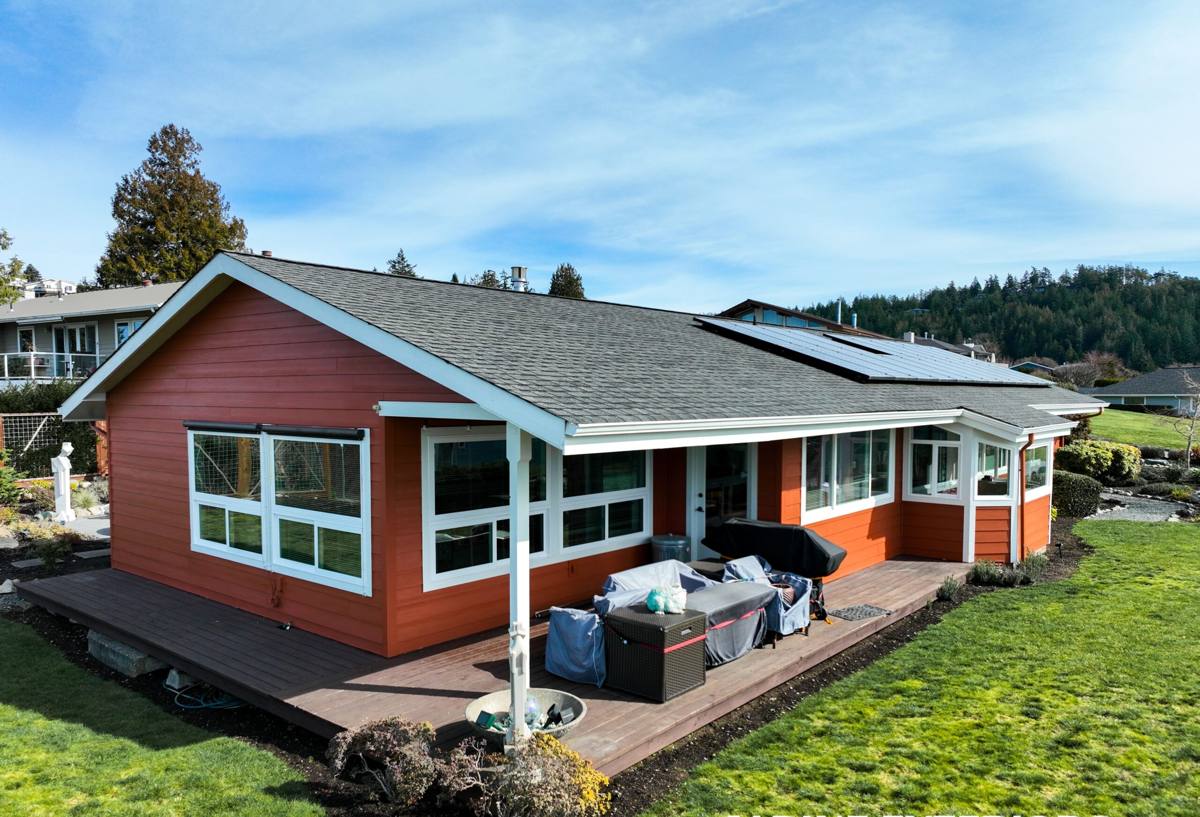
What's Actually Damaging Siding in This Area
Most siding repair calls we see in and around Marietta trace back to a handful of recurring causes, and understanding which one is at play changes how the repair should be done.
Salt Air and Fastener Corrosion
Homes closer to Semiahmoo Bay deal with airborne salt that accelerates corrosion on fasteners, flashing, and any metal trim components. When nails or screws corrode, they lose their grip, and siding boards start to loosen, cup, or pull away at the edges — often well before the siding material itself is failing.
Driving Rain and Moisture Intrusion
Wind-driven rain doesn't just wet the surface of siding — it finds every gap in caulking, every failed seam, and every spot where flashing was installed short. Once moisture gets behind the siding, it can sit against the sheathing and framing for weeks during a wet Pacific Northwest winter, which is where real structural problems start.
Moss, Algae, and Prolonged Dampness
The long moss season here means siding, trim, and the ground line at the base of walls stay damp for extended stretches. Moss and algae growth hold moisture against the siding surface, which accelerates rot in wood-based products and can degrade caulk and paint film faster than in drier climates.
Caulk and Sealant Failure
Caulking has a service life, and it's usually the first thing to fail. Once it cracks or shrinks away from a joint, it stops doing its job — and in a climate with this much rain, that's usually the first domino that leads to a repair call.
Signs a Marietta Home Needs Siding Repair
Some damage is obvious. Some isn't visible until you know what to look for. Walk your exterior and check for:
- Boards that are cupping, bowing, or visibly separating from the wall
- Soft or spongy spots when you press on siding, especially near the bottom courses
- Persistent moss or algae staining that keeps returning after cleaning
- Cracked, shrunken, or missing caulk at joints, corners, and around windows and doors
- Rust streaking from nail heads or corroded fasteners
- Paint or finish that's peeling, bubbling, or chalking unevenly in one area
- Visible gaps at trim boards, corner boards, or where siding meets flashing
- Interior signs — a musty smell, discoloration, or soft drywall near an exterior wall
Any one of these on its own might be minor. Several showing up in the same area of the house usually means water has been getting behind the siding for a while.
Repair or Replace? How We Decide
Not every damaged section needs to become a full re-side, and not every "repair" is actually worth doing. We look at the extent of the damage, what's underneath it, and how much of the wall assembly is compromised before recommending either path.
| Factor | Points Toward Repair | Points Toward Replacement |
|---|---|---|
| Extent of damage | Isolated to one or two boards/areas | Spread across multiple walls or elevations |
| Sheathing condition | Dry, solid framing underneath | Soft, rotted, or water-stained sheathing |
| Age of existing siding | Relatively young, still performing well elsewhere | Near or past its expected service life |
| Cause of damage | A single failure point (one bad seam, one impact) | Systemic issue — poor original flashing, wrong material for this climate |
| Material match | Existing product still available and repairable | Discontinued color, product, or profile that can't be matched |
Sometimes a home has a mix — one wall that took the worst of the weather and needs a fuller re-side, and other elevations that just need targeted repair. We'll tell you honestly which situation you're in rather than defaulting to the bigger job.
What a Correct Repair Actually Involves
A siding repair that's done right isn't just about making the wall look fixed. It's about restoring the parts of the system you can't see — the water management layer — so the repair actually outlasts the next few winters.
- Removing damaged material fully — not just covering over rot or soft sheathing, which only hides a problem that keeps spreading
- Inspecting and repairing the weather-resistive barrier underneath before any new siding goes back on
- Correcting flashing at windows, doors, and horizontal transitions so water sheds outward instead of pooling behind the siding
- Using fasteners and hardware rated for coastal or high-moisture exposure to avoid the same corrosion issue recurring
- Sealing and caulking joints properly, with attention to which joints should be sealed and which need to stay open to let the assembly drain and dry
- Matching or finishing the repaired section so it blends with the surrounding siding rather than leaving an obvious patch
Skip any of these steps and you get a repair that looks fine at the walk-through and fails again within a couple of wet seasons.
Why We Repair and Rebuild With James Hardie Fiber Cement
We install and repair with James Hardie fiber cement siding exclusively. In a climate like Marietta's — salt air, sustained moisture, moss season — the material matters as much as the workmanship. Fiber cement doesn't absorb water the way wood-based products do, and it's non-combustible, which matters given how dry summer conditions have become in parts of Washington even in a generally wet region.
Hardie's HZ5 product line is engineered specifically for climates that see extended wet-dry cycling and higher moisture exposure — which describes Semiahmoo-area weather well. Combined with the factory-applied ColorPlus finish, which is baked on rather than field-painted, repaired or replaced sections hold their color and resist the chalking and fading that field-applied paint tends to show first, especially on the salt-air-exposed sides of a house.
When a repair calls for replacing a damaged section, we use Hardie product to rebuild it — not a mismatched patch of whatever was there before if that material has a track record of underperforming in this environment. If the existing siding is a different material entirely and repair isn't a durable long-term fix, we'll say so plainly and explain why Hardie is the better long-term answer, rather than just patching around a recurring problem.
Our Repair Process
- On-site inspection. We look at the visible damage and check surrounding areas, flashing, and — where accessible — the condition of the sheathing underneath.
- Honest assessment. We tell you whether you're looking at a targeted repair, a larger section replacement, or a case where repair isn't the right long-term move.
- Written scope and estimate. You know exactly what's being repaired, what materials are used, and what the job costs before work starts.
- Removal and inspection behind the siding. We don't close a wall back up over a moisture problem we haven't addressed.
- Repair and rebuild to spec. Flashing corrected, weather barrier repaired, new Hardie material installed and fastened for this climate.
- Finish and cleanup. Caulking, touch-up finish work, and a final walk-through so the repair blends with the rest of the home.
Why It Matters That We Already Work Marietta and Semiahmoo
A crew that works this specific stretch of Whatcom County regularly already knows how salt exposure, driving rain direction, and moss buildup tend to show up on homes here — which means less time spent diagnosing and more time spent fixing the actual problem. We're also familiar with the permitting and inspection expectations that apply to exterior work in this part of the county, so a repair doesn't stall out on paperwork.
Just as importantly, a local crew has a reputation to protect in a small community. If a repair doesn't hold up, we're not far away and we're not hard to find — which is exactly the accountability you want from whoever puts hands on your siding.
Keeping Repaired Siding Healthy in a Marietta Winter
A correct repair buys you years, but a little upkeep keeps that repair — and the rest of your siding — performing the way it should.
- Rinse salt residue and grime off siding periodically, especially on sides of the house facing the water
- Keep gutters clear so overflow doesn't run directly down siding faces
- Trim back vegetation and landscaping that keeps siding shaded and damp
- Address moss and algae growth early, before it stains or holds moisture long-term
- Recaulk joints on a proactive schedule rather than waiting for visible cracking
- Do a seasonal walk-around after major storms to catch new damage while it's still small
If you're seeing warning signs on your siding, or you just want a second opinion on whether a repair is enough versus a larger fix, we're happy to take a look. We offer free, no-pressure estimates for Marietta and the surrounding Semiahmoo area — you'll get an honest read on what your siding actually needs, not a sales pitch.