 Semiahmoo Siding
 Marietta's Climate Is Harder on Siding Than Most Homeowners Realize
Marietta sits close enough to Semiahmoo Bay and Drayton Harbor that salt-laden air is a daily fact of life, not an occasional nuisance. Combine that with Whatcom County's long wet season, wind-driven rain off the water, and the shade and moisture that add up to months of moss and algae growth on north- and west-facing walls, and you have a set of conditions that will find every weakness in a siding system. Materials that hold up fine in a dry inland climate can fail here in a fraction of the time.
Salt air is corrosive to exposed metal fasteners and trim, and it accelerates the breakdown of coatings that aren't formulated to resist it. Driving rain doesn't just wet a wall's surface — it gets pushed sideways and upward under laps, around trim, and into any gap in the weather barrier that wasn't detailed correctly. And moss doesn't just look bad; its root structures hold moisture against the wall surface far longer than open air would, which matters a great deal on a material that can absorb water and swell, warp, or rot.
This is the environment we install siding in every day, and it's the reason we're selective about what goes on a Marietta home.
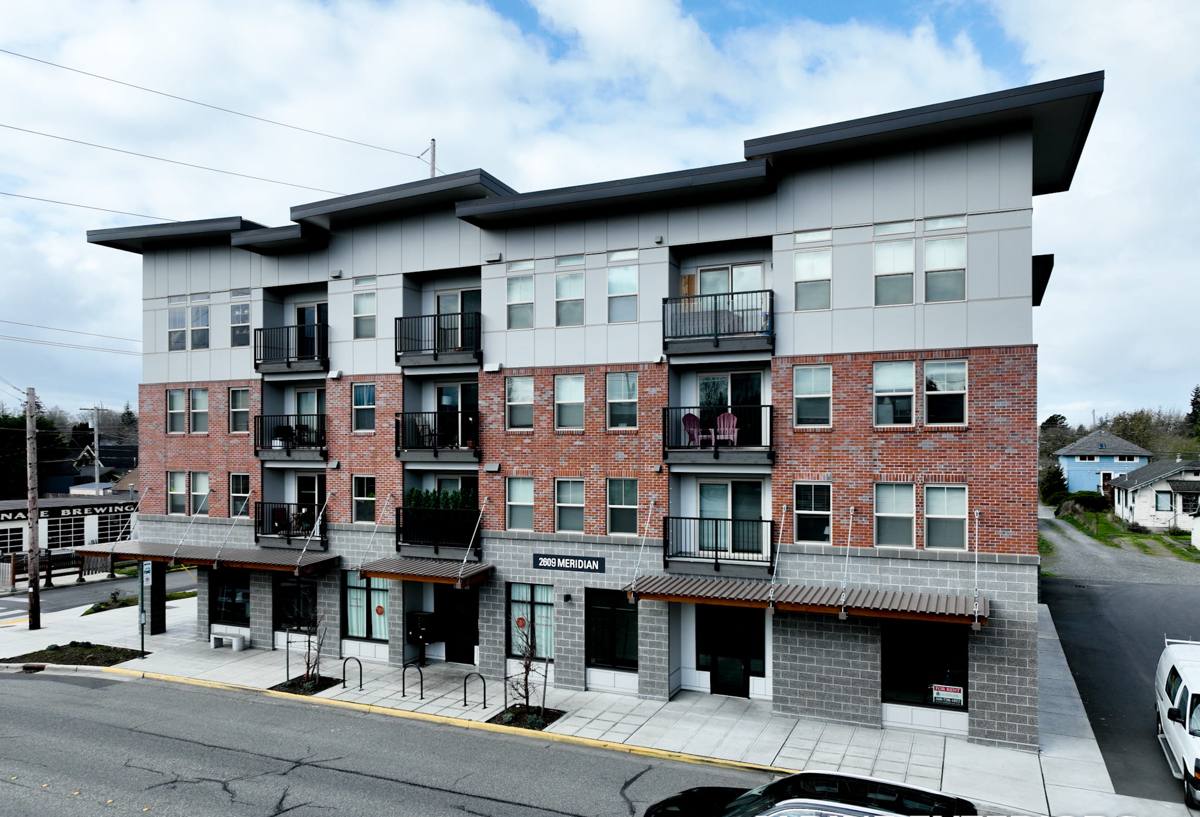
Why We Install Only James Hardie Fiber Cement
We don't install vinyl, LP SmartSide, Cemplank, Allura, primed spruce, or cedar. That's not a marketing position — it's a standard we hold because of what we've seen happen to those products in exactly this kind of coastal, wet Pacific Northwest climate. Each has real strengths, but each also has a trade-off that becomes a bigger problem the closer a home sits to salt air and standing moisture:
- Vinyl is inexpensive and low-maintenance, but it's a thin plastic product that can warp in heat, crack in cold, and fade — and it doesn't hold paint well if a homeowner ever wants to change the color.
- LP SmartSide and other engineered wood products use a wood-strand core. If moisture gets past the coating — through a nail hole, a cut edge, or a failed caulk joint — the core can swell and deteriorate from the inside, often before it's visible from outside.
- Cemplank and Allura are also fiber cement, and structurally similar to Hardie in concept, but we've standardized on one manufacturer's engineering, factory finish, and warranty rather than mixing systems.
- Primed spruce and cedar are natural wood. They look great when new, but they need active, ongoing maintenance — recoating, caulking, and inspection — to keep water out over time, and that maintenance burden only grows in a climate with this much rain and moss pressure.
James Hardie fiber cement is non-combustible, dimensionally stable (it doesn't swell and shrink with moisture the way wood-based products do), and it comes from the factory with a baked-on ColorPlus finish engineered to hold color and resist fading, cracking, and peeling far longer than a field-applied paint job. For a Marietta property exposed to salt air and sustained wet weather, that combination is the reason we put it on homes instead of the alternatives.
HZ5 Engineering for the Pacific Northwest
Hardie manufactures its siding in climate-specific formulations, and the HZ5 product line is engineered for regions with significant moisture exposure and freeze-thaw cycling — which describes Whatcom County's coastal weather well. That engineering affects the composition of the board itself, not just the finish, so it's a meaningful distinction when you're comparing options for a home this close to the water.
What a Correct James Hardie Installation Actually Involves
Fiber cement siding is only as good as the installation behind it. Hardie's own warranty terms depend on installation following the manufacturer's published specifications, and in a climate like Marietta's, cutting corners on the details is exactly what leads to moisture problems years down the road. A correct install includes:
- A continuous, correctly lapped weather-resistive barrier behind the siding, with no gaps or punctures left unsealed
- Proper flashing at every window, door, deck ledger, and roof-to-wall transition — the points where wind-driven rain is most likely to find a way in
- Correct nail placement and fastener spacing per Hardie's specifications, using fasteners rated for the exposure
- Minimum clearance between the bottom edge of the siding and roof lines, decks, patios, and grade, so water and moisture don't wick into the board
- Properly gapped and sealed joints at butt seams and trim, using sealants compatible with the ColorPlus finish
- Field-cut edges primed or sealed before installation, since factory-finished edges are what actually resist moisture intrusion
Skipping any one of these doesn't usually cause a visible problem right away. It shows up two, five, or ten years later as a soft spot near a window, a stain trailing down from a poorly flashed transition, or moss and mildew taking hold where water has been sitting against the wall longer than it should.
Where We See Installations Go Wrong
The most common issues we find on homes in this area aren't failures of the siding material — they're installation shortcuts. Undersized clearances at grade, caulk used in place of proper flashing, and fastener patterns that don't match the manufacturer's spec are the recurring themes. Those mistakes are avoidable, and avoiding them is most of what separates a siding job that lasts thirty-plus years from one that needs rework in five.
Our Process for a Marietta Siding Project
- On-site assessment. We look at the current siding, the condition of the wall sheathing underneath, drainage around the foundation, and any areas already showing moisture damage or moss buildup.
- Written estimate and product selection. We walk through Hardie's plank, panel, and shingle options, color choices, and trim details so you know exactly what's going on the house before work starts.
- Tear-off and inspection. Removing the old siding lets us check the sheathing and framing for hidden rot or water damage — common in older wet-climate homes — and address it before new siding goes up, not after.
- Weather barrier and flashing. This is the step that determines how the house performs in wind-driven rain for the next several decades, and it's where we spend the most care.
- Installation to Hardie specification. Correct fastening, clearances, and joint treatment, following the manufacturer's published instructions rather than shortcuts.
- Final walkthrough and warranty registration. We register the installation so the manufacturer's warranty coverage is in place, and we walk the property with you before calling the job done.
Comparing Siding Options for a Marietta Home
| Factor | James Hardie Fiber Cement | Vinyl | Engineered Wood (LP-type) | Natural Wood/Cedar |
|---|---|---|---|---|
| Salt air resistance | Strong — non-combustible, factory-sealed finish | Fair — can fade and become brittle | Moderate — vulnerable if coating fails | Weak without frequent maintenance |
| Moisture/moss tolerance | High — doesn't swell or rot | High but can trap moisture behind panels | Moderate — wood-strand core can degrade if water intrudes | Low — absorbs and holds moisture |
| Finish longevity | Long — baked-on ColorPlus finish | Moderate — color molded in, but fades over time | Moderate — depends on coating maintenance | Short — needs recoating on a cycle |
| Fire resistance | Non-combustible | Combustible (melts/burns) | Combustible | Combustible |
| Ongoing maintenance | Low | Low | Moderate | High |
What Drives Cost on a Marietta Siding Project
Every home is different, so we don't quote broad ranges without seeing the property, but the factors that typically move the price are consistent:
| Factor | Why it matters |
|---|---|
| Home size and wall complexity | More square footage and more corners, gables, and trim details mean more labor and material |
| Condition of existing sheathing | Hidden rot or water damage found during tear-off adds repair scope before new siding can go up |
| Number of stories and access | Multi-story walls and limited access for equipment add time and safety requirements |
| Siding profile chosen | Lap siding, panel systems, and shingle-style Hardie products differ in material and labor cost |
| Trim and flashing scope | Windows, doors, and roof transitions that need new flashing add both material and labor |
Why a Crew That Already Works Marietta Matters
A siding crew that regularly works properties along Semiahmoo Bay and Drayton Harbor already understands how far salt spray travels inland on a windy day, which wall orientations collect the most moss, and how the region's rain patterns tend to push water at trim and transitions. That's the kind of judgment that shows up in small decisions — where to add an extra flashing detail, which fastener spacing to hold to strictly rather than loosely — that a crew unfamiliar with this specific coastal environment might not think twice about.
It also means we're a known quantity locally rather than a company that shows up once and moves on. If a warranty question or a maintenance question comes up years after installation, you're calling a contractor who's still working in the area and still stands behind the work.
Maintaining James Hardie Siding in a Salt Air, Moss-Prone Climate
One of the real advantages of Hardie siding in this environment is how little upkeep it needs compared to wood or engineered wood products — but "low maintenance" isn't "no maintenance." A few habits go a long way toward getting the full lifespan out of the installation:
- Rinse salt residue and grime off the siding periodically, especially on walls that face open water or prevailing wind
- Keep gutters clear so water isn't overflowing and running down the wall face
- Trim back vegetation and landscaping that shades walls and keeps them damp, since that's where moss takes hold fastest
- Check caulking at trim joints and penetrations every few years and have any cracked or failed sealant redone
- Address any soft spots, staining, or unusual moisture signs promptly rather than waiting
Warranty and Long-Term Value
James Hardie backs its siding products with a strong transferable warranty when installation follows the manufacturer's specifications — which is exactly why we install to spec rather than taking shortcuts that can put that coverage at risk. For a home in a demanding coastal climate like Marietta's, that warranty combined with a factory finish designed to resist fading and moisture is a meaningfully different value proposition than a product that depends on ongoing field maintenance to perform.
If you're weighing a full re-side or replacing siding that's showing its age, we're happy to take a look at the property and walk you through what correct Hardie installation would involve for your home specifically. Reach out for a free, no-pressure estimate using the form below.