 Semiahmoo Siding
 Storm Damage Roof Repair for Lynden Homes
Lynden sits inland along the Nooksack River valley, out in the open farmland of Whatcom County, and that setting shapes how storms hit a roof here. Unlike the immediate coastline, Lynden doesn't take the salt-laden marine air that wears on metal fasteners and flashing near the water — that's one thing working in your favor. What Lynden does get is wide-open wind exposure across flat fields, heavy rain events that stack up fast, and a long wet season that keeps roofs damp for months at a stretch. When a windstorm or a hard rain event moves through, the damage often isn't dramatic. It's a lifted shingle tab, a cracked ridge cap, a piece of flashing worked loose — small stuff that turns into a real problem if it sits through the next few rain systems.
This page covers what storm damage repair actually looks like when it's done right for a Lynden roof, what to check after a storm, and how our process works when you call us out.
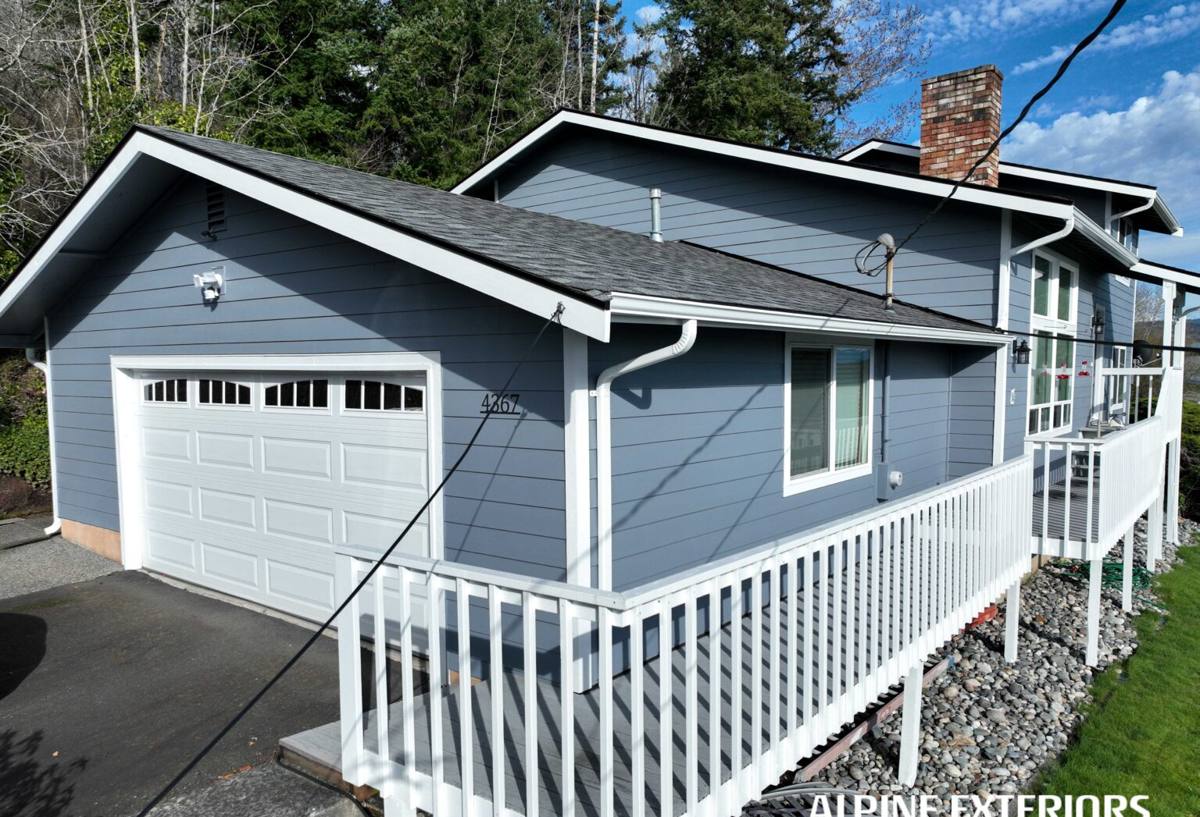
Why Storms Hit Lynden Roofs the Way They Do
Open exposure, not coastal exposure
Because Lynden sits away from the immediate shoreline, wind here tends to move differently than it does closer to the water — less salt corrosion, but often stronger sustained gusts across open farmland with fewer windbreaks than a wooded or built-up neighborhood provides. A roof that's marginal on fastening or has aging shingles can take a harder hit from straight-line wind gusts moving unobstructed across flat land than a similar roof tucked into trees would.
Rain volume and duration
Whatcom County's wet season isn't just about how much rain falls — it's how long the roof stays saturated. Any existing weak point (a nail pop, a cracked pipe boot, a hairline in old caulking) has more time to actually let water through when the roof surface is wet for days or weeks at a time rather than drying out between short showers.
Moss and organic growth
A long moss season is one of the most underrated causes of "storm damage" that isn't really storm damage at all — it's moss and moisture that had already worked shingles loose, and the storm just finished the job. Moss holds water against the roof surface, lifts shingle edges as it grows, and speeds up granule loss. A roof that's been neglected on moss control is simply more vulnerable when wind and rain show up together.
Signs Your Lynden Roof Has Storm Damage
Not all storm damage is obvious from the ground. After any significant wind or rain event, it's worth checking for the following:
- Shingles that look lifted, curled, or are missing outright, especially along roof edges and ridges
- Granules collecting in gutters or at downspout outlets — a sign of accelerated shingle wear
- New or worsening water stains on interior ceilings, especially near chimneys, skylights, or where roof planes meet
- Bent, lifted, or missing flashing around vents, chimneys, and valleys
- Sagging or soft-feeling spots on the roof deck, visible from the attic or from a ladder
- Debris (branches, moss clumps) driven into valleys or gutters that can trap water against the roof
- Gutters pulled away from the fascia, which often points to ice, wind, or heavy debris load
If you see any of these, the roof deserves a proper inspection before the next rain system rolls through — not months later when a small leak has become a rotted deck.
What a Correct Storm Damage Repair Actually Involves
Inspection before anything else
A legitimate repair starts with someone actually getting on the roof (weather permitting) or using a ladder and binoculars to check hard-to-reach areas, not just a drive-by estimate from the street. We look at the full roof system — shingles, flashing, underlayment where exposed, decking condition, and ventilation — because storm damage rarely shows up in just one spot.
Temporary protection first, if needed
If there's active water intrusion or an exposed section of decking, the first job is stopping further water entry — tarping, temporary flashing, or sealing an exposed area — before scheduling the permanent repair. This matters most during Whatcom County's wetter stretches, when even a day or two of delay can let water reach the decking and framing.
Matching materials, not just patching
A repair that uses mismatched shingle profiles, the wrong flashing metal, or incompatible sealants tends to fail again within a season or two. Correct repair means matching the existing shingle type and color as closely as possible, using the right flashing material for the application, and tying the new work into the existing underlayment properly so water sheds the way the roof was designed to shed it.
Checking what's underneath
Any spot where shingles were lifted or missing is a chance to check the decking underneath for soft spots or moisture staining. Skipping this step is one of the most common shortcuts in storm repair — a new shingle over a soft deck buys a homeowner a year, maybe two, before the same spot fails again.
Addressing the root cause, not just the symptom
If moss growth, poor ventilation, or a clogged valley contributed to the damage, a correct repair addresses that too. Replacing a shingle without dealing with the moss bed still under it, or the ventilation issue that's kept the deck damp, is a repair that's designed to fail again.
Our Storm Damage Repair Process
- Call and initial assessment. We ask what you've noticed — active leaks, missing shingles, storm timing — so we know whether it's an emergency tarp situation or a scheduled repair visit.
- On-site inspection. We walk the roof and check the areas most likely to be affected: ridges, valleys, penetrations, and any spot you've flagged from inside the house.
- Written scope and honest recommendation. You get a clear explanation of what's damaged, what caused it, and whether it's a targeted repair or something that points to a larger issue (age, prior poor installation, ventilation problems).
- Repair work. We match materials, replace what needs replacing, re-flash where needed, and check the decking in any opened-up area.
- Final check and cleanup. We confirm the repair is sound, clear debris and old materials, and walk you through what was done.
Repair or Replace? What Actually Drives That Decision
Not every storm-damaged roof needs full replacement, and not every roof that looks "fine" after a storm is actually sound. The honest answer depends on a handful of factors:
| Factor | Leans toward repair | Leans toward replacement |
|---|---|---|
| Roof age | Under roughly 12-15 years, shingles still flexible | Near or past manufacturer's expected lifespan |
| Extent of damage | Isolated area — one slope, one flashing point | Damage spread across multiple roof planes |
| Decking condition | Solid, dry decking under the damaged area | Soft, delaminated, or water-stained decking found |
| Moss/moisture history | Minor, recently maintained | Long-term moss buildup with granule loss throughout |
| Prior repairs | First repair on this roof | Multiple past patch jobs stacking up |
We'll tell you plainly which situation you're in rather than pushing a full replacement when a targeted repair will genuinely hold up, or patching a roof that's clearly at the end of its usable life.
Insurance and Documentation
Many storm-related roof repairs qualify for a homeowner's insurance claim, particularly when there's a clear wind or storm event tied to the damage. We can document what we find — photos, a written description of the damage, and our repair recommendation — so you have what you need if you choose to file a claim. We're not adjusters and won't promise a claim outcome, but a clear, honest inspection report makes that conversation with your insurer easier.
Why a Crew That Already Works Lynden Matters
Roofing crews that mostly work closer to the water sometimes miss what's specific to Lynden's setting — the wind-across-open-fields exposure, the way moss builds differently on a shaded farmhouse roof than on a coastal home, the drainage quirks of older roofs built before current ventilation standards were common. A crew that regularly works Whatcom County's inland communities has already seen how local weather patterns actually play out on real roofs here, not just in general terms. That means fewer surprises, a repair that accounts for what's actually causing the wear, and a straight answer about whether your roof needs a patch or something more.
Get an Honest Look at Your Roof
If a recent storm has left you with a missing shingle, a new stain on the ceiling, or just a nagging feeling something's not right up there, it's worth getting a second set of eyes on it before the next rain system comes through. We offer a free, no-pressure estimate and inspection — fill out the form below and we'll take a look.