 Semiahmoo Siding
 Why Siding Replacement in Lynden Is Its Own Kind of Job
Lynden sits inland from the salt water but still lives inside the same weather system that soaks all of Whatcom County — long wet winters, driving rain that comes in sideways off Pacific storms, and a damp shoulder season that keeps north- and west-facing walls shaded and moist for weeks at a time. Add the salt-laden air that moves inland off the Strait of Georgia and Semiahmoo Bay on a west wind, and you have a climate that is genuinely harder on exterior siding than most of the country ever deals with. Homes here don't fail because of one bad storm. They fail slowly, one damp season at a time, as moisture finds the small gaps that were never sealed correctly the first time.
A siding replacement in this area isn't just a cosmetic upgrade. Done right, it's a chance to correct the water-management mistakes baked into the original build or a prior re-side, and to put a material on the wall that's actually engineered for this climate instead of one that's simply cheaper to install.
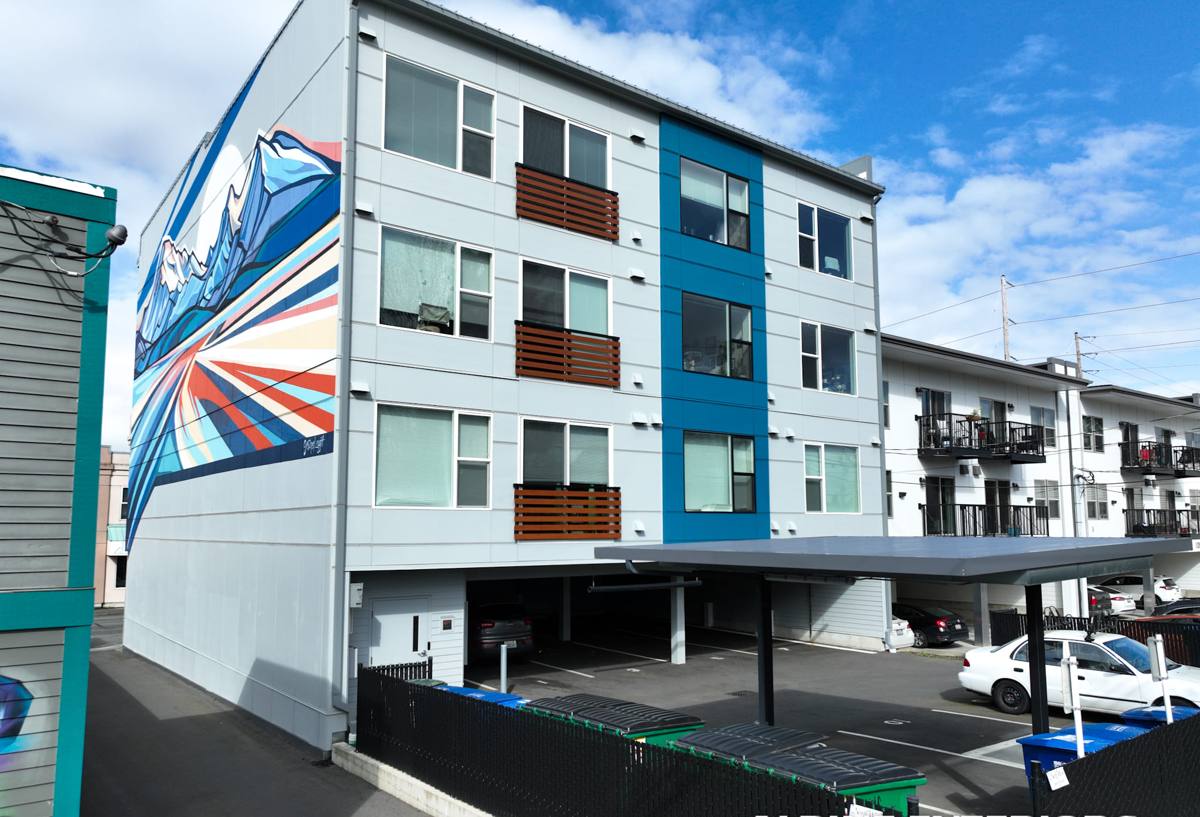
What Lynden's Climate Actually Does to Siding
Salt Air
Salt-bearing moisture accelerates corrosion on fasteners, flashing, and any exposed metal trim. On vinyl and some engineered wood products, it also speeds up fading and chalking on sun-facing elevations, while shaded elevations stay damp longer and grow moss and mildew faster.
Driving Rain
Wind-driven rain doesn't just fall on siding — it gets pushed sideways into laps, seams, and butt joints. Siding that relies on caulk alone to keep water out, rather than proper lap geometry and a correctly installed water-resistive barrier behind it, eventually lets water in. Once that happens, the sheathing behind the siding starts to rot long before anything looks wrong on the surface.
A Long Moss Season
Whatcom County's moss season isn't a few weeks — it's most of the fall, winter, and spring. Moss and algae hold moisture against the siding surface, and on absorbent materials that moisture works its way into the substrate. On north-facing walls and anywhere trees shade the siding, this is often the first visible sign that a wall system needs attention.
Signs a Lynden Home Needs Replacement, Not Just Repair
Not every siding problem calls for a full tear-off. But in this climate, certain signs mean the damage almost certainly goes deeper than the surface:
- Soft or spongy spots when you press on the siding, especially near the bottom courses or under windows
- Persistent black staining or moss growth that returns within weeks of cleaning
- Visible buckling, warping, or delamination, especially on engineered wood or hardboard products
- Paint that won't hold — recoating every 2-3 years instead of every 8-10
- Rot or staining showing up at inside corners, around penetrations, or where trim meets siding
- Interior signs — musty smells, peeling interior paint, or soft drywall near exterior walls
If more than one of these shows up on the same elevation, it's usually a sign that water has been getting behind the siding for a while, and patching the visible spot won't fix the underlying moisture path.
What a Correct Siding Replacement Involves
A siding replacement is only as good as what happens before the new siding ever goes up. In a climate like this one, the sequence matters as much as the material.
Tear-Off and Inspection
Removing the old siding is also the only real chance to see the sheathing underneath. Any rot gets cut out and replaced — never covered over. This is where problems that started years ago actually get found and fixed, rather than sealed in behind new siding.
Water-Resistive Barrier and Flashing
A correctly lapped weather-resistive barrier, properly integrated window and door flashing, and flashing at every horizontal transition (roof lines, decks, trim boards) give the wall a drainage plane so any water that does get past the siding has somewhere to go besides the sheathing.
Fastening and Clearances
Fastener spacing, embedment, and type all matter — under-driven or over-driven fasteners are one of the most common causes of early siding failure. Ground clearance and proper gaps at trim, roofing, and decks keep splash-back and standing moisture away from the bottom edge of the siding, which is the first place damage shows up in wet climates.
The Siding Itself
This is where material choice matters most. We install only James Hardie fiber cement siding — no vinyl, no LP SmartSide, no cedar, no primed spruce. Fiber cement doesn't absorb water the way engineered wood products can, it won't rot, and it holds paint and factory finish far longer in a climate that's damp more months than it's dry. Hardie's HZ5 product line is specifically engineered for climates like ours — freeze-thaw cycling, sustained moisture, and coastal-adjacent air — and the ColorPlus factory finish is baked on under controlled conditions, which holds up better against salt air and UV than field-applied paint.
Why We Don't Install Everything on the Market
Homeowners in Lynden sometimes ask why we won't quote vinyl or engineered wood siding when it's cheaper up front. The honest answer is that we've made a standard for ourselves based on what actually holds up here. Vinyl can crack in freeze-thaw swings and fades unevenly under coastal sun; it also expands and contracts more than fiber cement, which stresses seams over time. Engineered wood products depend heavily on maintaining an intact factory coating — any breach lets moisture in, and once that happens in a climate this wet, it's hard to catch early. Cedar and primed spruce need real maintenance discipline — recoating on a schedule most homeowners don't keep up with — and salt air and constant moisture shorten that maintenance window further. None of these are bad products in every climate. We just won't put our name on an installation we don't think will hold up on a Whatcom County wall for the next 30 years, and Hardie fiber cement is what we've found does.
Our Process, Start to Finish
- On-site assessment — we walk the exterior, check for existing moisture damage, and look at how each elevation actually takes weather (sun exposure, shade, wind direction)
- Written estimate — scope, product line, color, and a clear breakdown of what's included, no surprise add-ons buried in fine print
- Tear-off and sheathing repair — old siding removed, damaged sheathing replaced, nothing patched over
- Water management installed — WRB, flashing, and trim integration done before a single piece of new siding goes up
- Hardie installation — fastened, spaced, and finished to manufacturer spec so the warranty is actually valid if you ever need it
- Final walkthrough — we go over the finished job with you before we consider it done
Cost Factors for a Lynden Siding Replacement
Every home is different, but the same handful of factors drive most of the cost variation we see on siding replacement jobs in this area.
| Factor | Why It Matters in Lynden | Typical Impact |
|---|---|---|
| Existing sheathing damage | Long wet seasons mean hidden rot is common on older homes; extent isn't known until tear-off | Can add meaningfully once uncovered — we flag it before proceeding |
| Home size and wall complexity | More corners, dormers, and trim transitions mean more flashing detail and labor | Moderate to significant |
| Siding profile chosen | Lap width, shingle-style panels, and trim boards vary in material and labor cost | Moderate |
| Color and finish | ColorPlus factory finish vs. field painting affects longevity and long-term maintenance cost | Small upfront, larger over the life of the siding |
| Access and site conditions | Tree cover, tight lot lines, and multi-story walls affect staging and labor time | Small to moderate |
Why Hiring a Crew That Already Works in Lynden Matters
Siding installation isn't just about following a manual — it's about knowing how a specific climate behaves on a specific wall. A crew that regularly works Whatcom County knows which elevations in this area take the worst wind-driven rain, how far moss creep typically travels up a north wall in a given season, and where salt air tends to do the most damage to fasteners and trim. That local pattern recognition is what keeps small details — a flashing lap here, an extra fastener course there — from getting skipped. It's also worth asking any contractor bidding the job how familiar they are with installing to James Hardie's actual specifications, since an installation that doesn't meet spec can affect whether the manufacturer's warranty holds up later.
After the Install: Keeping It Looking Right
Fiber cement is low-maintenance compared to the alternatives, but "low-maintenance" doesn't mean "no maintenance," especially in a climate this wet.
- Rinse siding annually to keep moss and algae from establishing, especially on shaded and north-facing walls
- Keep gutters clear so overflow doesn't run down the siding face
- Trim back vegetation and tree cover that keeps walls shaded and damp longer than necessary
- Inspect caulking at trim and penetrations every year or two and recaulk as needed
- Address any impact damage or chipped finish promptly rather than letting it sit through a wet season
If your Lynden home is showing signs of siding trouble, or you're just ready to stop maintaining a product that isn't built for this climate, we're glad to walk the exterior with you and give you a straight answer on what it needs. Use the form below for a free, no-pressure estimate.