 Semiahmoo Siding
 Roof Repair in Lynden Built for Whatcom County Weather
A roof in Lynden works harder than most people realize. Between salt-laden air drifting in off the water, driving rain that comes in sideways during winter storms, and a moss season that seems to stretch longer every year, this region asks a lot of asphalt shingles, flashing, and the wood underneath them. When a roof starts to leak, stain, or shed granules, it's rarely one single cause — it's usually a combination of small failures that add up over a few wet seasons. Our job when we come out to a Lynden home isn't to sell a new roof on sight. It's to figure out exactly what's failing, why, and whether a targeted repair will hold up for years or whether we're past that point.
This page is about roof repair specifically — not full tear-offs or replacements. If your roof is sound overall but has a problem area, a repair done correctly is almost always the smarter first move, both for your budget and for the life of the roof.
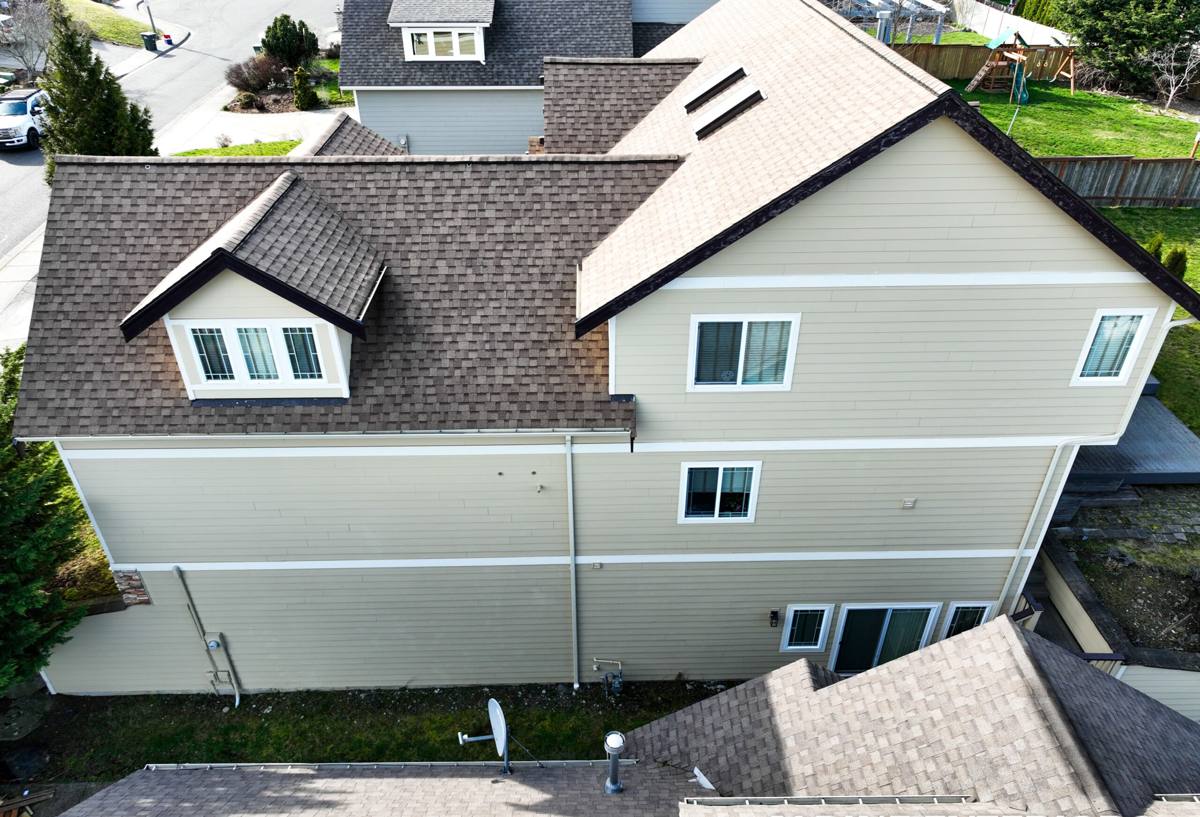
Why Roofs Age Differently Here Than Inland
Homes further from the water tend to lose roofs to sun and heat cycling. Around here, the story is different. Three things do most of the damage:
Salt Air
Airborne salt accelerates corrosion on exposed metal — nail heads, flashing, gutter hangers, and vent stacks. Once a fastener starts to rust, it loses its grip on the shingle or flashing it's holding down, and that's how small leaks start at seams and penetrations rather than in the middle of a roof plane.
Driving Rain
Wind-driven rain doesn't just fall on a roof, it pushes sideways and upward under shingle edges, around chimneys, and along valleys. A roof that would shed a straight-down rain just fine can still take on water when the wind pushes it at an angle, especially at transitions like where a lower roof meets a wall, or where a dormer breaks up the roof plane.
Moss and Sustained Moisture
Long stretches of damp, mild weather are exactly what moss needs to establish itself on north-facing and shaded roof sections. Moss doesn't just look bad — its root structure lifts shingle edges, holds moisture directly against the roofing material, and accelerates granule loss. Left alone through a few wet seasons, a mossy roof section will fail years before the rest of the roof.
Signs a Lynden Roof Needs Repair, Not Just Watching
Most roof problems give some warning before they turn into an interior leak. Catching them early is the difference between a modest repair and a much bigger project once water gets into the decking.
- Dark streaking or green/black growth concentrated on shaded or north-facing slopes
- Granules collecting in gutters or at downspout outlets
- Curling, cupping, or lifted shingle edges, especially near ridges and eaves
- Rust staining or visible corrosion around flashing, vent boots, and metal valleys
- Soft or spongy spots when walked on (a sign of decking that's absorbed moisture)
- Water stains on interior ceilings, especially after a windy rainstorm
- Daylight visible through the attic roof deck at seams or nail holes
- Shingles missing or torn loose after a windstorm
If you're seeing more than one of these, it's worth having someone look before the next heavy rain, not after.
What a Correct Roof Repair Actually Involves
A quality repair is more than swapping a few shingles. The goal is to fix the underlying cause of the failure, not just cover the symptom.
Diagnosis First
We start by tracing the leak or damage to its actual source, which is often several feet away from where the stain shows up inside. Water travels along the underside of decking and rafters before it drips, so an accurate repair depends on finding where it's actually entering, not just where it's showing.
Flashing and Penetrations
A large share of roof leaks in this area start at flashing — around chimneys, skylights, plumbing vents, and where a roof meets a sidewall. Salt air and repeated moisture cycling take a toll on metal flashing and the sealant around it faster than on the shingle field itself. Proper repair means re-flashing or resealing these points correctly, not just caulking over a symptom.
Matching Materials
Shingle repairs need to blend with the existing roof in both color and profile where possible, and more importantly need to tie into the existing underlayment and flashing system correctly so water is still shed in the right direction, layer over layer, down to the gutter line.
Moss and Debris Removal Done the Right Way
Moss and debris get cleared using low-pressure methods, never a pressure washer, which can drive water under shingles and strip protective granules. We treat the surface to slow regrowth, rather than just knocking the visible moss off and leaving the roots and spores behind.
Repair or Replace? How We Actually Decide
Not every damaged roof needs to come off. We look at the age, the extent of the damage, and how the roof is performing as a whole system before recommending anything.
| Factor | Points Toward Repair | Points Toward Replacement |
|---|---|---|
| Roof age | Under 15-20 years, most of the roof still performing well | Nearing or past its expected service life |
| Damage location | Isolated to a flashing point, valley, or single slope | Widespread granule loss or curling across most slopes |
| Decking condition | Solid, dry decking under the damaged section | Soft or rotted decking found in multiple areas |
| Leak history | First or isolated occurrence with a clear cause | Recurring leaks in different spots over time |
| Moss/algae extent | Concentrated on one slope, roof otherwise sound | Heavy, roof-wide moss with lifted shingles throughout |
We'll always tell you plainly which side of that table your roof falls on, and why, before we talk about cost.
Our Roof Repair Process
- Inspection. We walk the roof (weather permitting) and check the attic from the inside where accessible, looking for the actual entry point of any leak.
- Written scope. You get a clear explanation of what's failing, what we recommend fixing, and what it will cost — no vague line items.
- Repair. We remove and replace damaged materials down to sound decking, re-flash as needed, and match shingle coverage for a clean, weathertight result.
- Moisture check. Before closing anything up, we confirm the decking underneath is dry and sound, not just covering over a damp spot.
- Cleanup and walkthrough. We clear debris, check gutters near the repair area, and walk you through what was done.
Materials and Methods We Use
What goes under the shingles matters as much as the shingles themselves, especially in a climate that stays wet for long stretches of the year.
| Component | Why It Matters Here |
|---|---|
| Self-adhered ice and water membrane at valleys and eaves | Extra protection where wind-driven rain and ponding water are most likely to find a way in |
| Corrosion-resistant flashing and fasteners | Standard steel hardware degrades faster in salt-influenced air; we use materials built to hold up longer |
| Synthetic underlayment | More resistant to prolonged moisture exposure than older felt products during our long rainy stretches |
| Zinc or copper strips at ridge lines (where appropriate) | Helps slow moss regrowth on shaded, moisture-prone slopes |
Why a Crew That Already Works in Lynden Makes a Difference
Roofing crews unfamiliar with this part of Whatcom County sometimes treat every leak like a straightforward shingle failure, because that's what they see most often in drier inland markets. A crew that regularly repairs roofs in this specific area knows to check flashing and fasteners first, knows which slopes on a given lot orientation tend to hold moss, and knows how wind off the water behaves against different roof shapes. That local pattern recognition shortens the diagnosis and reduces the chance of fixing the wrong thing.
It also means we're not guessing at appropriate materials for the exposure level here — we're using what we've already seen hold up through repeated wet seasons on roofs just like yours.
Maintaining Your Roof Between Repairs
A repair holds up longer when it's not fighting neglect on the rest of the roof. A few habits go a long way in this climate:
- Keep gutters and downspouts clear so water isn't backing up under the eaves
- Trim back overhanging branches that keep shaded roof sections damp longer
- Have moss treated at the first sign of growth rather than waiting a season
- After major windstorms, do a visual check from the ground for lifted or missing shingles
- Schedule a roof check every couple of years, even with no visible problems
If you're seeing staining, moss, missing shingles, or a slow leak on a Lynden-area roof, we're glad to take a look and give you a straight answer on what it needs. Reach out for a free, no-pressure estimate using the form below.