 Semiahmoo Siding
 Windows Built for Lynden's Climate, Not a Showroom in Arizona
Lynden sits inland from Semiahmoo Bay, but it still lives inside the same маritime weather system that soaks all of Whatcom County for much of the year. That means long stretches of low-pressure rain systems, humidity that never fully lets up, and enough moss and mildew pressure to make every exterior surface on a house work harder than it would almost anywhere else in the country. Windows take the brunt of it. A window that's rated fine for a drier climate can still fail here in five or six years if it wasn't installed with this specific weather in mind — not because the glass unit failed, but because water found a way behind the frame and nobody caught it until the sill was soft.
We work on homes in and around Lynden regularly, and the pattern repeats: builder-grade vinyl windows installed in the 1990s and 2000s that were never flashed correctly, condensation trapped between panes because the seal finally gave out, and single-pane originals on older farmhouses that cost the owner real money every winter. Energy-efficient window replacement here isn't just about a lower heating bill — though that matters — it's about stopping water intrusion before it becomes a wall problem.
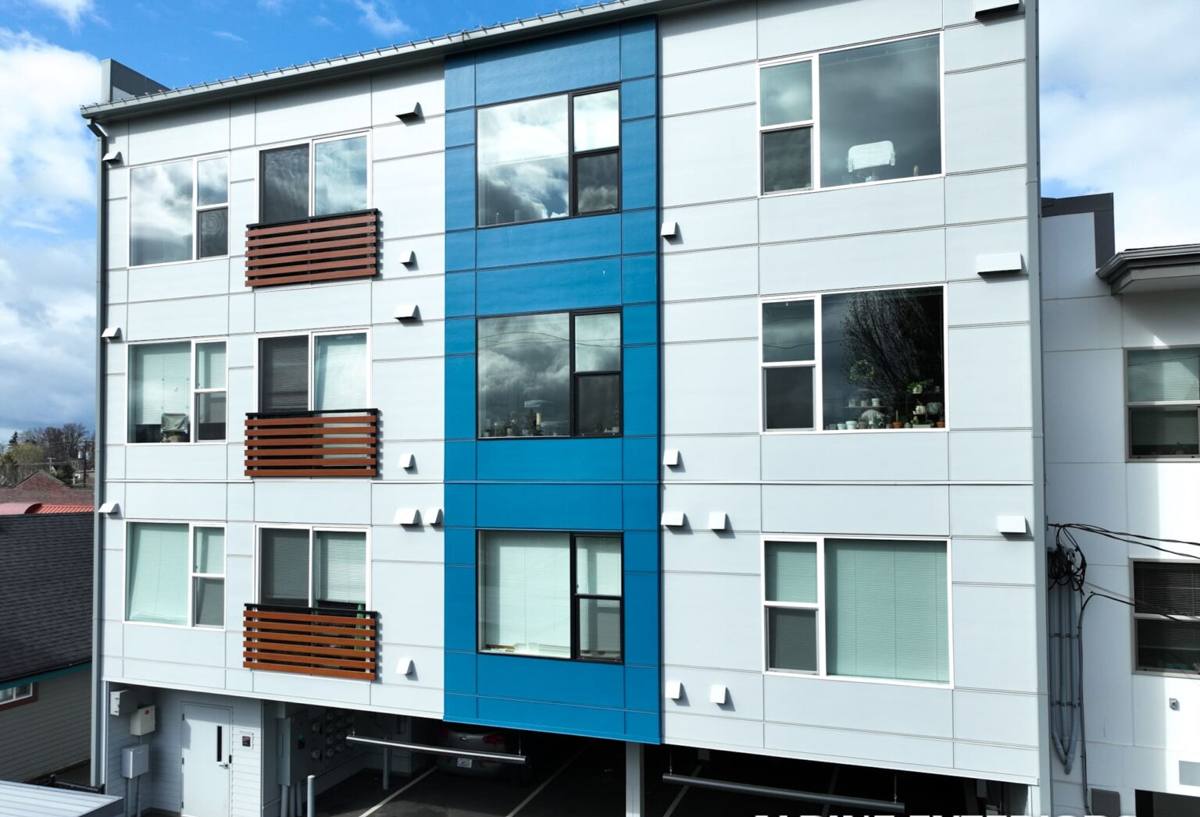
What Lynden's Weather Actually Does to a Window
Driving Rain and Wind-Loaded Water
Rain in this part of Washington rarely just falls straight down. Storms moving in off the Strait of Georgia and Semiahmoo Bay push moisture sideways, and wind-driven rain finds every gap in a window's weatherstripping, flashing, and sealant. A window that isn't flashed with a proper water management system — sill pan, house wrap integration, correctly lapped flashing tape — will eventually let water track behind the frame and into the wall cavity, even if the window itself looks fine from the outside.
Humidity and the Long Moss Season
Whatcom County's growing season for moss and algae is long, and it doesn't stop at the roofline. Window sills, trim, and the caulking around frames stay damp for weeks at a time in fall and winter, which accelerates rot in wood trim and breaks down cheap sealants faster than manufacturers' warranties assume. Vinyl and fiberglass frames resist this better than wood, but only if the perimeter sealant and flashing detailing are done right — the frame material doesn't matter if water is getting in around it.
Temperature Swings and Condensation
Lynden gets colder overnight temperature drops than the immediate coastline, especially on clear winter nights. That daily swing between a warm interior and a cold exterior is exactly what causes visible condensation on old single-pane or failed dual-pane glass — and it's a strong sign a window's insulating value is gone, not just an annoyance to wipe up every morning.
Signs Your Lynden Home Needs New Windows, Not Just Repairs
- Fog or moisture trapped between the panes of a dual-pane window (the seal has failed — this cannot be fixed, only replaced)
- Soft or discolored wood trim/sill around the window frame
- Visible daylight or a draft you can feel with your hand along the frame edge
- Windows that are difficult to open, close, or lock — often a sign the frame has racked or swollen
- A noticeable spike in heating cost compared to similarly sized rooms elsewhere in the house
- Paint or caulk failing repeatedly in the same spot no matter how often it's redone
- Visible moss, algae, or persistent black streaking on the sill or lower frame
What "Energy-Efficient" Actually Means for This Region
Energy efficiency for a Whatcom County window isn't primarily about summer heat — it's about winter heat retention and moisture control working together. We look at a few specific numbers and features rather than marketing language:
| Spec | Why It Matters Here |
|---|---|
| U-Factor (target 0.27–0.30 or lower) | Measures heat loss through the window — the primary driver of winter heating cost in this climate |
| Low-E glass coating | Reflects radiant heat back into the room during our long heating season |
| Argon or krypton gas fill | Improves insulation between panes; matters more here than in drier, milder climates |
| Warm-edge spacer system | Reduces condensation risk at the glass edge — a common failure point in humid climates |
| Frame material (vinyl, fiberglass, clad-wood) | Determines how well the frame itself resists moisture absorption and swelling over time |
A window that's efficient on paper but poorly installed will still leak, still fog, and still lose its rating's benefit within a few years. The install matters as much as the product.
Our Window Replacement Process
1. On-Site Assessment
We inspect existing window condition, frame material, sill and sheathing moisture, and how each window is currently flashed. This tells us whether we're dealing with a straightforward swap or whether there's hidden water damage that needs to be addressed first.
2. Product Selection Based on Exposure
Not every window on a house faces the same conditions. A west-facing window catching the worst of the driving rain may warrant a different sealant detail or frame spec than a sheltered window on a covered porch. We size the approach to each elevation, not a one-size-fits-all order.
3. Removal and Water Management Setup
Old windows come out carefully to check the rough opening for rot or prior water damage. We install a sloped sill pan and integrate flashing tape with the house wrap so water is directed out and away from the wall assembly — this is the step that's most often skipped or done poorly on lower-cost installs, and it's the one that determines whether the window lasts 10 years or 30.
4. Installation and Air Sealing
Windows are set plumb, level, and square, shimmed correctly to avoid stress on the frame, and sealed with low-expansion foam and proper exterior caulking rated for this climate's humidity.
5. Final Inspection and Cleanup
We check operation, seal integrity, and trim finish before we consider the job done, and we walk the homeowner through what to expect during the first rainy season.
Frame Material: What We Recommend and Why
For most Lynden homes, we steer customers toward vinyl or fiberglass frames over painted wood for anything exposed to weather. This isn't a knock on wood windows as a product — a well-maintained wood window can look great — but it's an honest trade-off assessment for this specific climate. Wood requires repainting and recaulking on a schedule that most homeowners underestimate, and any lapse lets moisture into end grain that then rots from the inside out, often invisibly, until the frame is failing. Vinyl and fiberglass don't need that maintenance cycle and handle sustained humidity better. Clad-wood windows (wood interior, aluminum or vinyl exterior cladding) split the difference and are a reasonable option where the interior wood look matters and the budget allows for it.
Cost Factors for Lynden Window Projects
| Factor | How It Affects Your Project |
|---|---|
| Number and size of windows | Largest single driver of total cost |
| Frame material | Vinyl is typically most economical; fiberglass and clad-wood cost more upfront but resist this climate's demands better long-term |
| Existing water/rot damage | Rotten sheathing or framing found during removal adds repair cost before the new window can go in correctly |
| Full-frame vs. insert replacement | Insert replacement (new window into the old frame) is cheaper but only appropriate when the existing frame is sound and well-flashed |
| Trim and finish work | Matching existing interior/exterior trim adds labor beyond the window unit itself |
We don't quote a job without seeing it. Broad per-window ranges you'll hear thrown around online rarely account for what's actually behind your specific siding, and we'd rather give you an accurate number than a fast one.
Why Hire a Crew That Already Works in Whatcom County
Window installation looks similar everywhere on the surface, but the flashing detail, sealant selection, and sill design that hold up against this region's rain load and humidity are specific to this climate. A crew used to installing in drier parts of the country can put in a technically fine window that still fails here in a few years because the water management wasn't built for what Lynden actually gets thrown at it. We size our approach to Whatcom County conditions on every job, and because we're already working in this area regularly, we're not guessing at what the local weather does to a house over time — we're accounting for it up front.
A Straightforward Look at Your Options
If you're not sure whether your windows need full replacement or whether a repair (resealing, hardware fix, re-glazing) would buy you more time, that's a fair question to ask before spending money on a full job. We'll tell you honestly which situation you're in. Some window problems are genuinely repairable; others are a symptom of a frame that's already compromised and throwing money at caulk won't fix it.
If you'd like a straight answer on where your windows stand, we offer a free, no-pressure estimate — we'll take a look, tell you what we actually see, and give you options rather than a hard sell. The form below is the easiest way to get started.