 Semiahmoo Siding
 Why Windows Take a Beating in This Part of Whatcom County
Homes in and around Lynden deal with a specific combination of weather that's harder on windows than most homeowners realize. It's not one big storm event that causes damage — it's the slow, steady grind of a marine-influenced climate. Driving rain comes in sideways during winter systems, moss and algae find a foothold on anything shaded or north-facing, and the humid, salt-tinged air that moves in off the Semiahmoo area and greater Whatcom County coastline keeps wood and metal components damp far more often than in drier climates. That combination doesn't destroy a window overnight. It works on seals, sills, and frames year after year until a window that looked fine starts fogging between panes, sticking when you try to open it, or letting in a draft you can feel from across the room.
Custom windows done right for this area aren't just about matching a rough opening. They're about choosing materials, seals, and installation details that actually hold up to years of wet weather cycling between soaked and dry, warm and cold.
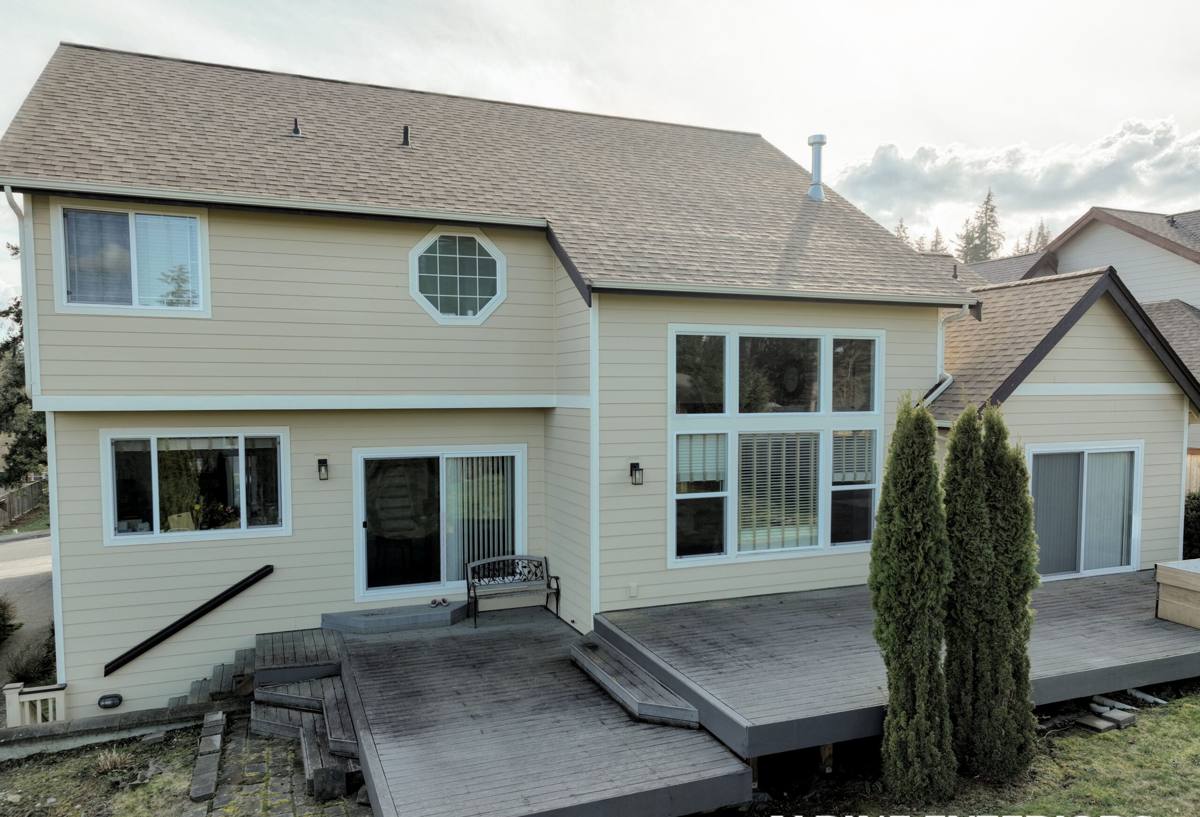
What "Custom" Really Means for a Lynden Home
"Custom" gets used loosely in this industry. For us, it means three things, and all three matter for older and newer homes alike in this region.
Custom Sizing
Many homes in this area — especially older farmhouses and homes built in stages over the decades — don't have standard window openings. Settling, additions, and previous remodels all shift dimensions slightly. A true custom window is measured and built to the actual opening, not forced into a stock size with extra shimming and caulk to make up the difference. Extra shimming and caulk is exactly where future leaks start.
Custom Material Choice
Not every home needs the same frame material. A window on a shaded, moss-prone north wall has different needs than one on a sun-exposed south wall. We match the frame and glass package to where the window actually sits on the house, not just what's cheapest to order in bulk.
Custom Fit for the Style of Home
Farmhouse, craftsman, ranch, newer construction — window proportions and trim details should look like they belong on the house. Off-the-shelf replacement windows that don't match original sightlines are one of the most common ways a remodel ends up looking like a patch job instead of an upgrade.
Frame Material Comparison for Wet, Moss-Prone Climates
There's no single "best" window material — there are trade-offs, and the right call depends on budget, exposure, and how much upkeep you want to take on.
| Material | Moisture Performance | Maintenance | Typical Trade-Off |
|---|---|---|---|
| Vinyl | Very good — won't rot, resists moss growth on frame surface | Low — occasional cleaning | Limited color/finish options; can look less premium on higher-end homes |
| Fiberglass | Excellent — very stable in wet/dry and hot/cold cycling | Low | Higher upfront cost than vinyl |
| Wood-Clad | Good if detailed correctly, but the wood interior is vulnerable if seals fail | Moderate to high | Best natural look, but least forgiving of installation mistakes in this climate |
| Aluminum | Fair — conducts cold and can condense/sweat in damp weather | Low | Least common for residential replacement in this region for that reason |
We'll walk through these options honestly during an estimate rather than steering every job toward one product line. The right material is the one that matches your home's exposure and your tolerance for upkeep, not the one with the best margin for us.
How We Approach a Window Install or Replacement
- On-site assessment. We look at each opening individually — not just the window, but the sill condition, flashing, and any signs of past moisture intrusion around the frame.
- Precise measurement. Every opening is measured for its actual current dimensions, accounting for any settling or squaring issues common in older homes.
- Material and glass selection. We recommend frame material and glass package (low-E coatings, gas fill, pane count) based on the window's exposure and your budget.
- Removal and inspection. Old windows come out carefully so we can inspect the sheathing and sill underneath before anything new goes in — this is where hidden moisture damage from years of driving rain often turns up.
- Correct flashing and sealing. This step is where most bad installs go wrong. Proper flashing tape, sill pans, and sealant order matter more in a wet climate than almost anywhere else in the country.
- Installation and adjustment. New windows are set, shimmed as needed, and adjusted so they operate smoothly and seal tightly.
- Interior and exterior finish work. Trim, caulking, and touch-up paint or stain to match the home.
- Final walkthrough. We check operation, sealing, and appearance with you before calling the job done.
Signs Your Current Windows Are Already Failing
Because moisture damage in this climate is gradual, a lot of homeowners live with early warning signs for years before addressing them. Watch for:
- Fogging or a hazy film between panes of double-pane glass (a sign the seal has failed)
- Visible moss or dark streaking on the frame or sill, especially on shaded walls
- Soft or spongy wood at the sill or lower corners of the frame
- Windows that stick, won't latch fully, or have become hard to open and close
- Noticeable drafts or a cold spot near the window even when it's closed
- Paint or finish that's peeling or bubbling specifically around the window frame, not the wider wall
- Condensation forming on the inside of the glass regularly during cold, damp weather
Any one of these on its own might just mean a minor repair. Several at once, especially soft wood at the sill, usually means it's more cost-effective to replace than to keep patching.
Where Poorly Installed Windows Go Wrong
We've seen the same handful of installation mistakes cause repeat problems in this area, regardless of how good the window product itself was:
Skipped or Incorrect Flashing
Flashing tape and sill pans are what actually keep driving rain from working its way behind the window and into the wall cavity. When this step is rushed or skipped to save time, the window can look fine from outside for a year or two while moisture quietly damages the framing behind it.
Caulk Used as a Substitute for Proper Flashing
Caulk is a finishing touch, not a waterproofing system. A heavy bead of caulk around a window that lacks proper flashing underneath will eventually fail, and when it does, water has nowhere to go but into the wall.
Ignoring Existing Sill or Sheathing Damage
Installing a brand-new window over a compromised sill just locks the existing problem behind a new frame. It should be repaired first.
What Drives Cost on a Window Job
| Factor | Why It Matters |
|---|---|
| Frame material | Vinyl, fiberglass, and wood-clad have different material costs and labor requirements |
| Glass package | Low-E coatings and gas-filled panes add cost but improve comfort and energy performance |
| Opening condition | Rot or framing repair discovered during removal adds labor beyond the base install |
| Number and size of openings | Larger or custom-shaped windows require more material and precision |
| Trim and finish detail | Matching existing trim profiles or historic detailing adds finish-carpentry time |
Broadly, straightforward vinyl replacements in standard openings sit at the lower end of the cost range, while custom sizing, fiberglass or wood-clad frames, and any structural repair at the sill push a project toward the higher end. We'll give you a clear, itemized number after seeing the actual openings — not a guess over the phone.
Why Local Experience Matters for This Kind of Work
A crew that regularly works homes in the Lynden and greater Semiahmoo area already knows what to expect before pulling the first window: how moss tends to build up on certain wall orientations, how much driving rain a given exposure typically takes, and how older homes in Whatcom County were originally built and where they tend to have settled or shifted over time. That's not something you can fully substitute with a generic install checklist. It shows up in small decisions — how much extra attention a north-facing sill gets, or when it's worth recommending fiberglass over vinyl for a particularly exposed wall — that add up to a window installation that actually holds up here, not just on paper.
It also means straightforward, honest conversations about timeline. Weather windows for exterior work in this climate can be tighter than homeowners expect, and a crew that works here regularly plans around that instead of promising a schedule that gets pushed back by rain.
Getting an Estimate
If you're dealing with foggy panes, a sticking sash, or you're just planning ahead before the next wet season sets in, we're happy to come take a look. There's no pressure and no obligation — just a straightforward assessment of your current windows and honest options for what makes sense for your home and budget.