 Semiahmoo Siding
 Roof Repair for Laurel Homes
Laurel sits a short distance inland from the Semiahmoo shoreline, but it's still squarely inside the marine climate that defines this part of Whatcom County. Homes here don't get hit with the same open-water wind that properties right on the spit see, but they still deal with salt-laden air carried in off the Strait, driving rain that comes and goes for months at a time, and a moss season that runs longer here than it does almost anywhere outside the Pacific Northwest. A roof in Laurel earns its keep, and when something goes wrong, it usually doesn't stay a small problem for long.
This page is about one thing: roof repair for homes in and around Laurel. Not a full tear-off, not a general overview of roofing systems — the specific work of finding what's actually failing on an existing roof, fixing it correctly, and leaving the roof in a condition where it can go back to doing its job for years, not months.
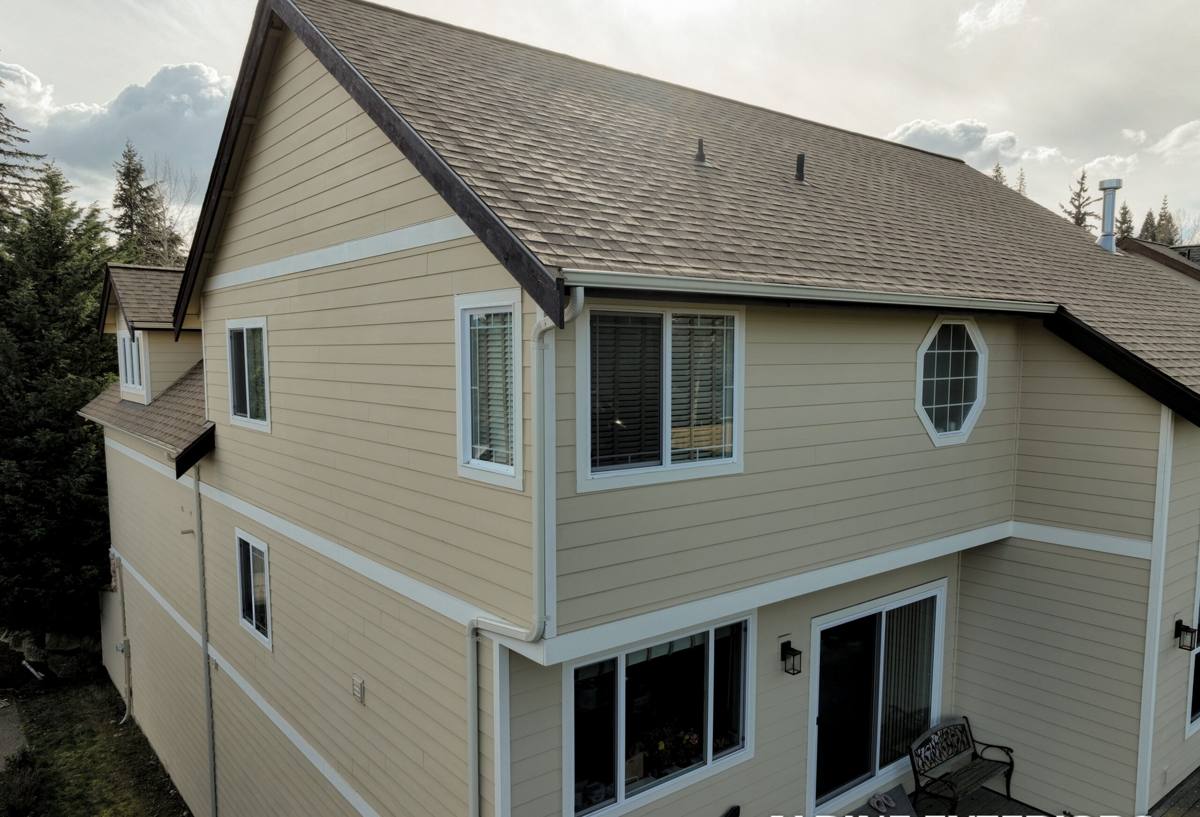
What This Climate Does to a Laurel Roof
Moss That Keeps Coming Back
Mild temperatures and near-constant dampness give moss a long growing window across Whatcom County, and Laurel's tree cover and quieter, less wind-scoured setting make it a comfortable place for moss to establish. Moss on its own is unsightly, but the real damage happens underneath it — moss holds moisture directly against the roofing material, which shortens the life of the surface and can work its way under shingle edges over time.
Driving Rain and Wind-Driven Moisture
Rain in this part of the county rarely just falls straight down. Storms moving through push rain sideways into roof-to-wall transitions, valleys, and anywhere flashing meets a penetration like a vent pipe, chimney, or skylight. Those are the spots where a roof either sheds water cleanly or lets it find a way in, and it's almost always a flashing or transition detail — not the field of the roof itself — that ends up being the actual source of a leak.
Salt Air, Even Set Back From the Water
Laurel isn't waterfront, but it's close enough to Semiahmoo Bay and the broader Strait that salt-influenced air still reaches homes here, especially during windier weather. Salt accelerates corrosion in exposed metal — flashing, fasteners, and vent hardware in particular — which is one more reason repairs need to use hardware suited to this region rather than whatever's cheapest at a big-box store.
Common Roof Repair Issues We See in Laurel
- Moss buildup in valleys and on shaded, north-facing slopes that keeps returning after a homeowner clears it themselves
- Lifted, cracked, or missing shingles after a windstorm, often concentrated on one exposed slope
- Flashing that's pulled loose, rusted through, or was never properly lapped around chimneys, vents, and skylights
- Granule loss showing up as grit in gutters and downspouts, a sign the shingle surface is wearing thin
- Water staining on interior ceilings or upper walls, usually near an exterior wall or a roof valley
- Soft, spongy decking felt underfoot in the attic near a leak point, meaning the sheathing itself has already absorbed moisture
Why Small Leaks Don't Stay Small
A slow leak that only shows up during the heaviest storms is easy to put off. The problem is that wood sheathing exposed to repeated wetting doesn't dry out fully between storms during a long Whatcom County wet season, so the damage compounds. What starts as a repair measured in a couple of shingles and a strip of flashing can turn into replacing rotted decking if it sits unaddressed through a second or third wet season.
What a Correct Roof Repair Actually Involves
A repair that just patches the visible symptom tends to fail again within a season or two. Doing it right starts with finding the actual source of the problem, which is not always directly above where the leak shows up inside the house — water can travel along rafters or sheathing before it drips somewhere visible.
Diagnosis Before Repair
We trace the leak to its actual entry point rather than assuming the stain marks the spot. That means checking flashing at every nearby penetration, looking at the condition of the underlayment where shingles have been pulled back, and checking whether the decking underneath has already started to soften.
Matching Materials and Technique
Repairs need to tie into the existing roof correctly — shingles lapped the right direction and the right amount, flashing that integrates with what's already there instead of just being caulked over the top, and fasteners placed where they'll actually hold under wind load. A patch that looks fine from the ground but wasn't tied in correctly underneath is often worse than doing nothing, because it can trap moisture instead of shedding it.
Checking What's Around the Repair, Not Just the Repair Itself
If one section of a roof is failing, it's worth checking whether nearby flashing, vents, or shingle courses are showing early signs of the same wear. Fixing one leak while ignoring an adjacent trouble spot just means a second repair call within a year or two.
Roof Repair vs. Roof Replacement: How We Help You Decide
Not every roof problem calls for a full replacement, and not every roof is a good candidate for another round of patchwork. The right call depends on the roof's age, how much of it is affected, and what shape the decking underneath is in.
| Factor | Points Toward Repair | Points Toward Replacement |
|---|---|---|
| Age of roofing material | Well within its expected service life | At or past the end of its typical lifespan |
| Extent of damage | Isolated to one area, slope, or penetration | Spread across multiple slopes or widespread granule loss |
| Decking condition | Firm, dry sheathing found during inspection | Soft or rotted decking in more than a small, localized area |
| Repair history | First real issue on an otherwise sound roof | Repeated repairs to the same or nearby areas |
| Cost outlook | Repair cost is modest relative to remaining roof life | Repair cost approaches what replacement would run |
Most straightforward repairs — a section of flashing, a handful of damaged shingles, a resealed penetration — land in a modest cost range measured in hundreds to low thousands of dollars depending on scope and access. A full replacement is a much larger investment, but it also resets the clock on the whole roof rather than extending the life of an aging one piecemeal. We'll walk a Laurel homeowner through where their roof actually falls on that spectrum before recommending either option.
Our Roof Repair Process
- An on-site inspection of the roof surface, flashing, penetrations, and attic space to find the actual source of the problem, not just where it shows up inside the house
- A clear explanation of what's failing and why, along with photos where useful, before any work is proposed
- A written scope and cost estimate so there are no surprises once work begins
- The repair itself, matched to the existing roofing material and correctly integrated with surrounding flashing and shingle courses
- A final check of the surrounding roof area for related wear that could turn into the next leak if left alone
We don't upsell a full replacement to a homeowner who genuinely just needs a repair, and we don't recommend another round of patching on a roof that's clearly past the point where that makes sense. The goal is an honest read on the roof in front of us, not a standard answer we give everyone.
Signs a Laurel Homeowner Should Call for a Roof Repair Now
- A ceiling or wall stain that appears or grows after a windy storm
- Shingles visible in the yard or gutters after high wind
- Moss that has come back thick after a previous cleaning
- Daylight visible through the roof deck from inside the attic
- Flashing that looks lifted, rusted, or gapped around a chimney, vent, or skylight
- A musty smell in an upper room or attic that wasn't there before
None of these on their own mean a roof is in crisis, but each one is worth a look before the next wet-season storm turns a small fix into a bigger one.
Why a Crew That Already Works Laurel Matters
Roofing crews who mostly work drier, more sheltered parts of the country don't always carry the same instincts about flashing detail and fastener corrosion that this climate demands. A crew that regularly repairs roofs around Laurel and the wider Semiahmoo area already knows how moss establishes on shaded slopes here, how far wind-driven rain can travel under a poorly lapped flashing joint, and which hardware actually holds up against the salt-influenced air that reaches even the inland parts of Whatcom County. That familiarity shows up in the small decisions during a repair — not in anything a homeowner would necessarily notice at the time, but in whether the fix is still holding two or three wet seasons later.
A Quick Checklist Before Hiring for Roof Repair in Laurel
- Ask what they believe is actually causing the leak, not just where it shows up inside
- Confirm current Washington contractor licensing and active liability insurance
- Get a written scope of the repair before work starts, not just a verbal price
- Ask whether they checked the attic or decking condition, not only the roof surface
- Ask how the repair will be flashed and tied into the surrounding roofing material
If you're dealing with a leak, storm damage, or a roof that just needs a closer look, we're glad to come take an honest, no-pressure look and tell you plainly what your roof actually needs. Reach out below for a free estimate.