 Semiahmoo Siding
 Why Birch Bay Is a Tough Place to Own Siding
Birch Bay sits close enough to the water that homes here deal with a combination of stresses most inland Whatcom County properties don't face at the same intensity: salt-laden air off the Strait, driving rain that comes in sideways during winter storms, and a long, damp shoulder season that keeps north- and west-facing walls shaded and wet for weeks at a time. That last part is what drives the moss and algae growth that's so common on siding, trim, and roofing throughout this stretch of the coast.
None of this is unusual for a Pacific Northwest coastal community. But it does mean the siding material and the installation details matter more here than they would on a home twenty miles inland. A product or a nail pattern that "gets away with it" in a drier climate can fail years early on a home a few blocks from Semiahmoo Bay.
What James Hardie Brings to a Home in This Environment
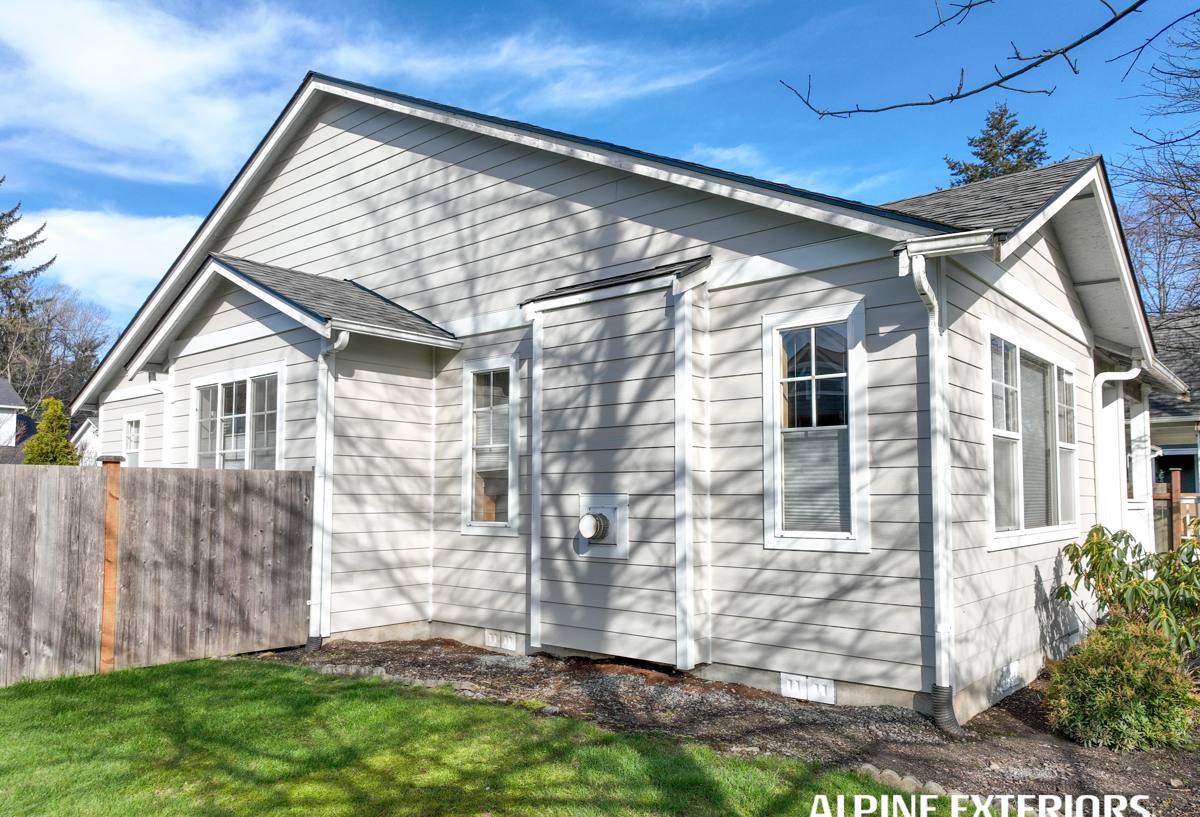
We install James Hardie fiber cement siding exclusively, and Birch Bay is exactly the kind of environment that explains why. Fiber cement is non-combustible and dimensionally stable — it doesn't absorb and release moisture the way wood-based products do, so it isn't constantly expanding, contracting, and opening up seams the way cedar or engineered wood siding can in a wet, salt-exposed climate.
Climate-Engineered Product Lines
James Hardie manufactures different formulations for different climate zones, and that distinction matters on the water. Their HZ5 product line is engineered for regions with more moisture exposure and freeze-thaw cycling, which fits the Pacific Northwest coast better than a generic, one-size-fits-all product. We specify the HZ5 formulation for Birch Bay installs rather than a version built for a drier, milder inland climate.
ColorPlus Factory Finish
Most Hardie siding we install uses the factory-applied ColorPlus finish rather than field painting. That matters in a salt-air environment because the factory process bakes on a finish that's more resistant to fading and moisture intrusion at the surface than a job-site paint job can achieve, and it comes with its own finish warranty separate from the substrate warranty. Salt air is hard on paint — a factory finish gives homes here a real head start.
The Installation Details That Actually Determine Whether Siding Lasts Here
Fiber cement siding is only as good as the installation behind it. In a climate like Birch Bay's, a handful of details separate a job that holds up for decades from one that starts showing problems in five years.
- Rainscreen or drainage gap: A gap behind the siding lets any moisture that does get past the cladding drain and dry out instead of sitting against the wall sheathing.
- Flashing at every penetration: Windows, doors, hose bibs, light fixtures, and vents all need proper flashing and sealant details — this is where driving rain finds its way in, not through the flat field of the siding.
- Correct fastener spacing and type: James Hardie specifies fastener size, spacing, and embedment depth for a reason; loose or over-driven fasteners create gaps that trap moisture and eventually cause the board to work loose.
- Proper clearance at grade and roof lines: Siding installed too close to the ground, a deck, or a roofline traps moisture against the bottom edge — a common cause of early rot and paint failure on coastal homes.
- Caulking only where it belongs: Over-caulking horizontal joints can trap water behind the siding instead of letting it shed; Hardie's installation instructions specify where sealant is and isn't appropriate.
These aren't optional refinements — they're the difference between a wall assembly that manages the moisture load Birch Bay throws at it and one that slowly fails behind a siding product that gets unfairly blamed for a bad install.
How Our Process Works on a Birch Bay Home
We start with an on-site walkthrough of the exterior, checking the condition of the existing siding, sheathing, and any trouble spots — areas with visible moss buildup, staining, soft trim, or past water intrusion get extra attention before we ever talk product or price.
From there we put together a written scope that covers the Hardie product line and profile, the color (factory ColorPlus or site-applied, depending on the product), house wrap and drainage plane details, flashing scope, and a realistic timeline. Once the old siding is removed, we inspect the sheathing underneath — this is the point where hidden moisture damage from years of coastal exposure sometimes turns up, and we'll walk you through it before covering it back up rather than after.
Installation follows James Hardie's published fastening and clearance specifications, not shortcuts, because those specifications are what keep the manufacturer's warranty valid and what actually holds up against wind-driven rain off the bay. We finish with a walkthrough so you know what was done and what warranty coverage applies.
James Hardie Compared to Other Siding Options in This Climate
Homeowners in Birch Bay often ask why we don't offer vinyl, LP SmartSide, or cedar as alternatives. Here's an honest comparison of how these materials tend to perform against the specific stresses this area produces.
| Factor | James Hardie Fiber Cement | Vinyl | Wood / Engineered Wood |
|---|---|---|---|
| Salt air exposure | Non-organic, doesn't absorb salt moisture into the material itself | Can become brittle and discolored with prolonged coastal UV and salt exposure | Organic material is more vulnerable to salt-accelerated moisture cycling |
| Driving rain / moisture resistance | Engineered HZ5 formulation for wetter climates; dimensionally stable when installed to spec | Sheds water but seams and panels can flex and loosen over time | Prone to swelling, cupping, and rot if moisture gets behind the surface |
| Moss and algae growth | Factory finish resists surface staining better than field-painted or organic surfaces | Doesn't feed moss growth but shows algae staining that's hard to fully clean | Organic surface is a food source for moss and algae in damp, shaded areas |
| Fire resistance | Non-combustible | Combustible, can melt or warp near heat sources | Combustible |
| Typical maintenance | Periodic washing; repaint only if not ColorPlus finish, on a much longer cycle | Low maintenance but limited repair options if damaged or faded | Regular repainting/staining and moisture monitoring |
This isn't a claim that vinyl or wood siding can't be installed correctly and last — it's why we made a professional decision to specialize in one product system we can install to spec every time, rather than stock several products and install all of them at a "good enough" level.
Living With Hardie Siding in a Salt Air, Moss-Prone Environment
Correctly installed James Hardie siding is genuinely low-maintenance in this environment, but "low-maintenance" doesn't mean "no maintenance." A few habits go a long way on a Birch Bay home:
- Rinse siding periodically, especially on north- and west-facing walls where moss and algae tend to establish first.
- Keep gutters clear so overflow isn't running down the siding face and staying wet longer than it should.
- Trim back landscaping that shades siding and keeps it from drying out between rain events.
- Inspect caulking at trim and penetrations every couple of years — sealant is a maintenance item on any siding system, Hardie included.
- Address any soft trim, staining, or lifted boards promptly rather than waiting — small moisture issues are far cheaper to fix early.
Why It Matters to Hire a Crew That Works Birch Bay Regularly
Siding installation instructions don't change block by block, but judgment calls do. Knowing which walls in a given neighborhood take the worst of the wind-driven rain, how much clearance to build in near grade on a lot with drainage challenges, and where moss tends to establish fastest on local homes all comes from working in this specific stretch of Whatcom County repeatedly — not from a generic install checklist. A crew that treats a Birch Bay home the same as a job in a drier, inland climate is more likely to skip details that don't matter elsewhere but matter here.
What to Check Before You Hire Anyone for This Job
- Are they a James Hardie-focused installer, or does fiber cement compete for their attention with several other siding products?
- Will they specify the HZ5 (or appropriate climate zone) product for a coastal Whatcom County home?
- Do they inspect and address sheathing condition before re-siding, not just cover it up?
- Is flashing and drainage plane detail spelled out in the written scope, not left vague?
- Do they follow James Hardie's published fastening and clearance specifications so the manufacturer's warranty stays valid?
If your Birch Bay home's siding is showing moss staining, soft trim, or you're just planning ahead for a replacement, we're glad to walk the exterior with you and give you a straightforward, no-pressure estimate — using the form below.