 Semiahmoo Siding
 Cherry Point's Coastline Is Hard on Siding
Cherry Point sits along the Whatcom County shoreline near Semiahmoo, close enough to the water that homes here deal with a different set of exterior problems than houses twenty miles inland. Salt-laden air moves off the water and settles on everything it touches, driving rain comes in sideways during winter storms, and the shade from mature evergreens keeps north-facing walls damp for weeks at a time. Add a moss season that can run from October through April in a wet year, and you have an exterior wall system that never really gets a break.
None of that is unusual for this part of Washington. What matters is whether the siding on a given house was actually built and installed to handle it, or whether it was chosen because it was the cheapest option at the time. We install James Hardie fiber cement siding exclusively, and this page is about what that means for a Cherry Point home specifically — not siding in general.
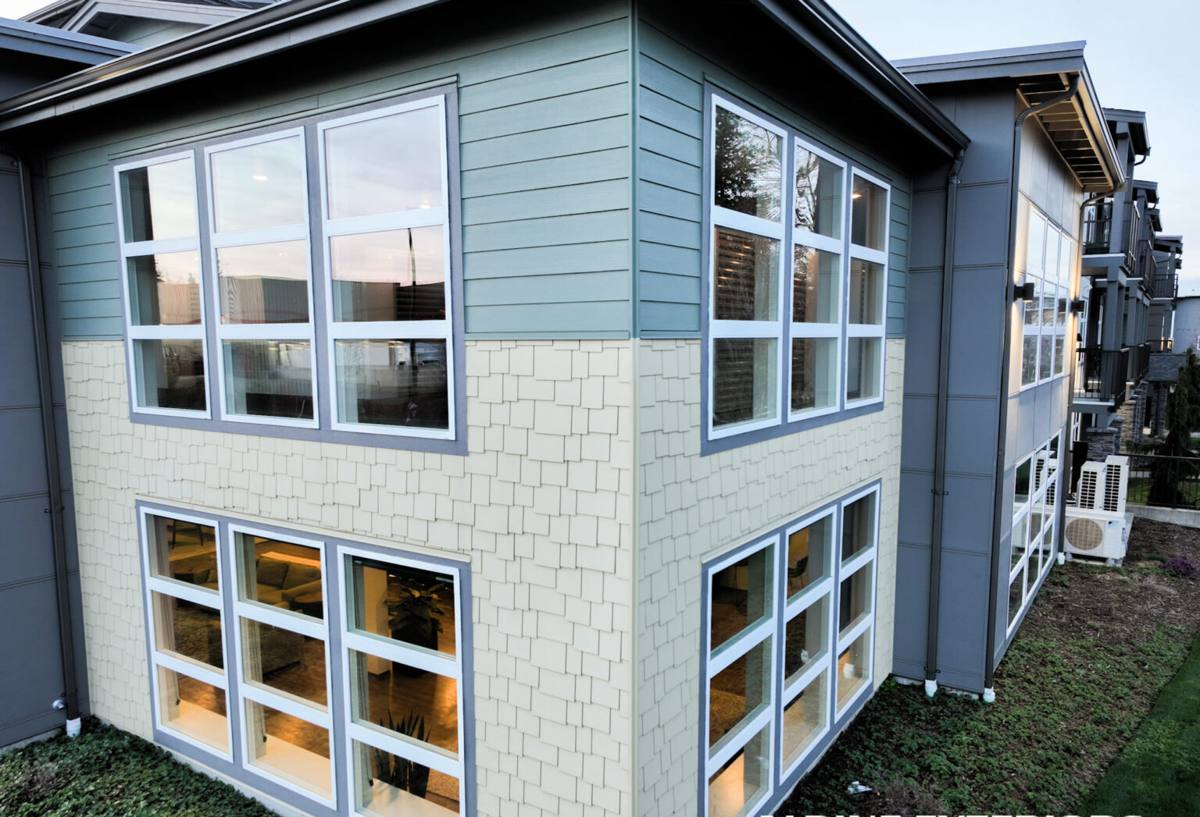
What Salt Air, Rain, and Moss Actually Do to a Wall
Salt air is corrosive to exposed metal fasteners and trim, and it accelerates the breakdown of paint films faster than the same product would fail further inland. Wood and wood-composite sidings — cedar, primed spruce, LP SmartSide, and similar OSB-based products — are especially vulnerable because their core material swells when it takes on moisture and doesn't fully release that moisture before the next rain arrives. Over repeated cycles, that swelling telegraphs through the paint, opens seams at butt joints, and gives moss and mildew a rougher surface to grip.
Vinyl siding doesn't rot, but it has its own weakness here: it expands and contracts significantly with temperature swings, and in areas with persistent damp shade, algae and moss growth on vinyl is a cosmetic problem that pressure washing only partially solves before it returns. None of this means these products are junk — it means they were not the right fit for what a Cherry Point exterior actually experiences year-round, which is why we don't install them.
Why We Install Only James Hardie Fiber Cement Here
James Hardie's fiber cement is a cement, sand, and cellulose fiber composite. It does not have an organic core that swells and rots when it gets wet, and it is non-combustible, which matters during the dry stretches of summer even in a generally wet county like Whatcom. For a marine-exposed property, the practical benefit is straightforward: the board itself is dimensionally stable in a climate that never stops cycling between wet and dry.
HZ5 Climate-Engineered Product Line
Hardie manufactures its siding in different formulations tuned to different climate zones. The HZ5 line is engineered for wetter, more variable climates like the Pacific Northwest, with adjustments to the product's moisture and freeze-thaw performance compared to the versions sold in hot, dry regions. Installing the wrong climate zone product is a real mistake we see on homes that were re-sided by out-of-area crews — it isn't a cosmetic detail, it's the wrong tool for the coastal exposure Cherry Point actually has.
ColorPlus Factory Finish
Most of what fails first on a repainted wood or fiber cement exterior is the paint, not the substrate underneath. Hardie's ColorPlus finish is baked on in a controlled factory environment rather than applied on site, which gives it better adhesion and more consistent coverage than field-applied paint, along with a longer color warranty. In a salt-air environment where field-applied paint tends to chalk and fade faster, that factory finish is doing real work, not just saving a paint job.
What a Correct Installation Actually Involves
Fiber cement siding is only as good as the installation behind it. Hardie publishes specific requirements for fastening, clearances, and flashing, and skipping them is the single most common reason a siding job fails early — not the product itself. On a coastal property, a few of these details matter more than they would on a sheltered inland lot.
| Installation Detail | Why It Matters at Cherry Point |
|---|---|
| Ground and roof clearance | Wind-driven rain splashes higher off hard surfaces near the water; tight clearances trap moisture against the bottom course |
| Weather-resistive barrier and proper lap | Blocks wind-driven rain from reaching the sheathing before it can drain back out |
| Corrosion-resistant fasteners | Standard fasteners can corrode faster in salt-influenced air, leading to streaking and loosened boards |
| Caulking at butt joints and penetrations | Poorly sealed joints are where moss gets a foothold and where water intrusion usually starts |
| Proper nailing pattern and blind-nailing where specified | Prevents board movement that opens seams during freeze-thaw and wind cycles |
Every one of these is inspectable after the fact if you know what to look for, which is part of why we walk a homeowner through what was done, not just what it looks like when we're finished.
Our Process for a Cherry Point Project
- On-site assessment — we look at existing siding condition, moisture staining, trim and window flashing, and how exposed the specific walls of the house are to prevailing wind and rain.
- Scope and product plan — we specify the correct Hardie product line and profile for the exposure, plus any necessary repairs to sheathing or water barrier found during tear-off.
- Tear-off and moisture check — old siding comes off and we inspect the sheathing underneath before anything new goes up; hidden rot gets addressed, not covered.
- Water barrier and flashing installation — this layer, not the visible siding, is what actually keeps water out of the wall assembly long-term.
- Siding installation to Hardie spec — correct clearances, fastening, and joint treatment as outlined above.
- Final walkthrough — we go over the finished work with the homeowner and explain what was done and why.
What It Costs to Side a Home in Cherry Point
Cost depends on the size and complexity of the house, how much of the existing siding and any underlying sheathing needs to be replaced, and the specific Hardie products and trim details chosen. A few factors move the number more than homeowners expect:
| Factor | Effect on Project Cost |
|---|---|
| Existing water damage found at tear-off | Adds sheathing repair or replacement before new siding can go up |
| Number of stories and roof lines | More cutting, staging, and trim work at transitions |
| Plank profile and reveal chosen | Wider reveals and specialty profiles cost more in material and labor than standard lap |
| Trim scope (windows, corners, fascia) | Full trim replacement adds material and labor beyond the field siding itself |
| Site access and staging | Wooded or tight lots near the water can slow scaffolding and material handling |
We give homeowners a written, itemized quote after the on-site assessment rather than a ballpark over the phone, because the tear-off almost always reveals something that changes the picture on an older coastal home.
Living With Fiber Cement Siding Through a Long Moss Season
Fiber cement doesn't rot, but it still needs a reasonable amount of care in a damp, shaded climate. The good news is that the maintenance is mostly about staying ahead of moss and buildup rather than fighting structural decay.
- Rinse siding gently once or twice a year, focusing on north-facing and shaded walls where moss and algae collect fastest
- Keep gutters clear so overflow doesn't run directly down the siding face
- Trim back vegetation and tree cover that keeps a wall shaded and damp longer than the rest of the house
- Re-caulk joints and penetrations if you notice cracking or gaps, rather than waiting for a visible leak
- Touch up any impact damage promptly so the factory finish keeps doing its job at that spot
Why a Crew That Already Works This Coastline Matters
A siding crew that mostly works dry, inland neighborhoods doesn't run into wind-driven rain details, salt-influenced corrosion, or a five-month moss season as a matter of routine. We do, because it's the environment our Cherry Point and Semiahmoo customers actually live in. That shows up in small decisions — where we add extra flashing attention, which fastener spec we insist on, how we sequence tear-off around a wet forecast — that don't show up on a brochure but do show up in how the siding performs five and ten years out.
If you're weighing a siding replacement on a Cherry Point or Semiahmoo property, we're glad to take a look and give you a straight, no-pressure assessment of what your home actually needs. Use the form below to request a free estimate.