 Semiahmoo Siding
 Fiber Cement Siding, Built for Blaine's Coastline
Blaine sits right where Semiahmoo Bay meets the open water of the Strait of Georgia, and that location shapes everything about how a home's exterior ages here. Salt-laden air drifts in off the water almost daily, wind-driven rain hits siding sideways during winter storms, and the damp, shaded stretches under mature evergreens stay wet long enough for moss and algae to take hold. Whatcom County's marine climate is mild compared to most of the country, but "mild" doesn't mean "gentle" on a house. It means near-constant moisture exposure, twelve months a year, with very little dry season to let materials fully recover.
We install James Hardie fiber cement siding exclusively, and Blaine is exactly the kind of environment that explains why. This page focuses specifically on what fiber cement siding needs to do for homes in this part of Semiahmoo, what a correct installation actually involves, and why hiring a crew that already works this coastline matters more here than it does inland.
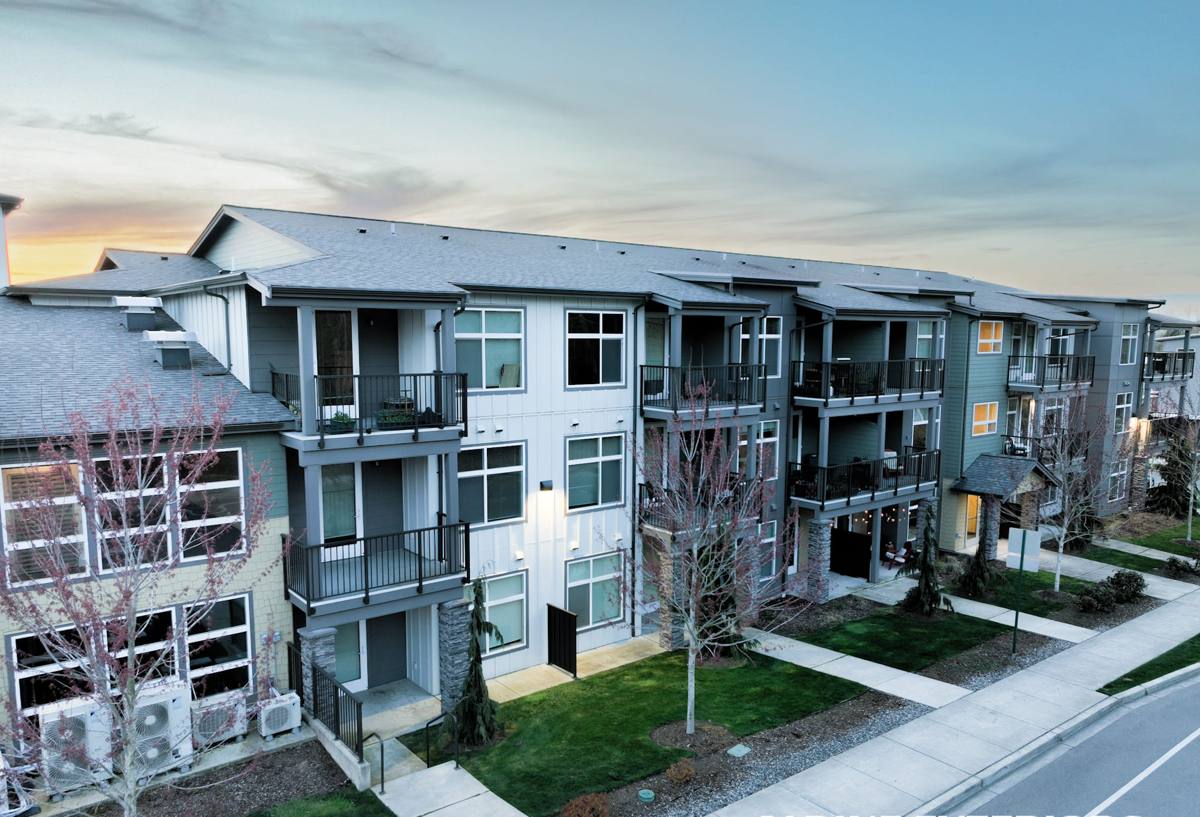
What Blaine's Climate Actually Does to Siding
Salt Air and Corrosion
Airborne salt doesn't just sit on the surface of a house — it works into fasteners, trim joints, and any place where two materials meet. Over years, salt exposure accelerates corrosion in low-grade nails and staples, and it degrades finishes that weren't formulated to resist it. This is one of the reasons fastener choice and factory-applied finishes matter so much more here than in a dry inland climate.
Driving Rain
Storms coming off the Strait don't just drop rain straight down — wind pushes it sideways into wall assemblies, seams, and butt joints. Siding that relies on caulk alone to keep water out, or that has poorly sealed joints, will eventually let moisture behind the cladding. Once water gets behind the siding, it's the wall sheathing and framing that pay the price, not just the siding itself.
Moss and Algae Season
Blaine's tree cover, cool temperatures, and long stretches of overcast, damp weather add up to a moss and algae season that can run most of the year on north-facing and shaded walls. Materials that hold surface moisture or have a porous, absorbent finish give moss and algae something to grip onto. A dense, factory-finished surface sheds water faster and gives biological growth less to hold onto.
Why We Only Install James Hardie Fiber Cement
We don't install vinyl, LP SmartSide, primed cedar or spruce, or other fiber cement brands like Cemplank or Allura. That's a deliberate standard, not a sales pitch, and it comes directly from what we've seen hold up — and not hold up — in exactly this kind of coastal, high-moisture environment.
- Non-combustible core: James Hardie siding is fiber cement through and through, not a wood-based composite, which matters for both fire resistance and long-term dimensional stability in wet-dry cycling.
- ColorPlus factory finish: a baked-on, multi-coat finish applied under controlled conditions holds up to salt air and UV far better than field-applied paint, and it's what gives the color a fighting chance against moss and mildew staining.
- Climate-engineered HZ product lines: Hardie's HZ10 formulation is engineered for wetter, colder climate zones like ours, which is the relevant distinction for Blaine — this isn't a one-size-fits-all product.
- Warranty structure: Hardie backs its siding with a long-term, transferable limited warranty, which matters to future buyers if a home ever sells.
Products like vinyl can warp or become brittle with temperature swings and UV exposure over time, and its seams and J-channels give wind-driven rain more opportunities to find a way in. Wood-based composite siding depends heavily on maintaining an intact factory seal — any breach from impact or poor installation lets moisture in, and once a wood-based product takes on water in a climate like Blaine's, it doesn't dry out quickly between storms. We'd rather stand behind one product system we trust completely than offer several and hope each one gets installed perfectly.
What Correct Installation Looks Like Here
Fiber cement siding is only as good as its installation. A quality product installed to a generic, dry-climate standard will still fail early in a place like Blaine. The details that matter most here are the ones that manage water, not just the ones that look right from the curb.
Weather-Resistive Barrier and Rainscreen Gap
A properly lapped weather-resistive barrier behind the siding is the last line of defense if water does get past the cladding. In a high-moisture, high-wind area like Semiahmoo, we also pay close attention to drainage — giving water a path to escape rather than trapping it against the sheathing.
Fastener and Flashing Selection
Given salt air exposure, fastener corrosion resistance isn't optional. Flashing at windows, doors, and roof-to-wall transitions has to be detailed correctly and lapped in the right order — shingle-fashion, so water always drains outward and down, never into a seam.
Clearances and Butt Joints
Hardie specifies minimum clearances from grade, roof lines, and decks, along with proper caulking or flashing at every butt joint. Skipping these clearances is one of the most common ways fiber cement siding fails early, and it's invisible from the ground until moisture damage shows up years later.
Field Painting and Touch-Up
Cut edges and any field-touch-up paint need to match Hardie's specifications to preserve both the finish warranty and the actual moisture performance of the ColorPlus coating.
Fiber Cement vs. Other Siding Materials in Blaine's Climate
| Factor | James Hardie Fiber Cement | Vinyl | Wood-Based Composite |
|---|---|---|---|
| Salt air resistance | Strong — dense, factory-finished, non-organic core | Moderate — can become brittle over time with UV/salt exposure | Depends on intact factory seal; vulnerable once breached |
| Driving rain performance | Strong with correct flashing and joint detailing | Moderate — reliant on seams and J-channel fit | Moderate — moisture intrusion is harder to reverse |
| Moss/algae resistance | Good — dense factory finish sheds water, less to grip | Moderate — smooth but can trap grime in seams | Lower — more porous surface can hold moisture |
| Fire resistance | Non-combustible | Combustible | Combustible |
| Typical warranty | Long-term, transferable | Varies by manufacturer | Varies, often shorter on finish |
How Our Process Works for a Blaine Home
Every Semiahmoo-area home we work on has its own exposure — a wall facing the water takes very different weather than one tucked behind trees. Our process starts by reading those conditions before we ever price the job.
1. On-Site Assessment
We walk the exterior and look specifically at wind exposure, shade patterns that feed moss growth, existing moisture damage around windows and trim, and the condition of the current wall assembly underneath.
2. Product and Detail Planning
We spec the Hardie product line, profile, and color, and plan out flashing, fastening, and drainage details specific to that home's exposure — a shaded, north-facing wall near mature trees gets treated differently than a wall in the open, facing the water.
3. Removal and Sheathing Check
Old siding comes off and we inspect the sheathing underneath for hidden moisture damage before anything new goes up. This step catches problems that would otherwise get sealed behind new siding and left to worsen.
4. Installation to Spec
Weather-resistive barrier, flashing, fasteners, clearances, and joint treatment are all installed to Hardie's published specifications — not shortcuts, not "close enough."
5. Final Walkthrough
We review the finished work with the homeowner, including any maintenance notes specific to their home's exposure and shading.
Why a Crew That Already Works Blaine Matters
Installation standards written for a national audience assume average conditions. A crew that already works the Semiahmoo peninsula knows which walls in this area take the worst of the winter storms, which shaded sides need extra attention for moss, and how salt air affects material choices over the long run. That local pattern recognition shows up in small decisions — where to add extra flashing, which clearances to be strict about, how to sequence work around this area's weather — that a generic crew unfamiliar with coastal Whatcom County conditions might not think twice about.
Maintenance in a Blaine Microclimate
Even the right product needs some upkeep in this environment. A short annual routine goes a long way toward protecting the investment:
- Rinse siding annually to remove salt residue and airborne grime, especially on walls facing open water
- Check and clear gutters before the fall rains so overflow doesn't run down the siding face
- Inspect caulking at trim, windows, and butt joints yearly for cracking or separation
- Trim back vegetation and tree limbs that keep walls shaded and damp longer than necessary
- Address any moss or algae growth promptly with a gentle wash rather than letting it establish
- Watch for any soft spots, staining, or paint failure near ground level or roof transitions
None of this is heavy maintenance — it's the kind of routine care that keeps a well-installed system performing the way it's designed to for decades.
Get a Straightforward Estimate
If you're weighing siding options for a home in Blaine or elsewhere on the Semiahmoo peninsula, we're happy to walk the exterior with you, talk through what your home's specific exposure calls for, and put together a clear, no-pressure estimate using the form below.