 Semiahmoo Siding
 Ferndale Roofs Take a Different Kind of Beating
Ferndale sits close enough to the water that salt air is a constant, low-grade stressor on every roof in town, not just the ones with a view of Drayton Harbor or the Strait. Add in driving rain that comes sideways off winter storms and a moss season that can stretch from October through May in shaded, north-facing sections of a roof, and you've got three separate mechanisms working on the same shingles at the same time. None of them show up overnight. They show up as a granule pile in the gutter, a soft spot near a chimney flashing, or a stain on a ceiling six months after the storm that actually caused it.
Storm damage repair in this part of Whatcom County isn't just patching a hole. It's understanding which of those three stressors did the damage, whether the rest of the roof is close behind, and what repair approach will actually hold up through the next wet season instead of failing again in a year.
What Counts as Storm Damage (and What Doesn't)
Homeowners often call us after a windstorm expecting to hear "you need a whole new roof," and just as often we find a localized, fixable problem. Knowing the difference matters for your wallet and, if you're filing a claim, for what your insurance adjuster will and won't cover.
Typically storm-related
- Shingles that are lifted, creased, or missing in a wind-exposed pattern (usually one slope or one edge, not the whole roof)
- Flashing pulled loose or bent around chimneys, skylights, and roof-to-wall transitions
- Punctures or bruising from wind-driven branches or debris
- Sudden granule loss concentrated after a specific storm event, visible as dark patches in gutters
- Water intrusion at a specific point that lines up with a specific storm date
Usually gradual wear, not a single storm
- General granule thinning across the whole roof
- Moss growth and the wood or shingle damage underneath it
- Curling shingle edges from age
- Slow leaks with no clear start date
We'll tell you honestly which category your roof falls into. Blaming a storm for damage that's really just an aging roof doesn't help you, and it can complicate an insurance claim if the timeline doesn't hold up.
Our Storm Damage Repair Process
We keep the process the same every time because skipping steps is how small problems get missed until they're big ones.
1. Inspection and documentation
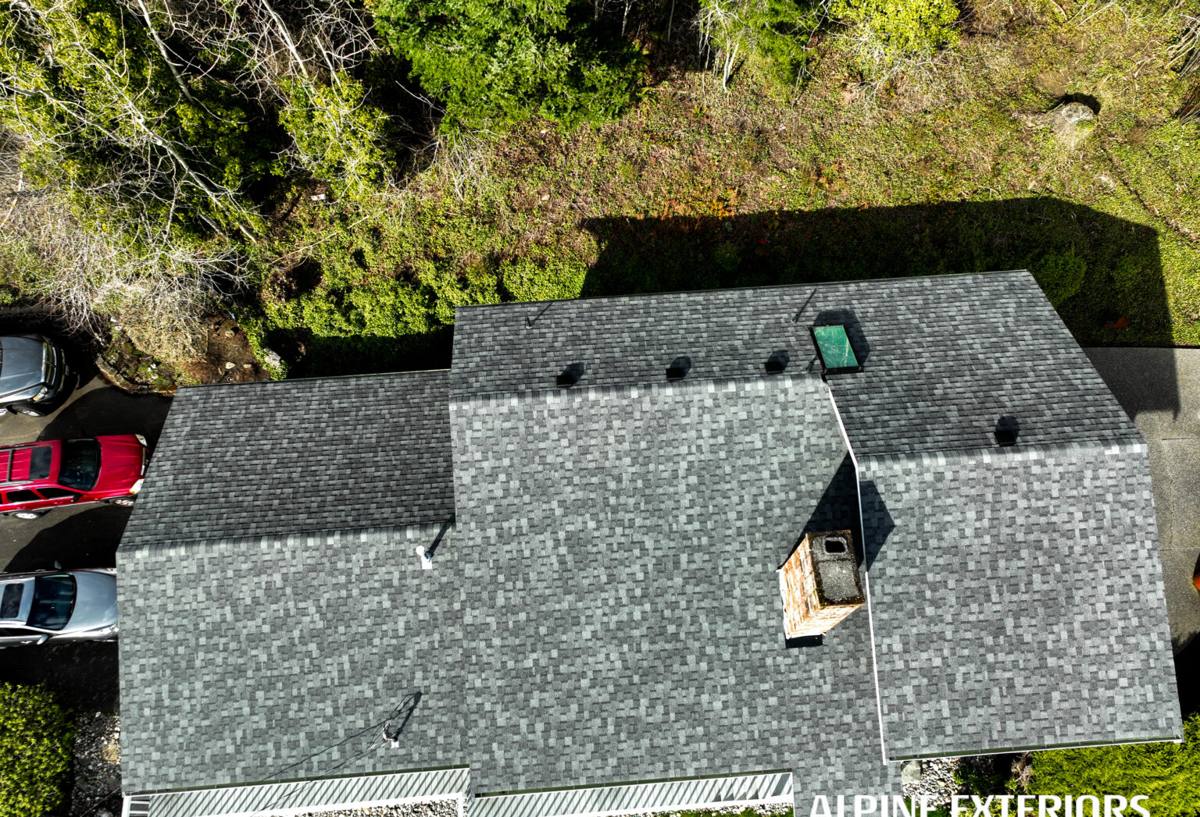
We walk the roof (or use a drone where the pitch or condition makes walking it unsafe) and document every point of damage with photos, not just the obvious ones. Storms rarely damage just one shingle — we're looking for the pattern, not the first thing we see.
2. Temporary protection, if needed
If there's active water intrusion or exposed decking, we get a tarp or temporary seal on it before we talk through permanent repair options. Waiting a week for a full repair plan shouldn't mean a week of water getting into your attic.
3. A written repair scope
You get a clear explanation of what's damaged, what needs to be replaced versus what can be left alone, and what materials we'll use. We don't pad a repair into a full replacement unless the roof's condition genuinely calls for it.
4. The repair itself
Matching existing shingles as closely as possible, correcting flashing details so the same failure doesn't happen again, and checking the surrounding area — not just the damaged spot — for anything the storm loosened but didn't fully expose yet.
5. Final walkthrough
We show you what was done and what to watch for, including any spots where the rest of the roof is aging and worth keeping an eye on.
Common Post-Storm Repairs We Make in Ferndale
| Damage Type | Common Cause Here | Typical Fix |
|---|---|---|
| Lifted or missing shingles | Wind gusts off the Strait catching an exposed slope or edge | Replace affected shingles, reseal or replace surrounding tabs, check underlayment |
| Flashing failure at chimneys/skylights | Wind flex plus years of freeze-thaw and moisture cycling | Remove and reinstall flashing with proper step and counter-flashing detail |
| Granule loss / bruised shingles | Wind-driven debris or hail-adjacent impact | Spot-replace damaged shingles; assess remaining shingle life |
| Soft decking near a leak point | Prolonged undetected water entry after a storm | Cut back and replace affected decking, then re-roof that section |
| Moss-related shingle lift | Shaded north-facing slopes holding moisture through winter | Moss removal, gentle cleaning, treatment, and shingle repair underneath |
Materials We Use, and Why They Matter Near the Water
Not every roofing product handles salt air and constant moisture the same way. When we're repairing a section of roof, we're choosing materials that will hold up next to the surrounding roof for the long haul, not just patch the hole.
Flashing metal
We favor corrosion-resistant metals for flashing repairs in coastal-influenced areas like Ferndale. Cheaper, uncoated metal flashing corrodes faster this close to salt air, and a failed flashing seam is one of the most common causes of a "mystery leak" that shows up long after the storm that started it.
Shingle matching
We try to match your existing shingle brand and line as closely as possible for both appearance and warranty consistency. When an exact match isn't available — which happens with older roofs — we'll explain your options honestly rather than mixing incompatible products and hoping it holds.
Sealants and fasteners
We use fasteners and sealants rated for exterior, high-moisture exposure. It's a small line item that gets overlooked on cut-rate repairs and is one of the first things to fail when it's not.
What to Know About Insurance Claims
We're not insurance adjusters and we don't process claims for you, but we've supported enough Whatcom County homeowners through this to know what helps.
- Photo documentation from the inspection is often more useful to an adjuster than a verbal description
- A clear, itemized repair scope helps prevent disputes over what's "storm damage" versus pre-existing wear
- Temporary protection (tarping) is usually something insurers expect you to do promptly — don't wait
- Keep your own photos and notes of the storm date and any visible damage as soon as it's safe to check
If you're not sure whether your damage is worth filing a claim over, we'll give you a straight answer based on the repair cost, not steer you toward filing just because it's an option.
Preventing the Next Storm From Doing the Same Damage
A repair that only fixes what's visible today tends to get revisited. A few things make the biggest difference for Ferndale roofs specifically:
Moss management
Moss holds moisture against the shingle surface and works its way under tabs and around flashing, which is exactly where wind then finds a foothold to lift things further. Keeping moss under control, especially on shaded north-facing slopes, reduces how much damage the next windstorm can do.
Gutter and drainage checks
Clogged gutters back water up under the shingle edge during heavy rain, which is one of the most common causes of edge rot we see after storm season. This is a five-minute check that prevents a much bigger repair.
Flashing condition
Flashing is a wear item, not a lifetime component. Checking it every year or two, especially after a rough winter, catches small gaps before they become active leaks.
Checklist: Right After a Storm
- Check your attic or top-floor ceilings for new stains, damp spots, or a musty smell
- Look at your gutters and downspouts from the ground for shingle granules or shingle pieces
- Scan the roofline from the ground (don't climb up after a storm) for obviously lifted or missing shingles
- Note the storm date and any visible damage with your phone camera
- Call for an inspection before the next rain, not after a second or third storm has made it worse
- Avoid climbing on a wet or damaged roof yourself — that's what a proper storm inspection is for
Why a Crew That Already Works Ferndale Matters
A contractor who works this area regularly already knows which roof styles and slopes tend to catch wind the hardest, which neighborhoods sit in enough shade to grow moss fast, and what a normal winter's wear looks like versus genuine storm damage. That familiarity shows up in faster, more accurate inspections and repair scopes that don't guess. It also means we're not learning Whatcom County's weather patterns on your roof — we already know them.
If a recent storm has left you with lifted shingles, a stain on the ceiling, or just a nagging feeling you should get your roof looked at, we're happy to come take an honest look. Fill out the form below for a free, no-pressure estimate and we'll tell you exactly what we find.