 Semiahmoo Siding
 Building a Deck That Actually Holds Up in Ferndale
Ferndale sits close enough to the Salish Sea and the Semiahmoo shoreline that homes here deal with a specific mix of weather most inland decks never see: salt-tinged air, long stretches of driving rain, and a moss season that can run from fall through spring. A deck built with generic, one-size-fits-all methods will show it within a few years — soft spots at the ledger board, green film on the boards by February, fasteners bleeding rust through the finish. A deck built for this climate, with the right materials and the right details at every connection point, doesn't have those problems. That's the difference we build for.
This page covers what we've learned building and repairing decks in Ferndale and the surrounding Whatcom County area: what the climate actually does to a deck over time, what a correctly built deck needs at each stage, and how to think about materials, permits, and maintenance so you're not surprised five years in.
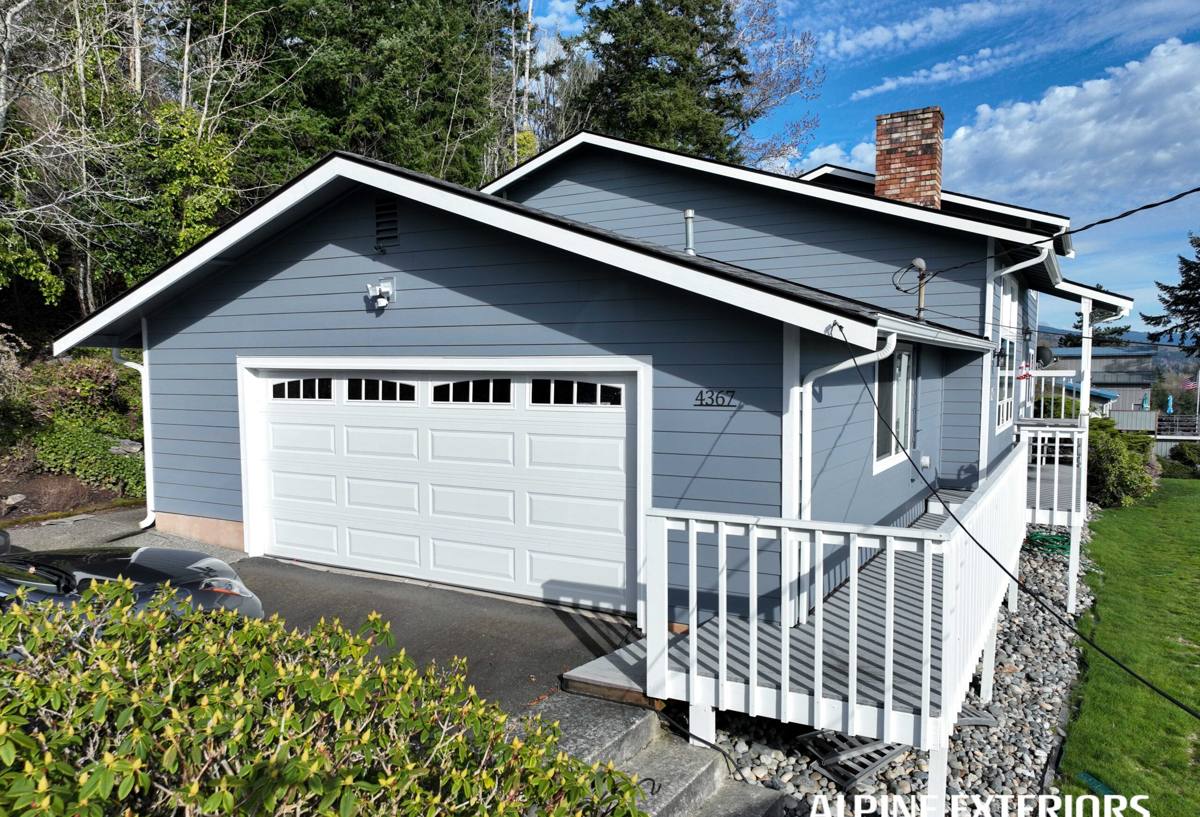
What Whatcom County Weather Does to an Unprotected Deck
None of this is dramatic — it's slow, cumulative damage that adds up because the exposure never really lets up.
Moisture that doesn't quit
Ferndale gets a long wet season, and unlike a hard summer downpour that comes and goes, this is weeks of low-grade dampness — misty mornings, drizzle, overcast days where nothing fully dries out. Wood decking, framing lumber, and especially the ledger board (where the deck attaches to the house) stay damp far longer than they would in a drier climate. That extended moisture exposure is what drives rot, not any single storm.
Salt air near the water
Homes closer to the Semiahmoo shoreline and the bay pick up salt-laden air that accelerates corrosion on anything metal — nails, screws, joist hangers, railing hardware. Standard galvanized fasteners can start showing rust streaks and pitting well before their expected lifespan in this kind of exposure.
Moss and organic growth
Shaded decks, north-facing decks, and decks under tree cover collect moss, algae, and mildew for a big chunk of the year. Beyond looking bad, moss holds moisture against the deck surface and creates a slick, slippery walking surface — a real safety issue on stairs and ramps.
Freeze-thaw cycling
Whatcom County doesn't get brutal winters, but it does get repeated freeze-thaw swings. Water that's soaked into end grain, fastener holes, or cracked finish expands and contracts with those temperature swings, which widens existing damage over time.
What a Correctly Built Deck Needs Here
Given all that, a deck built for Ferndale needs to get a handful of things right that a generic build might skip or shortcut.
- Flashing at the ledger board connection that actually sheds water away from the house framing, not just a bead of caulk
- Stainless steel or heavy-duty coated fasteners and hardware, especially anywhere near the shoreline or exposed to weather directly
- Proper spacing between deck boards for drainage and airflow underneath, so the structure can dry out between wet spells
- Joist tape or a moisture barrier on top of the framing to keep water from sitting in the wood where fasteners penetrate
- A slight slope away from the house on the decking surface so water doesn't pool against the siding
- Ventilation underneath the deck so the framing isn't sitting in a damp, enclosed space year-round
- Railing and stair hardware rated for the exposure, not just whatever is cheapest at the yard
None of these are exotic upgrades. They're standard good practice for this climate, and skipping them is exactly how a deck that looks fine on installation day ends up with a soft ledger board or rusted-out railing posts a few winters later.
Framing and Structure: Getting the Bones Right
The framing is the part of the deck nobody sees once it's finished, which is exactly why it matters most. A beautiful deck surface over rotting or under-fastened framing is a liability, not an asset.
Ledger board attachment
This is the single most common failure point on older decks we're asked to inspect or repair. The ledger board bolts to the house rim joist and carries a huge share of the deck's load — if it's not flashed correctly, water gets behind it, and the wood it's fastened to starts to soften without any visible sign from outside.
Post footings
Footings need to go below frost depth and bear on solid, undisturbed soil — not backfill. In parts of Ferndale with heavier clay or drainage issues, this matters even more, since standing water around a footing accelerates post rot at the base.
Joist spacing and hardware
Tighter joist spacing than the bare code minimum makes for a stiffer, longer-lasting deck surface, especially under composite decking, which is heavier and less forgiving of flex than wood. Every joist hanger, post base, and structural connector should be rated for exterior, corrosive-prone environments.
Decking Material Comparison
There's no single "best" decking material — it depends on your budget, how much upkeep you want to do, and how exposed the deck is to sun, shade, and moisture. Here's how the common options actually compare for a Ferndale property.
| Material | Upfront Cost | Maintenance | Moisture & Moss Resistance | Expected Lifespan |
|---|---|---|---|---|
| Pressure-treated wood | Lowest | Annual cleaning, periodic staining/sealing | Fair — needs consistent upkeep to stay ahead of moss and rot | 10-15 years with regular maintenance |
| Cedar | Moderate | Regular sealing to preserve color and resist moisture | Good natural rot resistance, but still needs care in shaded/damp spots | 15-20 years with upkeep |
| Composite decking | Higher | Occasional washing, no staining or sealing | Very good — resists rot and doesn't feed moss the way wood does | 25-30+ years |
| PVC decking | Highest | Minimal — occasional washing | Excellent — fully synthetic, no organic material for moss to root into | 30+ years |
Composite and PVC decking have become popular choices for homes in this area specifically because of the moss and moisture issue — they still get algae film on the surface in shaded areas, but they don't degrade structurally from it the way wood can, and a seasonal wash restores the surface. Wood decking isn't a bad choice, it just requires an honest commitment to yearly maintenance to hold up to the wet season.
Moss, Mildew, and Ongoing Maintenance
Whatever material you choose, moss and mildew are a fact of life for decks in this part of Whatcom County, particularly under tree cover or on the shaded side of a house. A few honest maintenance habits go a long way:
- Sweep debris and leaf litter off the deck regularly — trapped organic matter is what moss actually feeds on
- Wash the surface at least once a year with a deck-safe cleaner, more often in heavily shaded areas
- Keep gutters and downspouts clear so runoff isn't dumping extra water onto the deck surface
- Re-seal or re-stain wood decking on a regular schedule rather than waiting until it's visibly worn
- Check and clear the gap between deck boards periodically — clogged gaps hold moisture and stop proper drainage
A deck that gets this basic seasonal attention will consistently outlast one that doesn't, regardless of what it's built from.
Permits, Code, and Doing It the Right Way
Deck projects in Whatcom County typically require a permit once you're past a certain size or height off grade, and permitted work gets inspected at key stages — footings, framing, and final. That inspection step isn't a formality to work around; it's a second set of eyes confirming the structural connections that actually keep people safe, especially guardrails and stair railings, which have specific height and spacing requirements. We handle the permit process as part of the job so you're not stuck navigating it alone, and so the finished deck is something that won't cause problems at resale when a buyer's inspector looks at it.
Our Process for a Ferndale Deck Build
We keep the process straightforward and communicate clearly at each stage:
- Site visit and assessment — we look at sun exposure, shade patterns, drainage, and how the deck will tie into the house before recommending materials
- Design and material selection — honest guidance on wood versus composite versus PVC based on your budget, maintenance appetite, and the site's exposure
- Permit handling — we prepare and submit what's needed and coordinate inspections
- Framing and structural build — proper ledger flashing, footings to frost depth, corrosion-resistant hardware throughout
- Decking, railing, and stairs — installed to manufacturer spec with attention to drainage slope and board spacing
- Final walkthrough — we go over care and maintenance specific to the material you chose, so you know what upkeep actually looks like year to year
Why a Local Ferndale Crew Matters
A crew that regularly works in Ferndale and the surrounding Semiahmoo area already knows which details matter here — how aggressive the moss season is on a shaded north-facing deck, how much extra corrosion resistance a shoreline-adjacent property needs in its hardware, and what Whatcom County's permitting and inspection process actually looks like in practice. That's not something you get from a crew that mostly builds decks somewhere drier and treats this climate as an afterthought. It shows up in the small decisions — the flashing detail, the fastener grade, the drainage slope — that don't matter on day one but decide whether the deck is still solid in year ten.
Get a Straightforward Estimate
If you're planning a new deck or need an honest look at repairing or replacing one that's showing its age, we're glad to come take a look. The estimate is free, there's no pressure, and you'll get straight answers about what your specific site needs — just fill out the form below to get started.