 Semiahmoo Siding
 Windows Built for Laurel's Coastal Conditions
Laurel sits close enough to the water that homes here take a different kind of weathering than houses further inland. Salt-laden air, wind-driven rain off the Strait, and a moss season that seems to stretch longer every year all work against window assemblies that weren't built or installed with this specific exposure in mind. A window that performs fine in a dry inland climate can fail years early here if the frame, glazing, and flashing details aren't matched to what Whatcom County actually throws at a house.
This page covers what energy-efficient window replacement looks like specifically for Laurel homes: what the climate demands, what a correct installation actually involves, and how our process is built around the realities of this neighborhood rather than a generic install checklist.
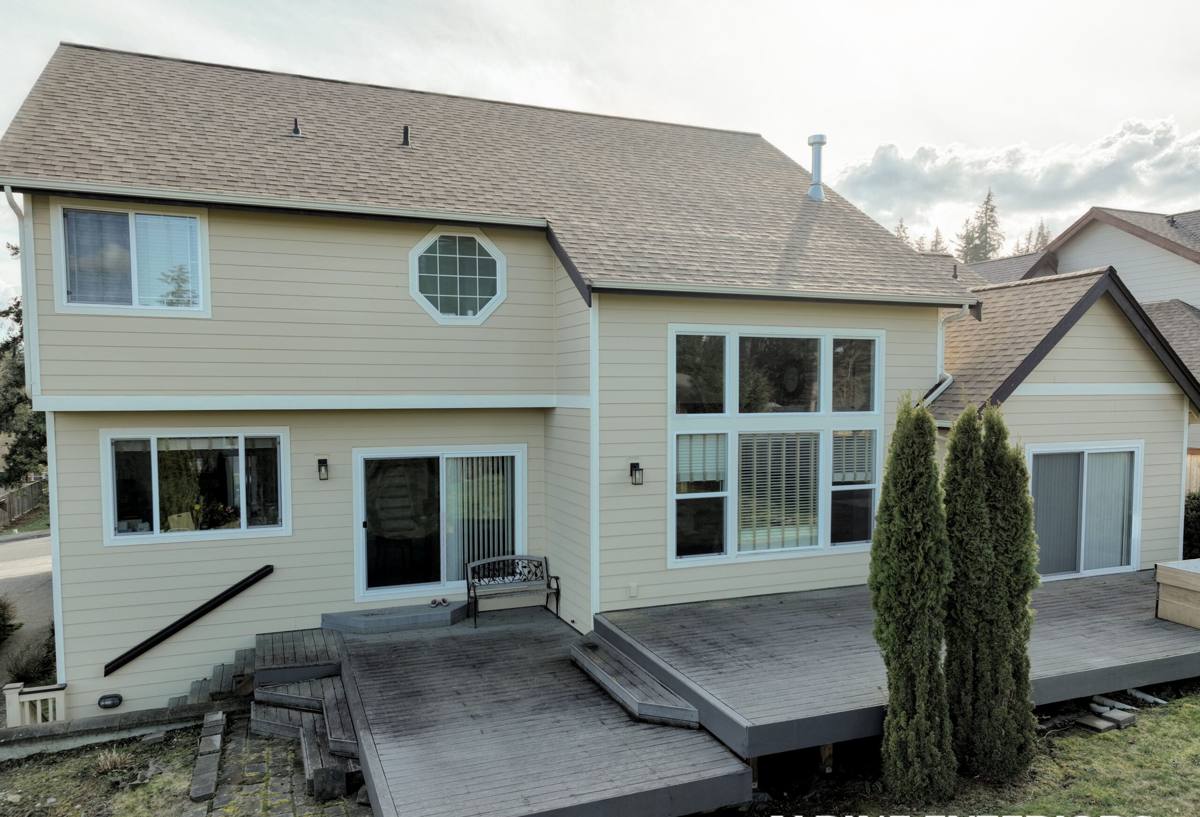
What Salt Air, Driving Rain, and Moss Do to Windows Over Time
Salt Air
Airborne salt is corrosive to unprotected metal hardware, fasteners, and certain frame finishes. Over years, it can pit weaker coatings, degrade seals, and accelerate wear on hinges, locks, and cranks on operable windows. It doesn't ruin every window, but it does mean hardware quality and finish durability matter more here than they would twenty miles inland.
Driving Rain
Wind off the water doesn't just drop rain straight down — it pushes it sideways into wall assemblies and window openings. A window that's watertight in calm conditions can still leak under wind-driven rain if the flashing, sill pan, and sealant details around it weren't done correctly. Most window leaks we find in this area trace back to installation and flashing mistakes, not the window unit itself.
Moss and Sustained Moisture
A long moss season means extended periods of damp shade around window trim, especially on north-facing walls and under eaves with limited sun exposure. Trapped moisture at the window perimeter is what actually causes rot in surrounding wood trim and sheathing — the window itself is rarely the failure point, but a poorly sealed or poorly flashed opening around it absolutely is.
What "Energy-Efficient" Actually Means in This Climate
Energy efficiency for a Laurel home isn't just about a sticker on the glass. It's a combination of factors that work together — and any one weak link undercuts the rest.
- Frame material and construction — determines how much heat is lost or gained through the frame itself, and how the frame holds up to moisture and salt exposure over time.
- Glass package — low-E coatings and gas fill (typically argon) control how much heat transfers through the glass in both directions.
- U-factor — measures how well the whole window resists heat flow; lower is better for our heating-dominated climate.
- Air infiltration rating — how tight the window is when closed, which matters as much for comfort and draft control as for energy bills.
- Installation quality — even a top-tier window underperforms badly if it's not shimmed, flashed, insulated around, and sealed correctly.
That last point is the one homeowners underestimate most. We've seen premium windows installed poorly perform worse than mid-range windows installed correctly. The install is not a formality — it's arguably the bigger variable.
Signs Your Laurel Home's Windows Are Underperforming
Not every window problem announces itself as a visible leak. Some of the most common signs we see on service calls in this area include:
- Noticeable drafts near the window frame, especially during windy weather
- Condensation or fogging between the glass panes, indicating a failed seal
- Difficulty opening, closing, or locking a window that used to operate smoothly
- Soft or discolored trim and sill wood around the window opening
- Rooms near windows that feel noticeably colder than the rest of the house
- Higher-than-expected heating bills without another clear explanation
Any one of these on its own isn't necessarily urgent, but a few together usually means the window and its surrounding assembly are due for a real evaluation, not just a caulk touch-up.
Frame Material Comparison for Coastal-Exposed Homes
There's no single "best" frame material for every home — it depends on the home's exposure, budget, and maintenance appetite. Here's how the common options compare specifically for a salt-air, high-rain environment like Laurel:
| Frame Material | Coastal Durability | Maintenance | Typical Trade-Offs |
|---|---|---|---|
| Vinyl | Good — won't corrode or rot | Low | Frame can expand/contract with temperature swings; color choices are more limited |
| Fiberglass | Very good — dimensionally stable, resists moisture well | Low | Higher upfront cost than vinyl |
| Aluminum | Fair — needs a quality marine-grade finish to resist salt corrosion long-term | Moderate | Conducts heat/cold more than other frame types unless thermally broken |
| Wood / wood-clad | Requires diligent upkeep in this climate | High | Best classic appearance, but sustained coastal moisture is unforgiving of any gap in maintenance |
For most Laurel homes, we steer conversations toward vinyl or fiberglass because they hold up to salt air and driving rain with the least ongoing maintenance burden. That's a professional recommendation based on how these materials behave in this specific exposure — not a knock on wood windows in general, which can be a fine choice for homeowners willing to stay on top of maintenance and refinishing.
How Our Window Installation Process Works
1. On-Site Assessment
We start by looking at the existing window openings, the condition of surrounding trim and sheathing, and the specific exposure of each elevation of the house — a north wall in shade behaves very differently than a south-facing wall that dries out fast.
2. Product Selection
We walk through frame material, glass package, and hardware options based on that assessment and your budget, being upfront about the trade-offs in the table above rather than steering everyone toward the same product.
3. Removal and Opening Prep
Old windows are removed carefully, and we inspect the opening for any hidden rot or moisture damage before anything new goes in. This is the point where problems that caused the old window to fail — if any — actually get addressed, not covered up.
4. Flashing and Sill Pan Installation
This is the step that matters most for driving-rain performance. A correctly integrated sill pan and flashing sequence directs any water that gets past the window back out, rather than into the wall. Skipping or rushing this step is the single most common cause of the leaks we get called to fix.
5. Window Setting and Insulation
The window is shimmed level and square, fastened per manufacturer specification, and the gap around it is insulated properly — not overpacked, which can bow the frame, and not left with gaps, which defeats the point of an energy-efficient window.
6. Sealing and Finish
Exterior sealant, interior trim, and final adjustments to make sure the window opens, closes, and locks the way it should.
Why a Crew That Already Works Laurel Matters
A contractor who mainly works drier, inland areas can install a perfectly good window and still get the flashing detail wrong for wind-driven rain, because it's not a problem they deal with often. Crews who regularly work Whatcom County's coastal-exposed neighborhoods build habits around sill pans, flashing sequencing, and hardware selection that account for salt air and sustained rain as a matter of routine — not as an afterthought.
That familiarity also shows up in smaller ways: knowing which elevations on a given lot tend to take the worst of the weather, recognizing early signs of moisture damage around older trim, and not being surprised by conditions that would catch an out-of-area crew off guard.
Maintaining Energy-Efficient Windows in This Climate
Even a well-installed window benefits from basic upkeep in this environment:
- Rinse salt residue off frames and hardware periodically, especially on wind-exposed elevations
- Keep weep holes clear of debris so water can drain out as designed
- Check exterior caulking annually and touch up before gaps widen
- Watch for moss or algae buildup on sills and trim, and clean it before it holds moisture against the surface
- Test locks and cranks periodically so minor hardware stiffness doesn't turn into a bigger repair
None of this is difficult, but skipping it in a climate this demanding shortens the life of even a quality installation.
Get a Straight Answer for Your Laurel Home
If your windows are drafty, fogged, sticking, or just older than the rest of the house's updates, we're glad to take a look and give you an honest read on what's actually going on — no pressure, no inflated scope. Fill out the form below for a free estimate, and we'll walk you through options that fit your home's exposure and your budget.