 Semiahmoo Siding
 Storm Damage Roof Repair for Drayton Harbor Homes
Drayton Harbor sits right where the Strait of Georgia meets Semiahmoo Bay, and that location comes with a specific kind of weather exposure. Homes here take a steady diet of onshore wind, wind-driven rain, and salt-laden air almost year-round, with the heaviest storm activity stacking up through the fall and winter months. A roof that would be fine twenty miles inland can take real damage here after just a few strong systems, and the damage isn't always obvious from the ground.
This page covers what storm damage roof repair actually means for a Drayton Harbor property — what the local climate does to roofing materials, what a correct repair looks like, and how our process works when you call us after a storm.
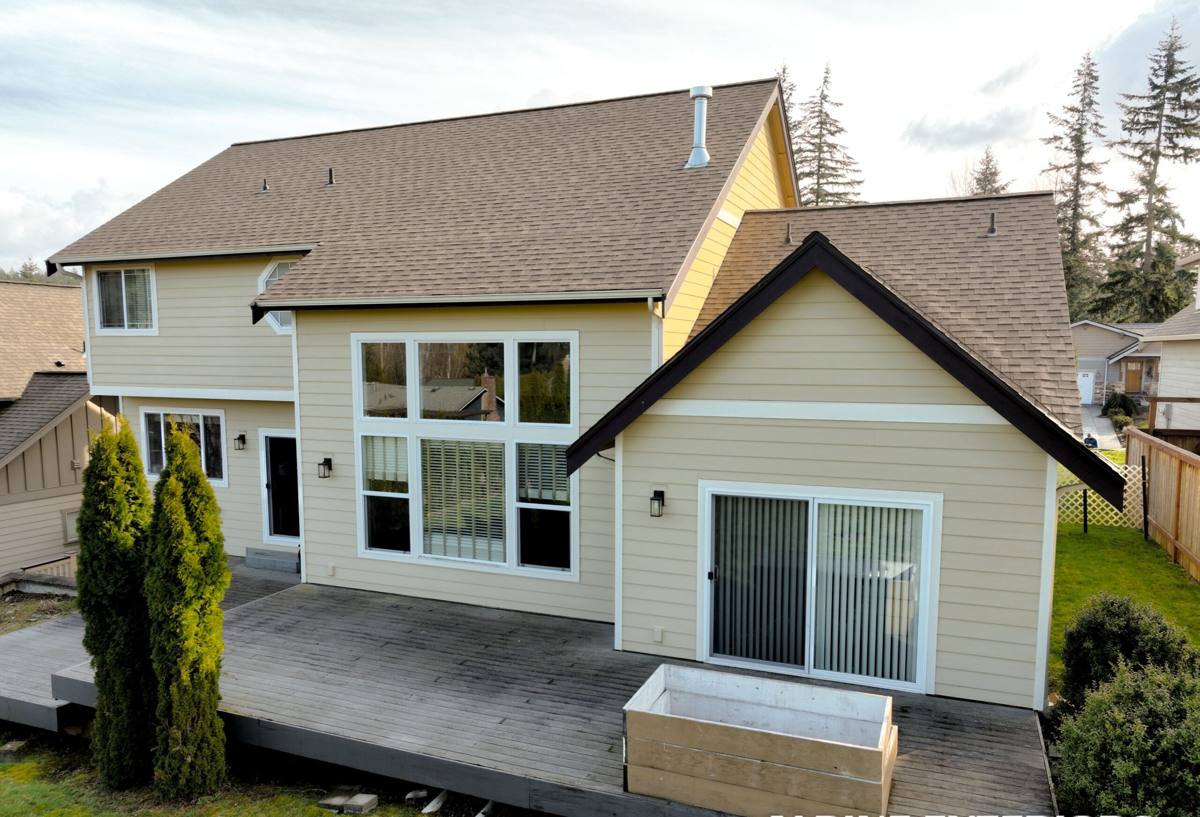
What Coastal Storms Actually Do to a Roof Here
It's rarely one single event that ruins a roof in this area. It's the combination, repeated over years, and it shows up in a few consistent ways.
Wind and Driving Rain
Storms coming off the water don't just drop rain straight down — the wind pushes it sideways, up under shingle tabs, around flashing edges, and into any gap that a calmer climate would never test. Wind gusts during a strong system can lift shingle edges, loosen fasteners, and stress the seal strips that keep shingles locked down. Once that seal is broken, the next rain event finds its way underneath.
Salt Air
Being close to Semiahmoo Bay means airborne salt settles on roofing materials continuously, not just during storms. Salt accelerates corrosion on exposed metal — flashing, fasteners, vent caps, gutter hardware — and that corrosion is usually what turns a small storm-related gap into an active leak. A fastener that's rusted through holds nothing.
Moss and Prolonged Moisture
Whatcom County's long, damp shoulder seasons give moss plenty of time to establish itself, especially on north-facing slopes and anywhere shade keeps a roof from drying out between rain events. Moss holds moisture directly against the roofing surface, and its root structure works into shingle granules and seams. A moss-covered roof going into a storm is already weakened before the wind and rain even arrive.
Signs of Storm Damage Worth Checking For
Most storm damage doesn't announce itself with an obvious hole. It shows up as small signals that, left alone, turn into interior leaks. After any significant wind or rain event, it's worth a look for the following:
- Shingles that look lifted, curled, or out of alignment compared to the rest of the field
- Granules collecting in gutters or at downspout outlets
- Bent, lifted, or missing flashing around chimneys, vents, or roof-to-wall joints
- Soft or discolored ceiling patches, especially near exterior walls or plumbing stacks
- New or heavier moss growth on shaded slopes since the last inspection
- Debris — branches, needles, gravel from asphalt shingles — collected on the roof surface or in valleys
- Gutters pulling away from the fascia or sagging under water weight
Any one of these on its own might be minor. Several together, especially after a named storm system, is a sign the roof needs a real inspection, not just a glance from the driveway.
What a Correct Storm Damage Repair Involves
A storm repair that actually holds isn't just replacing the shingles that are visibly missing. It has to account for what the wind and water did around and beneath the visible damage. Our approach on a Drayton Harbor storm call typically includes:
- Full-roof inspection, not just the damaged section. Wind damage is rarely confined to one spot — we check the whole roof, including slopes that face away from the street.
- Underlayment and decking check at the damage site. If water has been getting under shingles for any length of time, the underlayment or even the wood decking underneath may need to be replaced, not just the shingles on top.
- Flashing inspection at every penetration. Chimneys, vents, skylights, and roof-to-wall transitions are the most common failure points in coastal wind events — corroded or displaced flashing gets replaced, not just re-sealed.
- Fastener and seal-strip evaluation. Shingles that lifted but didn't tear off often reseal fine once pressed back down and re-nailed correctly; shingles with broken seal strips or cracked mat need replacing.
- Gutter and drainage check. A roof can be repaired perfectly and still leak if water has nowhere to go because gutters are damaged or clogged with storm debris.
Repair vs. Replacement: How We Make That Call
Not every storm-damaged roof needs full replacement, and not every roof can be safely patched. The decision comes down to the roof's age, how widespread the damage is, and what condition the materials were in before the storm hit.
| Factor | Favors Repair | Favors Replacement |
|---|---|---|
| Roof age | Under roughly half its expected service life | Near or past expected service life |
| Damage spread | Isolated to one or two areas | Scattered across multiple slopes |
| Underlying decking | Dry, solid, no rot | Soft spots or long-term water staining found |
| Moss/algae condition | Light, surface-level growth | Heavy growth with granule loss underneath |
| Prior storm history | First significant damage event | Repeated repairs in the same areas |
We'll walk through where your roof falls on each of these before recommending anything — an honest repair estimate when repair makes sense, and a straight explanation of why replacement is the better long-term value when it doesn't.
Our Storm Damage Process
1. Inspection and Documentation
We inspect the full roof, photograph the damage, and note anything relevant to an insurance claim — wind speed of the storm event if publicly available, the pattern of the damage, and its likely cause. This documentation matters if you're filing a claim.
2. Written Scope and Estimate
You get a clear, itemized description of what needs repair, what materials are involved, and a real cost range — no vague allowances.
3. Temporary Protection if Needed
If a roof has active penetration and rain is in the forecast, we can install temporary protection to stop interior damage while the full repair is scheduled.
4. The Repair
Work is done to match the existing roofing system where possible, with new flashing, fasteners, and underlayment at any point where the old material failed — not just where it's visibly torn.
5. Final Walkthrough
We walk the completed repair with you, confirm drainage is working, and leave you with a clear record of what was done.
Materials and Methods Suited to This Coastline
Given the salt exposure and moisture load around Drayton Harbor, material choice matters more here than it would further inland. For flashing and fasteners, we favor corrosion-resistant metals over standard galvanized options wherever the budget allows — the labor to install flashing is the same either way, so paying for material that won't rust through in a few seasons is usually the better long-term trade. For shingle repairs, we match the existing product line when it's still available so the repair blends in and the warranty coverage stays intact; when a match isn't available, we explain the closest honest alternative and how it will look and perform differently, rather than pretending it's identical.
We're cautious about any "quick fix" product — roof cement smeared over a problem, foam-in-place patches, or generic sealant used as a substitute for proper flashing. These can look like a fix for a season and then fail once the salt air and freeze-thaw cycles get to them, which usually costs more to correct later than doing it right the first time.
Insurance and Storm Damage Claims
Many storm repairs in this area are wind or wind-driven-rain claims. A few things are worth knowing before you call your insurer:
- Photo documentation from right after the storm is worth more than a description written weeks later
- Insurers distinguish between sudden storm damage and gradual wear (like long-term moss damage) — a clear inspection report helps establish which one you're dealing with
- Getting an independent contractor estimate before or alongside the adjuster's visit gives you a second data point to compare
- Temporary protective measures taken to prevent further damage are typically expected and often reimbursable — keep receipts
We're happy to provide documentation that supports your claim, but we work for you, not the insurance company — our recommendations are based on what the roof actually needs.
Why a Crew That Already Works This Coastline Matters
Drayton Harbor's exposure isn't the same as a roof three miles inland, and it isn't the same as roofs on the other side of Whatcom County away from the water. A crew that regularly works this stretch of coastline knows which flashing details fail first in onshore wind, which slopes hold moss longest, and how salt air changes the math on what material to use for a repair versus a full replacement. That local pattern recognition is what keeps a repair from becoming a repeat visit.
It also means faster response after a storm. When a system moves through and multiple homes in the area need attention, being local means we can prioritize based on severity and get to active leaks quickly rather than working a schedule built around a much wider service area.
Get a Straight Answer on Your Roof
If a recent storm has you wondering whether your roof took damage, we'll come take an honest look. If it's a small repair, we'll tell you that. If it needs more, we'll explain exactly why and what it involves. Reach out for a free, no-pressure estimate using the form below.