 Semiahmoo Siding
 Why Decks Age Faster Around Drayton Harbor
A deck built a mile inland in Whatcom County ages differently than one overlooking Drayton Harbor. Homes here sit close enough to the water that salt-laden air is a constant, not an occasional storm event. That air finds every exposed nail head, screw, and joist hanger and starts working on it long before the wood itself shows any trouble. Add in driving rain that comes sideways off the water during winter storms, and you get moisture pushed into joints and end grain that a deck fifty miles inland would rarely see.
Then there's moss season, which in this part of Washington isn't really a season so much as most of the year. Shaded decks, north-facing decks, and anything under overhanging trees stay damp for days after a real rain. That sustained moisture is what actually breaks decks down — not one big storm, but months of boards that never fully dry between soakings.
None of this means a Drayton Harbor deck is doomed. It means the repair has to account for what's actually attacking the structure here, not a generic checklist written for a drier climate.
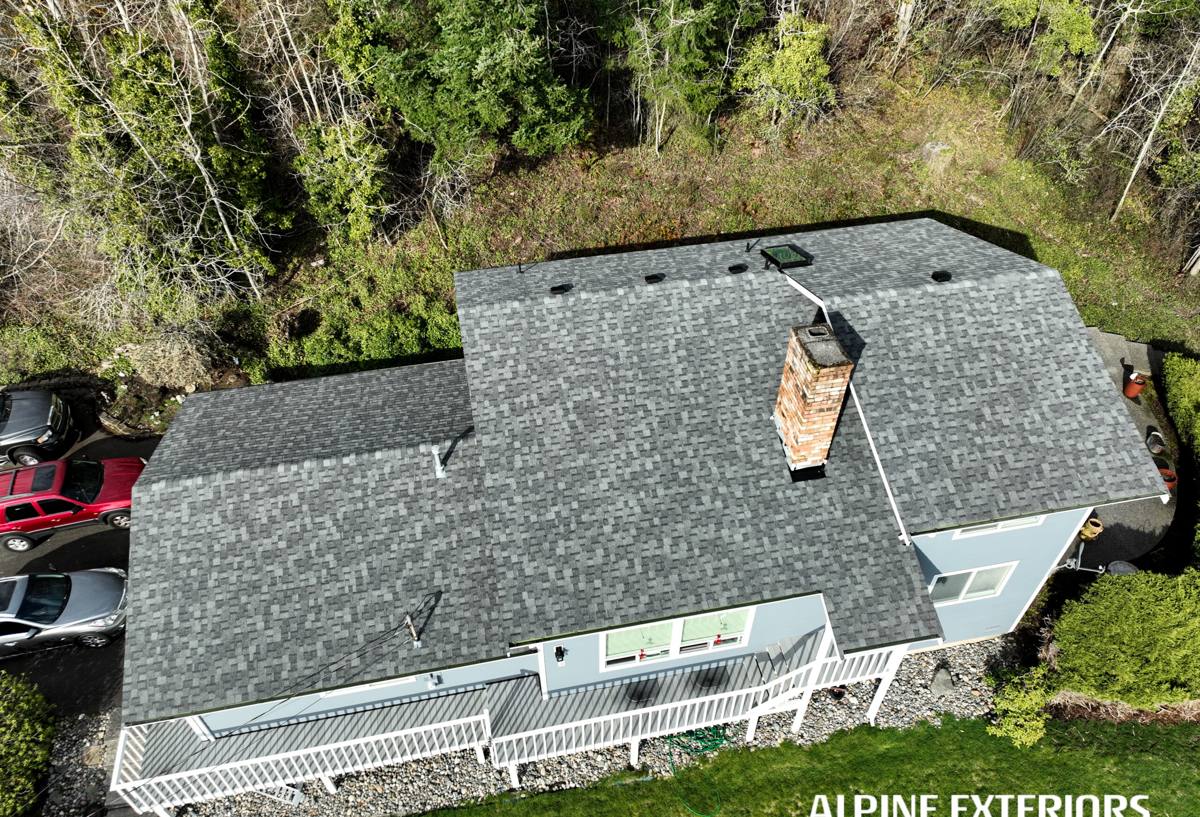
Warning Signs Your Deck Needs Repair, Not Just Cleaning
A pressure wash and a fresh coat of stain can make a tired deck look better for a season while doing nothing for problems underneath. Here's what actually signals a repair is due:
- Soft or spongy spots when you walk across the deck, especially near the house or at board edges
- Rust streaks bleeding out from screw heads or nail holes
- Gaps opening up where the ledger board meets the house siding
- Boards that stay dark and damp long after the rest of the deck has dried
- Visible sagging between joists, or a railing that flexes more than it used to
- Green or black growth that comes back within weeks of cleaning
- Popped or backed-out fasteners along high-traffic areas
- Any post base sitting in standing water or visibly rotted at the bottom
If you're seeing two or more of these, it's worth having someone look underneath the deck, not just at the surface.
The Problems You Can't See From Above
The decking boards are the least of a deck's structural worries. Most of the repairs we actually get called out for start below the walking surface — at the ledger connection to the house, the joist hangers, and the posts and footings. Surface boards can look fine for years while the framing underneath is quietly failing, especially in a climate that keeps wood damp for extended stretches.
What a Correct Deck Repair Actually Involves
A repair that's done right starts with taking the decking boards up in the affected area, not just working around them. That's the only way to actually see the condition of the ledger board, joists, and flashing.
The Ledger Board Connection
This is where the deck attaches to the house, and it's the single most common failure point we see in this climate. If flashing was installed poorly — or not at all — water works its way behind it and into the rim joist and framing. A repair here isn't cosmetic; it means correcting the flashing detail so water sheds away from the house instead of into it, and replacing any framing that's already compromised.
Joists, Posts, and Footings
We check joists for soft spots, especially near hangers where water tends to collect. Posts get checked at the base, where ground contact and splashback cause the most damage. Footings get checked for settling or heaving, which shows up as a deck that's no longer level even though nothing looks obviously wrong on top.
Fasteners and Hardware
Corroded hardware gets replaced, not reused. In salt air, standard galvanized fasteners can start showing rust well before the wood around them fails, and once a fastener corrodes it loses holding strength even if it still looks intact from a distance.
Decking Boards
Only boards that are actually damaged get replaced — sistering in matched material where possible so the repair blends rather than creating a patchwork. Boards with rot, persistent cupping, or fastener damage come out; boards that are simply weathered but structurally sound get cleaned and treated instead.
Repair or Replace? How We Help You Decide
Not every deck problem calls for a full rebuild, and not every deck is worth repairing piece by piece. The honest answer depends on where the damage is and how much of the structure it's reached.
| Factor | Favors Repair | Favors Replacement |
|---|---|---|
| Ledger board condition | Solid, flashing just needs correction | Rotted or pulling away from house |
| Extent of joist damage | Isolated to one or two joists | Widespread soft spots across the frame |
| Footings and posts | Level, sound at ground contact | Settling, heaving, or rotted post bases |
| Age of structure | Under roughly 15-20 years | Original framing decades old |
| Decking material | Boards sound apart from a few problem spots | Widespread cupping, splitting, or rot |
We walk you through which column your deck falls into before we recommend anything, and we'll tell you plainly if a repair is just delaying a rebuild you'll need in a couple of years anyway.
Materials and Hardware Built for This Climate
What goes into a repair matters as much as the workmanship. For framing repairs, we use lumber rated for ground or structural contact rather than cutting corners with interior-grade material that won't hold up to this level of moisture exposure.
For fasteners and hardware, we use stainless steel or coated fasteners rated for coastal and treated-lumber exposure. It costs more than standard hardware, but in an area with this much salt air, the cheaper option corrodes early and turns into a callback — or worse, a hazard — well before the rest of the deck needs attention.
On decking material itself, we'll give you a straight comparison. Wood decking is more affordable up front and repairs easily in sections, but it needs regular sealing and refinishing to keep moisture out, especially given how long boards stay damp here during moss season. Composite decking costs more initially and resists moisture and moss better, but it's less forgiving to repair invisibly if a board is damaged, and not every composite product handles direct ground moisture or poor drainage the way solid framing lumber does. Neither is the automatic right answer — it depends on your deck's exposure, budget, and how much maintenance you want to keep up with.
Our Deck Repair Process
We keep this straightforward, because a deck repair shouldn't be a mystery from start to finish.
- Inspection. We get underneath the deck, not just walk across the top of it, and check the ledger, joists, posts, and footings along with the surface boards.
- Written scope. You get a clear explanation of what's failing, what's still sound, and what the repair will involve — no vague line items.
- Repair work. We remove only what needs to come out, correct the underlying issue (flashing, framing, hardware), and rebuild with materials matched to this climate.
- Cleanup and walkthrough. We clear debris and walk the finished repair with you so you know what was done and what to keep an eye on going forward.
Living With Your Deck Through Moss Season
A repair holds up longer with a little upkeep on your end. A few habits go a long way in a climate like this:
- Sweep leaves and debris off the deck regularly in fall, since trapped organic matter holds moisture against the boards
- Keep gutters and downspouts near the deck clear so runoff isn't dumping extra water onto or under it
- Rinse off moss and algae growth as soon as you notice it rather than waiting until it's established
- Check railings and stair connections for looseness at least once a year
- Reseal or refinish wood decking on the schedule the product actually calls for, not just when it looks bad
Why Local Experience in Drayton Harbor Actually Matters
A crew that mostly works inland treats every deck the same way. A crew that regularly works homes around Drayton Harbor and the greater Semiahmoo area already knows which connections fail first in this exposure, which sides of a house take the worst of the driving rain, and which hardware actually holds up instead of just meeting a minimum spec on paper. That experience shows up in fewer surprises during the inspection and repairs that are sized correctly the first time — not over-scoped to pad the invoice, and not under-scoped in a way that has you calling again in two years.
We're not guessing at how Whatcom County's coastal climate treats a deck. It's the same set of conditions we see on job after job in this area, and it shapes every material and hardware decision we make.
If your deck around Drayton Harbor is showing any of the signs above — or you just want an honest read on its condition before it becomes a bigger problem — we're glad to come take a look. Use the form below to request a free, no-pressure estimate.