 Semiahmoo Siding
 Roofing Drayton Harbor: A Different Kind of Wear
Drayton Harbor sits right where the land meets Semiahmoo Bay, and that location shapes everything about how a roof ages here. A shingle roof on a home a few miles inland in Whatcom County deals with rain and the occasional windstorm. A roof on or near Drayton Harbor deals with all of that plus salt-laden air blowing straight off the water, wind-driven rain that hits the roof at an angle instead of falling straight down, and a shaded, moisture-heavy microclimate that keeps moss and algae active for most of the year. None of that means asphalt shingles are the wrong choice for this area — they're not — but it does mean the details of the install matter more here than they would on a dry inland roof.
This page covers what we look at, what we install, and how we approach a shingle roof specifically for homes in and around Drayton Harbor and Semiahmoo. It's not a generic roofing overview — it's the version that accounts for what this particular stretch of coastline does to a roof over time.
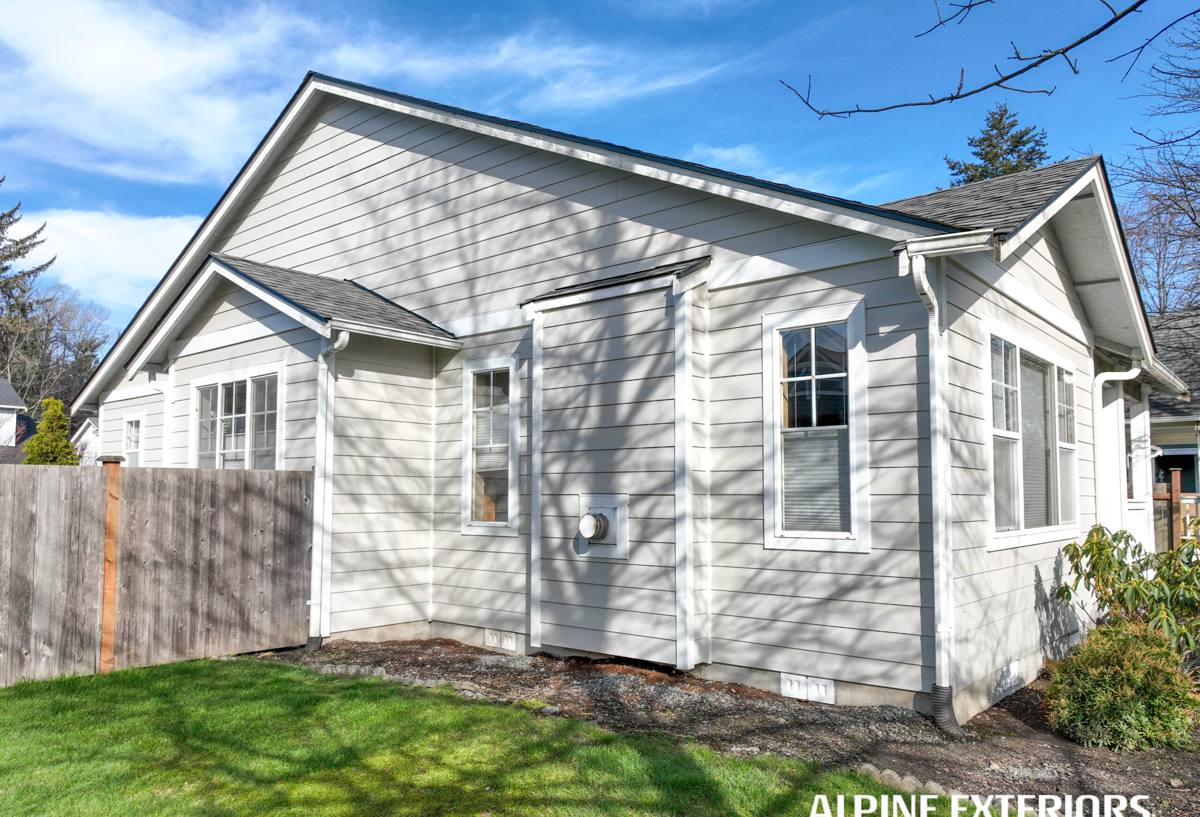
What Salt Air and Driving Rain Actually Do to a Shingle Roof
Salt air is corrosive to exposed metal. Nails, flashing, drip edge, and any exposed roofing hardware near the harbor take a slower but steadier beating than the same materials would inland. Standard galvanized fasteners can start showing surface corrosion years before they would elsewhere in the county, and once a fastener head starts to go, the seal around it goes with it. That's why we pay close attention to fastener and flashing material choices on jobs near the water — it's a small line item that has an outsized effect on how long the rest of the roof holds up.
Driving rain is the second factor. When wind pushes rain sideways instead of letting it fall straight down, it finds its way into laps, seams, and fastener penetrations that would never see water on a calmer inland roof. Shingle roofs are designed to shed water moving downward across overlapping courses; they're less forgiving when water is being pushed sideways and upward under the shingle edge. That's why underlayment selection, starter strip placement, and nailing pattern all get more scrutiny on a Drayton Harbor job than they might on a more sheltered site.
Where This Shows Up First
On homes we've looked at around the harbor, the earliest wear almost always shows up in the same places:
- Ridge caps and hip lines, where wind exposure is highest
- Valleys, where water volume and speed are greatest during heavy rain
- Roof edges facing the water, where driving rain hits hardest
- Exposed fasteners and flashing on chimneys, vents, and skylights
Moss: The Long-Season Problem
Whatcom County's moss season isn't limited to a few winter months, and Drayton Harbor's tree cover and damp air stretch it even longer. Moss doesn't just look bad on a roof — it holds moisture against the shingle surface, works its way under tabs and edges as it grows, and can lift shingles enough to create a path for water. Left long enough, moss growth accelerates granule loss, which is the part of the shingle that actually protects it from UV and weather.
We treat moss prevention as part of the roofing system, not an afterthought. That means thinking about ventilation, tree canopy over the roof, and where possible, installing shingles or accessories with algae-resistant granules in areas with heavy shade or north-facing slopes. It also means being honest with homeowners about the fact that no roof in this climate is going to be entirely moss-proof — the goal is to slow it down and make it easy to manage, not to promise it will never appear.
Choosing the Right Shingle System for This Location
Not every asphalt shingle product is built the same way, and for a harbor-adjacent home, the differences matter more than they would somewhere drier and calmer. We walk homeowners through the trade-offs rather than defaulting to whatever is cheapest or most common.
| Shingle Type | Wind Resistance | Best Fit Near the Harbor |
|---|---|---|
| Standard 3-tab | Lower wind rating, lighter weight | Budget-conscious projects on sheltered roof slopes only |
| Architectural (dimensional) | Higher wind rating, heavier mat | Our standard recommendation for most Drayton Harbor homes |
| High-wind / coastal-rated architectural | Highest wind rating, enhanced sealant strips | Exposed water-facing slopes, open lots with no windbreak |
Architectural shingles cost more up front than 3-tab, but their heavier fiberglass mat and wider sealant strip give them meaningfully better resistance to wind uplift and the granule loss that comes with age. On a roof taking direct wind off the bay, that difference shows up in fewer callbacks for lifted or missing shingles after storms. We'll always give you the honest range for both options rather than steering you toward the more expensive one by default — on a sheltered slope with good tree cover, standard shingles can still make sense.
What's Underneath Matters as Much as the Shingles
A shingle is only one layer of a roofing system. For Drayton Harbor homes, we're just as focused on what goes under it:
Underlayment
Synthetic underlayment is our standard for the field of the roof — it holds up better to wind-driven moisture and temporary exposure during install than older felt products, and it doesn't absorb water the way felt can.
Ice and Water Shield at Vulnerable Areas
Even though this isn't a heavy snow-load area, self-adhering ice and water shield membrane still earns its place at eaves, valleys, and around penetrations on harbor-facing roofs, because those are exactly the spots where wind-driven rain concentrates. It's cheap insurance in the places most likely to leak first.
Flashing
Flashing around chimneys, skylights, sidewalls, and roof-to-wall transitions is where most roof leaks actually start, not in the open field of shingles. We use corrosion-resistant flashing material and proper step-and-counter-flashing details rather than relying on caulk or sealant to do a flashing joint's job.
Ventilation
Balanced intake and exhaust ventilation keeps the underside of the roof deck dry and temperature-stable, which slows shingle aging from below and helps reduce the moisture buildup that feeds moss and algae growth from the top.
How We Approach a Drayton Harbor Roofing Job
Our process is the same core steps on every job, adjusted for what a specific roof and location need:
- On-site inspection — we look at the existing roof, deck condition, ventilation, flashing points, and how exposed the roof is to wind and water off the harbor.
- Straightforward written estimate — shingle options, underlayment and flashing specifics, and a clear scope, so there's no guessing at what's included.
- Tear-off and deck check — we remove the old roofing down to the deck and check for soft spots or damage before anything new goes on. Covering up a bad deck is how good shingles fail early.
- Underlayment and flashing installation — membrane and flashing go in at all the vulnerable points first, before a single shingle is laid.
- Shingle installation — laid to manufacturer nailing patterns and exposure specs, not shortcuts, with extra attention to ridge, hip, and valley work.
- Final walkthrough — we go over the finished roof with the homeowner and clean up the site thoroughly, including a magnetic sweep for stray fasteners.
Maintenance That Actually Extends Roof Life Here
A well-installed roof still needs some upkeep in this climate. This isn't a long or expensive list, but skipping it is one of the most common ways we see roofs age faster than they should:
- Keep gutters and valleys clear of needles and debris so water has a clear path off the roof
- Trim back tree limbs that shade the roof and keep it damp longer after rain
- Have moss growth removed before it spreads under shingle edges, not after
- Check flashing and sealant points every couple of years, especially after major windstorms
- Address small leaks or lifted shingles quickly — they rarely stay small in this climate
Repair or Replace? What We Actually Look At
Homeowners near the harbor often ask whether a problem area can be repaired or whether it's a sign the whole roof needs to go. There's no single answer, but a few factors consistently point one way or the other.
| Factor | Leans Toward Repair | Leans Toward Replacement |
|---|---|---|
| Age of roof | Under roughly 12–15 years | Approaching or past typical shingle lifespan for this climate |
| Extent of damage | Isolated area (one valley, one flashing point) | Widespread granule loss or multiple failure points |
| Deck condition | Solid deck, no soft spots | Soft or damaged decking found during inspection |
| Moss/algae history | Occasional, manageable with cleaning | Chronic, recurring despite maintenance |
We'll give you a straight answer on which side of that line your roof falls on, including when a repair is genuinely the right call and a full replacement would be spending money you don't need to spend yet.
Why a Crew That Works Drayton Harbor Regularly Makes a Difference
A lot of roofing problems near the harbor aren't caused by bad shingles — they're caused by an installation crew treating this like any other inland job. Fastener choices, flashing details, underlayment placement, and moss-prevention steps that are optional elsewhere aren't optional here. A crew that regularly works Semiahmoo and the surrounding Whatcom County coastline already knows which slopes take the worst of the wind-driven rain, where moss tends to establish first, and which flashing details actually hold up to salt air over time instead of just on installation day.
That local pattern recognition doesn't show up as a separate line item on an estimate, but it shows up years later in whether a roof is still performing the way it should.
Get a Straightforward Estimate
If you're dealing with an aging shingle roof, ongoing moss trouble, or you're just planning ahead for a home near Drayton Harbor or Semiahmoo, we're happy to take a look and walk you through what we see — no pressure, no hard sell. Use the form below to request a free estimate.