 Semiahmoo Siding
 Why Decks Wear Out Faster in Custer
Custer sits close enough to Semiahmoo Bay and the Strait of Georgia that salt-laden air is a fact of life, and Whatcom County's weather pattern adds long stretches of driving rain and a moss season that can run from fall through spring. None of that is dramatic on any given day, but a deck lives outside year-round, and it's the accumulation that does the damage. Fasteners corrode faster in salt air than manufacturers' generic ratings assume. Wood stays damp longer under a heavy cloud cover and low winter sun angle, which is exactly the environment rot fungus needs. Moss and algae take hold on any decking surface that doesn't dry out quickly, and once established they hold moisture against the boards instead of letting it shed.
A deck built for a drier climate, or built with hardware and flashing details that cut corners, tends to show problems years before it should. A deck built correctly for this specific climate can go the distance. The difference is almost always in details you can't see once the project is finished — the ledger flashing, the fastener spec, the gap and slope of the decking — not in how nice it looks the day it's done.
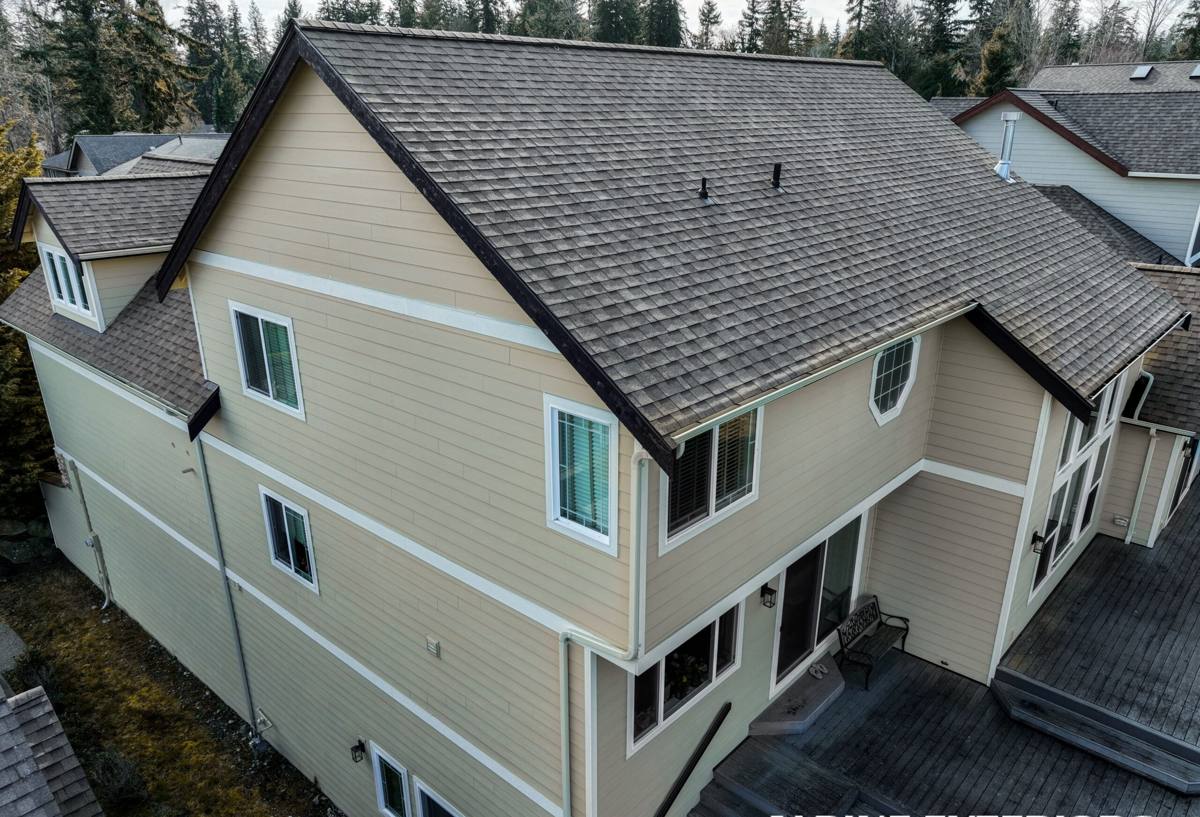
Repair or Replace? Reading the Signs
Not every tired deck needs a full replacement. But in a climate this wet, problems that start small tend to spread underneath before they're visible on the surface. Here's what typically tips a deck from "repairable" to "replace":
- Soft, spongy, or spring-y decking boards, especially near the house or in shaded corners
- Rust streaks or bleeding around fasteners — a sign the hardware itself is corroding, not just staining
- Gaps opening up between the house and the ledger board, or visible daylight where the ledger meets the siding
- Persistent moss or black algae staining that comes back within weeks of cleaning
- Posts that feel loose or footings that have shifted, heaved, or show visible cracking
- Structural members (joists, beams, posts) with soft wood, delamination, or fungal growth when probed with a screwdriver
- A deck older than its expected service life for the material it's built from, especially if maintenance has been inconsistent
If the issues are limited to a handful of surface boards or a section of railing, repair is usually the honest answer. If the ledger connection, framing, or footings are compromised, patching the decking on top just delays a bigger failure — and on a structure people stand on, that's not a risk worth carrying.
Structural Signs That Override Cosmetic Ones
A deck can look presentable and still be structurally unsound underneath. Bounce or deflection when you walk across it, a ledger board that's pulling away from the rim joist, or joist hangers with visible rust-through are all reasons to have the structure evaluated before spending money on new decking boards. Coastal salt exposure accelerates hardware corrosion in ways that aren't always obvious from the top side.
What a Correct Deck Replacement Involves
Ledger Board and Flashing
The ledger — the board that attaches the deck to the house — is the single most common failure point in this climate, because it's the one place where wood meets wood meets water in a tight space. A correct install uses proper flashing (typically a metal flashing under the siding combined with a self-adhering waterproof membrane over the ledger face) to keep driving rain from tracking down behind the siding and into the rim joist. Skipping or shortcutting this step is invisible on installation day and can rot a structure from the inside within a few wet seasons.
Framing, Posts, and Footings
Framing lumber should be rated for ground contact or exposure as appropriate to its position, and every fastener and connector — joist hangers, post bases, structural screws — should be corrosion-resistant hardware suited to coastal exposure, not the cheapest galvanized option on the shelf. Footings need to be sized and set to local frost and soil conditions and to bear the actual load of the deck, not just meet a minimum.
Decking Material Choice
The decking surface is what you see and walk on every day, and it's also what fights moss, algae, and standing water directly. Board spacing, direction, and slope away from the house all affect how fast water sheds and how much moss gets a foothold.
Railings and Guards
Railings need to be structurally anchored, not just decorative — they take real lateral load. Under most western Washington building codes, any deck surface a meaningful height above grade requires a code-compliant guard, and baluster spacing has to meet safety spacing requirements. This is one area where "it looks fine" and "it's actually up to code" aren't always the same thing.
Decking Material Comparison for This Climate
| Material | Moisture/Moss Behavior | Maintenance | Relative Cost |
|---|---|---|---|
| Pressure-treated wood | Sheds water reasonably well if sealed and sloped correctly; prone to moss if not cleaned | Annual cleaning and periodic re-sealing recommended | Lowest upfront cost |
| Cedar | Naturally rot-resistant but still needs sealing to resist moss and graying in this climate | Regular sealing/staining to maintain appearance and water resistance | Mid-range |
| Composite decking | Doesn't rot, but can still grow surface algae/moss film if not cleaned; some boards handle moisture better than others | Occasional washing; no sealing or staining needed | Higher upfront, lower ongoing labor |
| PVC/capped composite | Best moisture resistance of the common options; sheds water and resists staining well | Lowest maintenance of the group | Highest upfront cost |
There's no single "correct" material for every homeowner — it's a trade-off between upfront cost, how much upkeep you're willing to do, and how long you want the deck to last without major work. We'll walk through the honest trade-offs for your specific project rather than push whatever has the best margin.
Cost Factors on a Custer Deck Replacement
| Factor | Why It Moves the Price |
|---|---|
| Deck size and shape | Square footage and the number of angles/cuts directly affect material and labor |
| Decking material | Pressure-treated, cedar, composite, and PVC span a wide cost range |
| Height and stairs | Taller decks and stair sections add framing, footings, and railing complexity |
| Railing style | Basic wood or metal balusters cost less than cable, glass, or custom rail systems |
| Structural condition underneath | Rotted framing, failed footings, or ledger damage found during tear-off add scope |
| Tear-off and disposal | Old decking, especially older pressure-treated lumber, requires proper haul-away |
| Site access | Backyard access, slope, or obstacles affect how efficiently material and equipment move |
| Permit requirements | Permitting and inspection add time and a fee but protect you long-term |
Our Deck Replacement Process
- On-site assessment — we look at the existing deck, the ledger connection, framing, and footings, and talk through how you actually use the space
- Structural evaluation — probing framing and connections to find out what's salvageable versus what needs to come out
- Material and design decisions — decking, railing, and layout choices, with honest pros and cons for our climate
- Permitting — pulling the required permit and scheduling inspections as needed for the scope of work
- Tear-off and haul-away — removing the old structure and disposing of debris properly
- Framing and flashing — new posts, footings, joists, and ledger flashing built to hold up under coastal moisture
- Decking and railing installation — proper board spacing and slope for drainage, and code-compliant railings
- Final walkthrough — checking the finished deck with you before we call the job done
Permits and Code Considerations in Whatcom County
Most deck replacement projects in Whatcom County require a permit, particularly when the deck is attached to the house, exceeds a certain height above grade, or involves structural framing changes. Permitting isn't just paperwork — it means an inspector checks the ledger connection, footings, and framing before the decking goes down, which is exactly the part of the job you can't see once it's finished. We handle the permit process as part of the job rather than leaving it for the homeowner to sort out.
Keeping a New Deck Performing in This Climate
A correctly built deck still needs some seasonal attention in a climate with this much rain and moss pressure. A short routine goes a long way:
- Sweep debris off the decking regularly, especially in fall when leaves and needles collect and trap moisture
- Rinse or wash the surface periodically to interrupt moss and algae growth before it establishes
- Check that gaps between boards stay clear so water can drain rather than pool
- Inspect the ledger flashing area and railing connections once a year for any signs of movement or moisture
- Reseal or restain wood decking on the manufacturer's recommended schedule, not just when it looks faded
- Keep an eye on hardware for early rust — catching it early is far cheaper than a repair later
Why Hiring a Crew That Already Works in Custer Matters
Deck framing details that work fine in a dry inland climate can fail early here, and a crew that hasn't worked this specific stretch of Whatcom County coastline may not build in the moss and salt-air margin this area actually needs. A crew already familiar with Custer and the broader Semiahmoo area knows which fastener specs hold up, how to detail ledger flashing for driving rain rather than occasional rain, and what the local permitting process actually requires — so there are no surprises mid-project. That familiarity translates into a deck that's built right the first time, not one that needs early intervention because it was built to a generic spec.
If your deck is showing its age or you're planning a replacement, we're glad to take a look and give you a straightforward, no-pressure estimate — just fill out the form below.