 Semiahmoo Siding
 Why Birch Bay Decks Wear Out Faster Than the Manual Says
Every deck comes with a lifespan printed somewhere in the manufacturer's literature, and almost none of those numbers were calculated with Birch Bay in mind. Sitting right on the water in Whatcom County, Birch Bay decks deal with a combination most inland decks never see: salt-laden air off the bay, wind-driven rain that gets up underneath railings and ledger boards instead of just falling straight down, and a moss season that can stretch from October well into May. None of these on their own is unusual for the Pacific Northwest. Together, applied year after year to the same fasteners, boards, and joints, they shorten the practical life of a deck by years compared to the same structure built somewhere drier and further from open water.
Salt air is the one people underestimate most. It doesn't just sit on the surface — it works into any exposed metal, accelerating corrosion in fasteners, joist hangers, and post bases long before the wood around them shows obvious damage. By the time a homeowner notices a soft board or a wobbly rail, the hardware underneath has often been failing quietly for a couple of seasons already.
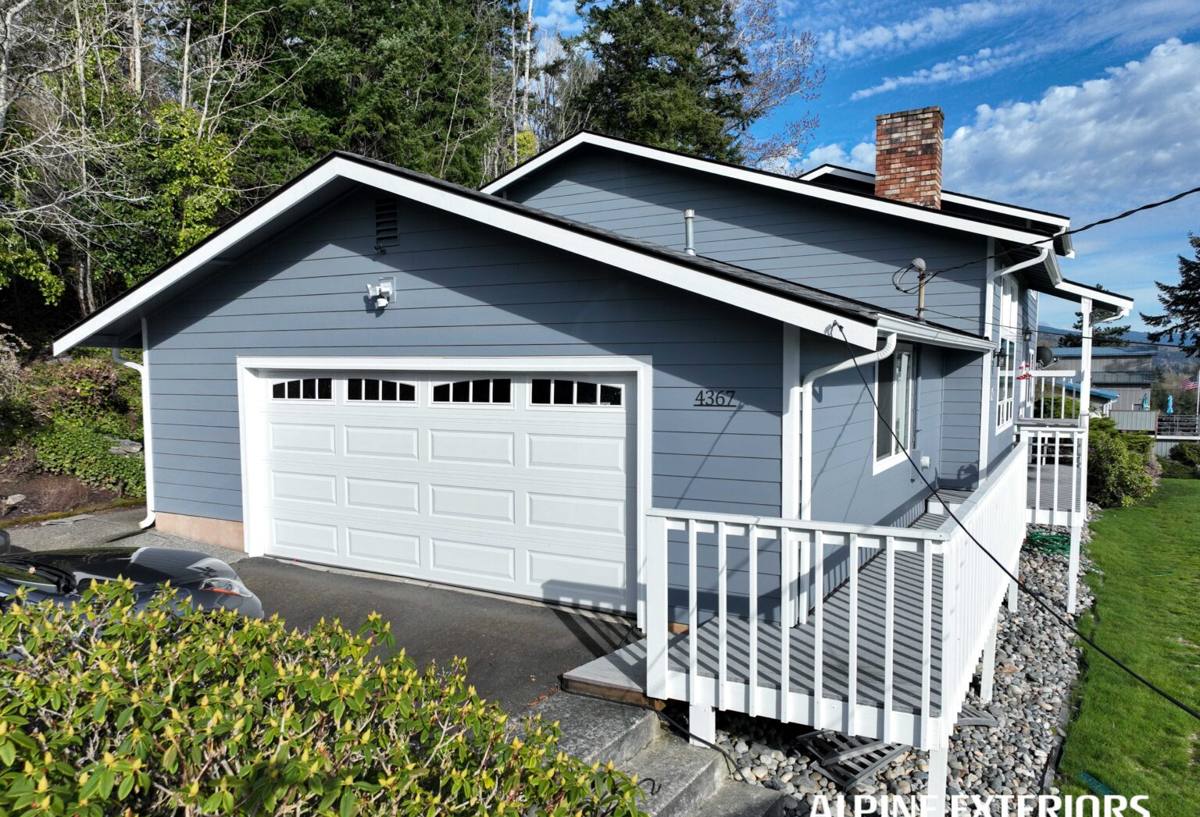
The Deck Problems We See Most Often in Birch Bay
Rot at the Ledger Board and Post Bases
The ledger board — where the deck attaches to the house — and the bottoms of support posts are the two spots that hold moisture longest after a storm. Combine that with our driving rain, which pushes water sideways into gaps that a vertical-rain climate would never expose, and these are consistently the first places we find soft, punky wood on an otherwise decent-looking deck.
Corroded or Failing Fasteners and Hardware
Standard fasteners and non-marine-rated joist hangers corrode faster this close to the water. We regularly find decks where the visible decking is still serviceable but the screws, nails, and hangers holding it together have rusted to the point of losing grip strength — a structural problem hiding behind a cosmetic one.
Moss, Algae, and Surface Decay
A long, wet moss season means organic growth gets a real head start on any deck that isn't cleaned regularly. Moss and algae hold moisture against the wood surface, break down finishes faster, and turn decking slick and dangerous underfoot — especially on shaded sides of the house or under overhangs where sun never gets a chance to dry things out.
Failing Stains, Sealers, and Finishes
UV exposure isn't our biggest enemy here, but repeated wet-dry cycling is. Finishes that would last five or six years in a drier climate often need attention in three or four in Birch Bay, and once a sealer fails, the wood underneath starts absorbing water directly.
Repair or Replace? How We Actually Decide
Not every deck problem means starting over, and not every repair is worth doing if the underlying structure is compromised. We look at the age of the deck, how much of the framing versus surface decking is affected, and whether the damage is isolated or spread across multiple structural points before recommending anything.
| Situation | Usually Repairable | Usually Needs Replacement |
|---|---|---|
| Damage location | Isolated boards, single post, or localized ledger section | Widespread rot across framing, multiple posts, or the ledger connection |
| Deck age | Under 15 years, built to a reasonable structural standard | Older decks with outdated framing, undersized footings, or no permit history |
| Fastener condition | Localized corrosion, hardware still holding | Widespread hardware failure or hangers pulling loose |
| Rough cost range | Several hundred to a few thousand dollars depending on scope | Full rebuild cost, generally several times a targeted repair |
When a deck falls in a gray area, we'll say so plainly. Sometimes the honest answer is that a repair will hold for a few more good seasons and buy time before a full rebuild makes more financial sense — and we'd rather tell a homeowner that than sell a bigger job than the deck actually needs.
What a Correct Deck Repair Actually Involves
Structural Inspection First
Before any board gets replaced, we check the framing underneath — joists, beams, post bases, and the ledger connection to the house. Surface repairs on top of a compromised structure are a waste of money and, worse, a safety issue.
Ledger Board and Flashing
If the ledger shows moisture damage, proper flashing is part of the fix, not an optional upgrade. Flashing that directs water away from this connection point is one of the cheapest things to get right and one of the most expensive things to ignore.
Fastener and Hardware Upgrades
Given our salt-air exposure, we don't reinstall standard fasteners in a repair just because that's what was there originally. Stainless steel or heavy hot-dip-galvanized fasteners and hardware cost more upfront but hold up dramatically longer this close to the water, which matters more here than in almost any other detail of the job.
Decking Board Replacement
Boards get matched as closely as possible to the existing deck for a consistent look, with attention to proper spacing for drainage and airflow — tight, moisture-trapping gaps are a common cause of premature rot on Birch Bay decks that were originally installed a little too snug.
Railings and Guard Posts
Railings take constant wind load off the water and get inspected for the same rot and fastener issues as the deck surface. A railing that looks fine from a few feet away can still have a compromised post base underneath.
Materials: What We Use and Why
We don't push one material as the answer for every deck. Wood, composite, and PVC decking each have real trade-offs in a marine climate, and the right choice depends on the homeowner's budget, maintenance appetite, and how the deck is used.
- Cedar and treated wood: Lower upfront cost, natural look, but needs regular cleaning and refinishing to hold up against our moss season and salt exposure.
- Composite decking: Higher upfront cost, resists rot and moisture absorption far better than wood, but still needs periodic cleaning since moss and algae will grow on any surface left wet and shaded.
- PVC decking: The most moisture-resistant option, generally the highest cost, and a reasonable choice for decks with heavy shade or constant salt spray exposure.
- Fasteners and hardware (all materials): Stainless or hot-dip-galvanized, regardless of what the decking itself is made of — this is the detail that most affects long-term durability here.
Signs Your Birch Bay Deck Needs Attention
- Boards that feel spongy, soft, or spring back slowly underfoot
- Visible rust streaks running down from screws, nails, or hardware
- Railings or posts that wobble more than they used to
- Persistent moss or dark staining that comes back within weeks of cleaning
- Gaps opening up between boards, or boards cupping or splitting
- A ledger board area that stays damp longer than the rest of the deck after rain
- Peeling or flaking stain that's exposing bare wood
Any one of these is worth a look. Several of them together usually mean the deck has been quietly deteriorating for a while and a repair now is cheaper than a rebuild later.
Our Process for a Deck Repair Job
- On-site inspection: We walk the full deck, check framing from underneath where accessible, and test fasteners and hardware rather than just looking at the surface.
- Honest scope and estimate: We tell you what actually needs fixing now, what can wait, and what a full replacement would cost for comparison if the deck is borderline.
- Repair work: Rot removed and replaced, hardware upgraded to marine-appropriate fasteners, flashing corrected where needed, decking reinstalled with proper spacing.
- Cleanup and walkthrough: We clear debris and walk the finished repair with you before calling the job done.
Keeping a Repaired Deck in Good Shape
A repair holds up a lot longer with basic seasonal upkeep, especially given how much moisture and organic growth Birch Bay decks deal with compared to drier parts of the county.
- Clean the deck surface at least once a year, and more often on shaded sections prone to moss
- Reseal or restain wood decking on the schedule the product actually needs in a marine climate — often shorter than the label suggests
- Check fasteners and hardware for rust or looseness each fall before the wet season sets in
- Keep gutters and downspouts clear so runoff isn't dumping extra water onto the deck or ledger area
- Trim back vegetation that's shading the deck and keeping it from drying out between rains
Why It Matters to Hire a Crew That Already Works Birch Bay
Deck repair looks similar on paper everywhere, but a crew that regularly works Birch Bay and the surrounding Whatcom County waterfront knows which details actually matter here: where salt air does the most damage first, which framing spots hold water longest in our driving rains, and how aggressive the moss season really gets on north- and shade-facing decks. That's the difference between a repair that gets you through one season and one that's built to handle the next several years of this specific climate. It also means faster response for inspections and follow-up, since we're already working in the area rather than treating it as a one-off trip.
If you've got a deck in Birch Bay that's showing any of the signs above — or you just want an honest opinion on whether it's a repair or a replacement — we're happy to take a look. Reach out for a free, no-pressure estimate using the form below.