 Semiahmoo Siding
 Building a Deck That Actually Holds Up in Point Roberts
Point Roberts sits on its own peninsula, cut off from the rest of Washington by water and border crossings, and that isolation shapes everything about how a deck should be built out here. The exposure is different than a few miles inland. You've got salt-laden air coming straight off the water, driving rain that hits decks sideways instead of just falling on them, and a wet season that stretches long enough to grow a full coat of moss on anything that doesn't drain or dry properly. A deck built to a generic spec sheet will show its age fast in this environment. One built for this specific stretch of Whatcom County coastline holds its finish, its fasteners, and its footing for years longer.
We're not describing a hypothetical here — this is the same climate logic we apply to siding work across Semiahmoo and the surrounding shoreline, just applied to a horizontal surface instead of a vertical one. Decks take the abuse differently than walls do, and that changes almost every material and construction decision.
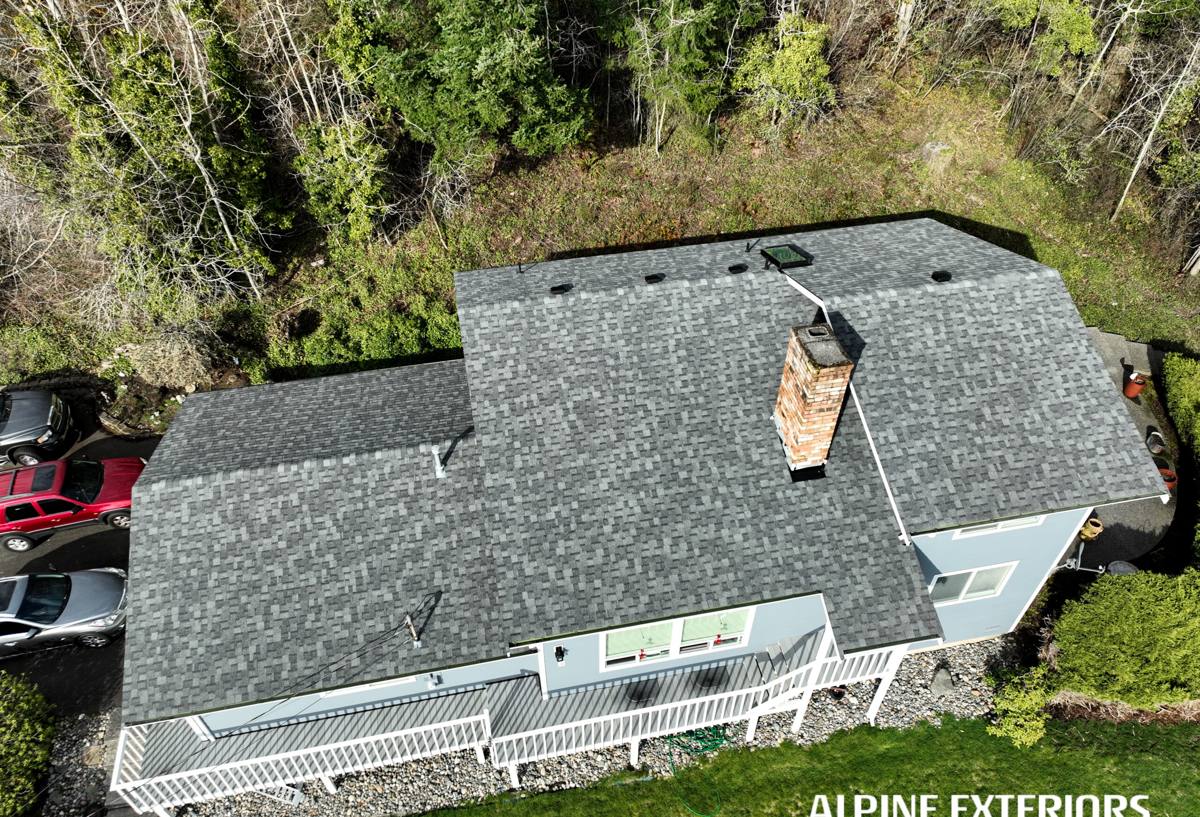
What Point Roberts' Climate Actually Does to a Deck
Salt Air
Salt in the air settles on every exposed surface, and on a deck it collects in fastener heads, in the gaps between boards, and in any joint hardware that isn't rated for coastal exposure. Standard zinc-coated screws and brackets corrode noticeably faster here than they would twenty miles inland. Corrosion doesn't just look bad — it weakens the connection between the deck and the ledger, between joists and beams, exactly where you don't want weakness.
Driving Rain
Rain that comes in at an angle off the water doesn't just wet the deck surface — it drives moisture into end grain, under fascia boards, and into any gap where the structure meets the house. Flat, still rain is relatively easy to shed. Wind-driven rain finds every seam.
Moss Season
Whatcom County's wet months run long, and Point Roberts gets the full effect with less sun exposure than more sheltered inland lots. Moss and algae need moisture and shade to establish, and a deck with poor drainage or heavy tree cover gives them both. Once moss takes hold on decking boards, it holds water against the surface even longer, which accelerates rot and makes the boards slick and genuinely dangerous underfoot.
What a Correctly Built Deck Needs Out Here
Given all that, a deck built for Point Roberts needs to do four things well: shed water fast, resist corrosion, allow airflow underneath, and use materials that don't punish you for the two things above (salt and moisture) over time.
- Proper board spacing: Gaps between decking boards need to be sized to let water through without becoming trap points for needles, leaves, and grit that hold moisture against the wood.
- Ledger flashing done right: Where the deck attaches to the house is the single most common point of hidden rot on any deck in this region. Correct flashing keeps water from wicking behind the siding at that connection.
- Coastal-rated hardware: Fasteners, joist hangers, and structural screws rated for coastal or marine-grade exposure, not the standard exterior-grade hardware sold as a default at most suppliers.
- Airflow underneath: Adequate height and ventilation below the deck so the framing can dry out between rain events instead of sitting damp.
- A drainage plan, not just a slope: The deck surface should shed water away from the house, and the ground or substructure below should have somewhere for that water to go.
Decking Material Choices for This Environment
There's no single "best" decking material for every budget and every homeowner, but some choices handle Point Roberts' conditions better than others. Here's how the common options actually perform in salt air, driving rain, and moss-prone shade.
| Material | Salt Air Resistance | Moss/Moisture Behavior | Maintenance |
|---|---|---|---|
| Pressure-treated wood | Fair — fasteners are the weak point | Needs regular cleaning and sealing to resist moss and rot | Highest — annual inspection, periodic sealing |
| Cedar | Good — naturally rot-resistant | Still needs to dry between rains; can gray and hold moss if shaded | Moderate — periodic oil or stain |
| Composite decking | Very good — doesn't corrode or absorb salt | Sheds water well; some boards can still support surface algae in deep shade | Low — occasional wash-down |
| PVC decking | Excellent — fully synthetic, no rot risk | Best moisture performance; least prone to sustained moss growth | Lowest — wash-down only |
We'll walk you through this trade-off honestly rather than pushing whatever has the best margin. Composite and PVC cost more up front but ask less of you every year after. Wood costs less initially but only holds up long-term if you're genuinely willing to keep up with sealing and cleaning on a schedule — and in a moss-prone, salt-air environment, that schedule is tighter than most homeowners expect when they buy the wood.
The Structure Underneath Matters More Than the Boards on Top
Homeowners naturally focus on the decking surface — the part they see and walk on — but the framing underneath is what actually determines how long the deck lasts. In this climate, we pay particular attention to:
Ledger Board Attachment
This is where the deck ties into the house, and it's the single spot most responsible for structural failures and hidden water damage on decks we've inspected in coastal Whatcom County. Correct flashing and fastening here isn't optional — it's the difference between a deck that lasts decades and one that develops soft, rotten framing behind the siding within a few years.
Post Bases and Footings
Posts that sit directly on concrete without a proper standoff base wick moisture up into the wood. In a high-rainfall coastal environment, that wicking happens faster and more persistently than inland, so post bases need to hold the wood clear of standing water and concrete contact.
Joist Hangers and Structural Hardware
As mentioned above, standard hardware corrodes visibly faster here. We use hardware rated for the exposure, not just hardware rated for "exterior use" generically — there's a real difference in a salt-air environment.
How Our Process Works
- On-site assessment: We look at sun exposure, prevailing wind and rain direction, existing drainage, and how the deck will tie into your home's siding and framing.
- Material conversation: We walk through the honest trade-offs between wood, composite, and PVC decking for your specific budget and how much upkeep you actually want to commit to.
- Structural plan: Framing layout, ledger flashing detail, post spacing, and hardware selection are all specified up front — not improvised on site.
- Build: Framing first, with attention to airflow and drainage beneath the structure, then decking, railing, and finish work.
- Final walkthrough: We show you what maintenance (if any) your chosen material actually needs and on what schedule.
Maintenance Checklist for a Point Roberts Deck
Whatever material you choose, a few habits go a long way toward fighting off the salt air, driving rain, and moss season that define this stretch of Whatcom County coastline:
- Sweep debris (needles, leaves, dirt) off the deck surface regularly so moisture doesn't collect against the boards
- Rinse salt residue off the deck surface and railings a few times a year, especially after storms
- Check for moss or algae buildup in shaded corners and treat it before it spreads
- Inspect ledger flashing and any visible fastener heads annually for rust or corrosion
- Keep gutters and downspouts near the deck clear so runoff isn't dumping extra water onto or under the structure
- For wood decks, re-seal or re-stain on the schedule the product actually requires — not "when it looks bad"
Why Local Experience on This Specific Peninsula Matters
Point Roberts' geography — a peninsula exposed to open water on multiple sides, cut off from mainland Whatcom County — creates weather exposure that's genuinely different from a sheltered inland lot even a few miles away. A crew that hasn't worked this specific stretch of coastline can underestimate how much salt air and wind-driven rain will affect fastener choice, flashing detail, and material selection. We work Semiahmoo, Point Roberts, and the surrounding Whatcom County shoreline regularly, so the hardware, flashing, and drainage decisions on your deck are based on what actually holds up here — not on a generic regional spec.
Common Mistakes We See on Existing Decks Out Here
When we're called out to repair or replace an aging deck in this area, a handful of issues show up again and again:
- Standard exterior fasteners used instead of coastal-rated hardware, now visibly rusted and weakening connections
- Ledger boards with missing or inadequate flashing, leading to hidden rot behind the siding
- Decking installed with boards too tight together, trapping debris and moisture between them
- Low clearance underneath the deck with no ventilation, keeping the framing damp long after rain stops
- Heavy moss buildup on shaded sections that was never addressed until boards started to soften
Most of these are avoidable with correct planning at build time, and most of them are fixable if caught early — but they get more expensive to correct the longer they're left.
If you're planning a new deck or dealing with an aging one in Point Roberts, we're happy to take a look and give you a straight assessment of what it needs. Reach out for a free, no-pressure estimate using the form below.