 Semiahmoo Siding
 Building a Deck That Actually Holds Up in Birch Bay
Birch Bay sits right on the water, and that changes what a deck needs to survive. A deck built to a generic spec sheet — the kind you'd find in a inland subdivision — doesn't last here the way it would somewhere drier and further from the coast. Salt-laden air corrodes hardware faster, driving rain from Pacific storms finds every gap in flashing and fastening, and a long, damp moss season keeps surfaces wet for weeks at a time. None of that is a reason to avoid building a deck. It's a reason to build it correctly the first time, with materials and details chosen for this specific stretch of Whatcom County.
We've worked on homes throughout the Semiahmoo and Birch Bay area long enough to know which shortcuts show up as problems in year three, not year one. This page covers what a Birch Bay deck actually needs — from the ground up.
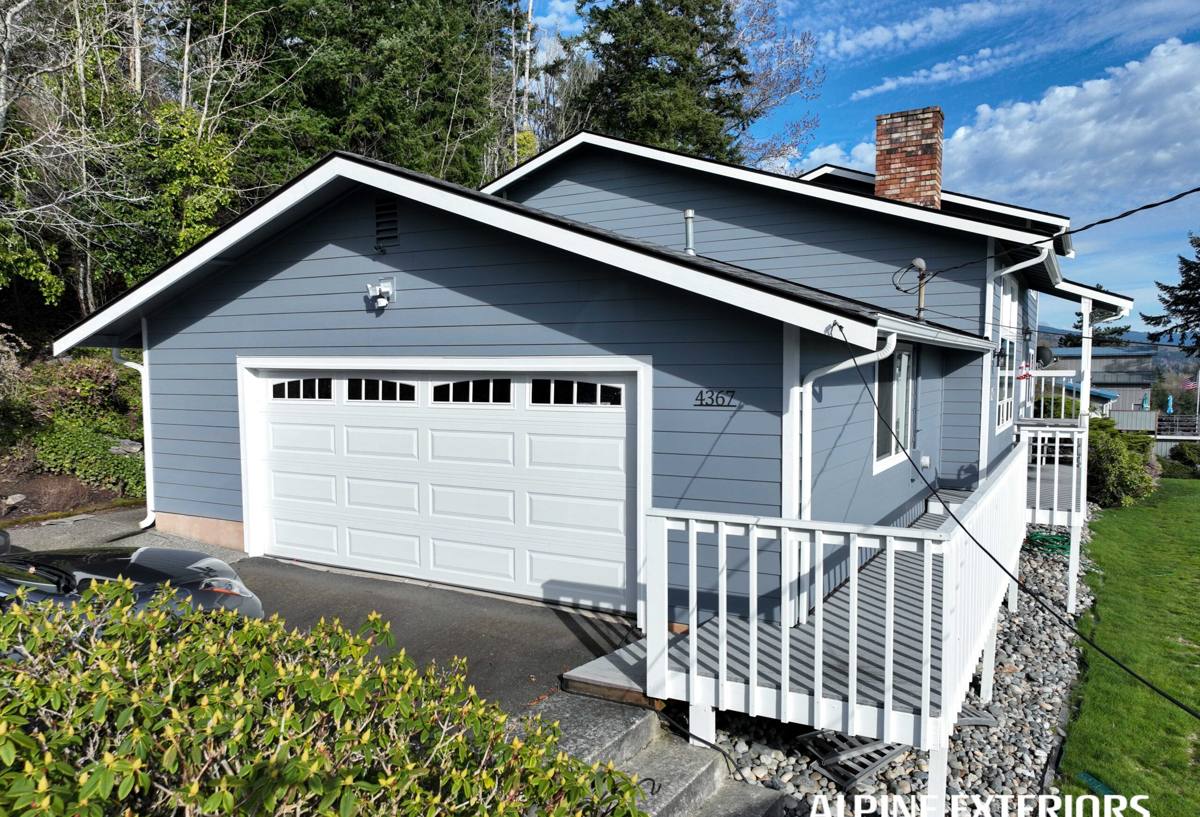
What Salt Air, Rain, and Moss Do to a Deck Over Time
Three things wear a Birch Bay deck down faster than they would elsewhere, and each calls for a different response:
Salt Air and Corrosion
Coastal air carries fine salt particles that settle on exposed metal — screws, joist hangers, bolts, railing brackets — and accelerate rust and corrosion. A fastener rated for general outdoor use inland can start pitting and staining within a few seasons this close to the water. This is one of the most common failure points we see on older Birch Bay decks: the wood is often fine, but the hardware holding it together isn't.
Driving Rain
Storms coming off the water tend to drive rain sideways, not just down. That means water gets pushed into joints, under ledger boards, and behind rim joists that a straight-down rain would never reach. Flashing and water-shedding details that would be optional in a drier climate are not optional here.
The Long Moss Season
Whatcom County's wet stretch runs long, and shaded or north-facing decks can stay damp for weeks without a real drying window. Moss and algae take hold on any surface that doesn't shed water and get sun, and once established, they hold moisture against the decking and make the surface slick and slippery underfoot.
Choosing the Right Decking Material for This Climate
There's no single "best" decking material for every Birch Bay home — it depends on budget, how much maintenance the owner wants to do, and how exposed the deck is to weather. Here's how the common options actually compare in a marine climate like ours:
| Material | Moisture Behavior | Maintenance | Typical Lifespan Here |
|---|---|---|---|
| Pressure-treated lumber | Resists rot when properly sealed; can cup or check if left unsealed | Needs re-staining or sealing every 2-3 years in this climate | 15-20 years with upkeep |
| Cedar | Naturally rot- and insect-resistant; still needs sealing against driving rain | Annual or biennial sealing to hold color and prevent graying | 15-25 years with upkeep |
| Composite decking | Doesn't absorb water or rot; some boards can still trap moss on the surface if not cleaned | Periodic washing, no staining or sealing | 25-30+ years, manufacturer-dependent |
We don't push one material over another as a rule — we walk the site, talk about how much maintenance the owner actually wants to keep up with, and factor in sun exposure and how close the deck sits to the water. A deck tucked under trees in a damp corner of the lot is a very different maintenance conversation than one that gets full afternoon sun.
A Note on Composite Decking
Composite has gotten a lot better over the years, but it's not maintenance-free — it's lower-maintenance. Boards can still develop a moss film in shaded, damp spots if they're never swept or washed, and installation quality matters just as much as with wood: proper gapping and ventilation underneath keep composite performing the way it's supposed to. We install composite when it fits the homeowner's goals, using manufacturer-specified fastening and spacing rather than treating it like a wood substitute.
What's Underneath Matters More Than What's On Top
The decking boards are what you see and walk on, but the framing and footings underneath are what determine whether a deck is safe and stable ten years from now. In this climate, a few things matter more than average:
- Footing depth and drainage — footings need to be set below frost depth and away from standing water, which matters on lots with poor drainage or a high water table near the shoreline.
- Ledger board attachment — where a deck attaches to the house is the single most common source of hidden rot. It needs proper flashing that sheds water away from the house framing, not just caulk over a bolt.
- Joist protection — joist tops should be capped or flashed so standing water doesn't sit directly on cut lumber, which is where rot starts even on treated wood.
- Corrosion-resistant hardware throughout — hot-dip galvanized or stainless fasteners and connectors, matched to whatever decking and framing material is used, so metal doesn't become the weak point.
A deck that looks great on top but was framed with standard hardware and no ledger flashing is a deck that will need structural repair well before the boards themselves wear out.
Fasteners, Flashing, and the Small Details That Prevent Rot
Most deck failures we get called out to inspect aren't dramatic — they're slow. Water gets behind a ledger board, or standard screws corrode and back out over a few seasons, or a joist top holds water because it was never capped. None of these show up right away. They show up as soft spots, rust streaks, or a railing post that's started to wiggle, usually a few years after installation.
Building correctly the first time means using self-adhering or metal flashing at every ledger and horizontal-to-vertical transition, choosing fasteners rated for coastal or treated-lumber use (not just whatever's cheapest at the yard), and taking the extra step to cap exposed end grain and joist tops. It costs more up front in labor and materials than skipping those steps. It costs a lot less than repairing a rotted ledger connection five years in.
Railings, Stairs, and Code Requirements
Whatcom County follows the Washington State Building Code for residential deck construction, which sets minimum requirements for railing height, baluster spacing, stair rise and run, and guard strength — these aren't optional details, they're safety requirements tied to permitting. On a coastal deck, the same corrosion concerns that apply to framing hardware apply doubly to railing posts and connectors, since they're fully exposed to weather and get the most physical stress from people leaning on them. We build railing systems using fasteners and post connections rated for the decking material and the exposure, and we handle permitting and inspection as part of the job rather than leaving it to the homeowner to sort out.
Our Deck Building Process
Every Birch Bay deck we build follows the same core process, adjusted for the specific site conditions and what the homeowner wants:
- On-site assessment — sun exposure, drainage, proximity to the water, and how the deck will actually be used.
- Material and layout discussion — decking type, railing style, and any structural considerations like grade changes or existing patios.
- Permitting — pulling the required permits and scheduling inspections through Whatcom County.
- Footings and framing — set to proper depth, with corrosion-resistant hardware and ledger flashing throughout.
- Decking, railing, and stairs — installed to manufacturer specs if composite, or properly sealed if wood.
- Final walkthrough — going over maintenance expectations before we consider the job done.
Here's a quick checklist of what to expect from a properly built Birch Bay deck, regardless of which contractor does the work:
- Footings set below frost depth with adequate drainage
- Ledger board flashed and sealed against the house, not just bolted and caulked
- Joist tops capped or flashed to prevent standing water
- Corrosion-resistant fasteners and connectors used throughout, not just at visible points
- Railings and stairs built to current Washington State Building Code
- A clear maintenance plan for the specific decking material chosen
Maintenance to Expect After We're Done
Even a well-built deck needs some upkeep in this climate, and what that looks like depends on the material. Wood decks generally need a wash and inspection each spring to catch any wear before the wet season sets in, plus resealing every couple of years to keep water from soaking into the grain. Composite decks need less — mainly periodic washing to keep moss and algae film from building up in shaded areas — but shouldn't be treated as zero-maintenance. Either way, we walk homeowners through what their specific deck needs before we leave the job, so there are no surprises the following winter.
Why Hiring a Crew That Already Works Birch Bay Matters
A lot of deck problems we get called to fix started with a crew that built a solid deck by inland standards, using hardware and flashing details that just aren't enough this close to the water. Knowing that Birch Bay sits in a marine exposure zone, that the moss season runs long, and that driving rain off the bay hits ledger boards harder than a straight-down rain would — that's not something you learn from a spec sheet. It's something you learn from building decks in this specific place, season after season, and seeing what holds up and what doesn't.
If you're planning a new deck or replacing one that's showing its age, we're happy to take a look and talk through what makes sense for your site — no pressure, no obligation. Fill out the form below and we'll set up a free estimate.