 Semiahmoo Siding
 Why Windows Fail Faster Around Drayton Harbor
Homes near Drayton Harbor sit right at the edge of Semiahmoo Bay, which means windows here deal with a combination most inland Whatcom County homes never see: near-constant salt-laden air, wind-driven rain that hits glass and trim sideways instead of straight down, and a long, damp moss season that keeps exterior wood and vinyl surfaces wet for months at a time. Any one of those on its own is manageable. Together, they shorten the life of a poorly installed or poorly chosen window by years.
Salt air is corrosive to hardware — hinges, cranks, locking mechanisms, and screws — long before it visibly damages the frame itself. Driving rain finds every gap in flashing and sealant, not just the obvious ones. And moss and algae hold moisture against sills and trim, which accelerates rot in any wood that isn't properly protected or detailed. A window that would last two or three decades in a drier part of the county can fail in half that time here if it wasn't built and installed with this specific exposure in mind.
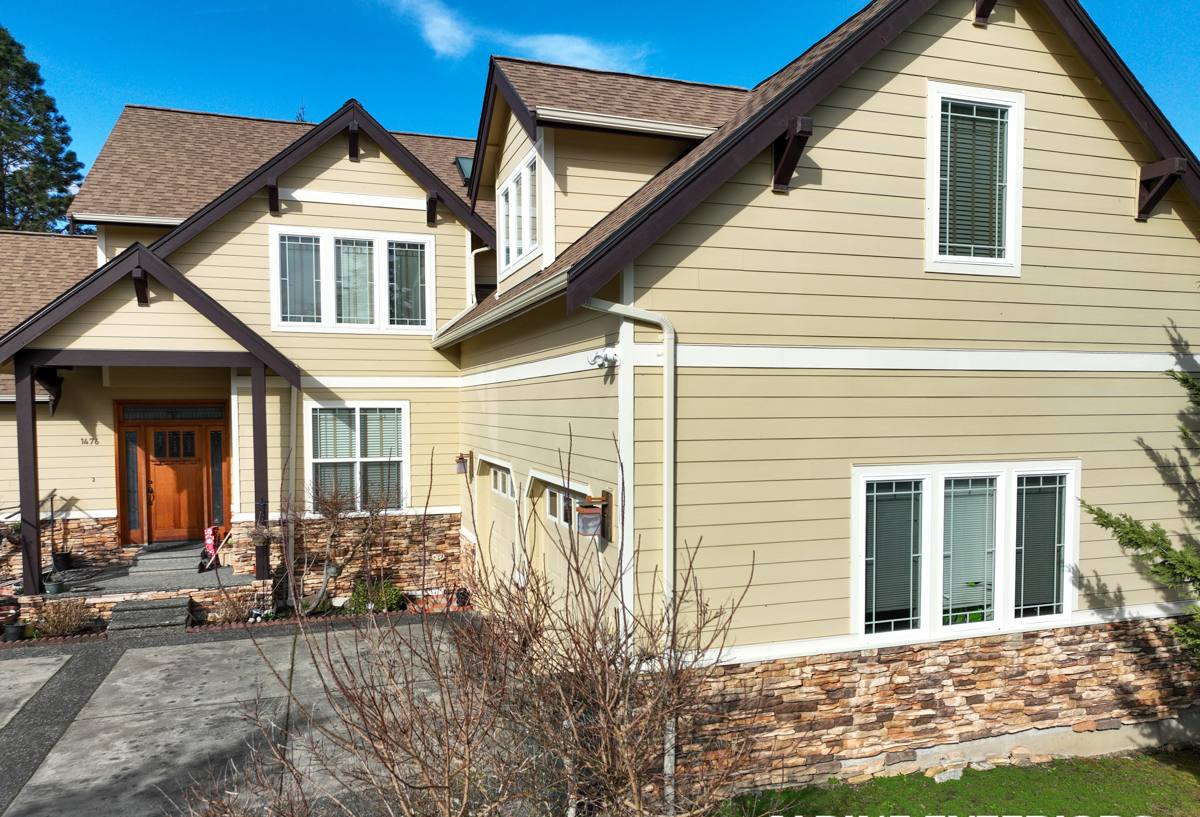
What a Correct Window Job Actually Requires Here
"Custom windows" doesn't just mean an unusual size or shape — it means the window and its installation are matched to the actual conditions of the house. For a Drayton Harbor property, that starts with recognizing which walls take the worst weather. Sides facing open water or prevailing wind need more attention to flashing detail and drainage than a sheltered wall, even on the same house.
The Details That Matter Most
- Flashing that sheds water down and out, never into the wall cavity, at the head, jambs, and sill
- A sill pan under every unit so any water that does get past the window drains back outside instead of pooling
- Sealants and tapes rated for the temperature swings and UV exposure of a coastal wall, not generic caulk
- Corrosion-resistant fasteners and hardware, since standard hardware pits and seizes faster this close to salt water
- Weep holes and drainage paths kept clear, not caulked shut during finishing
Skipping any one of these doesn't usually cause an immediate leak. It shows up as soft trim, foggy double-pane glass, or a musty smell near the window two or three years later — long after the crew that installed it has moved on.
Frame Materials: What Holds Up Near the Bay
There's no single "best" frame material for every house — it depends on exposure, budget, and how much upkeep you want to do. Here's how the common options actually perform in this specific environment.
| Frame Material | Salt Air Performance | Moss/Moisture Season | Upkeep |
|---|---|---|---|
| Vinyl | Good — won't corrode or rust | Handles standing moisture well | Low; occasional cleaning |
| Fiberglass | Very good — dimensionally stable, resists salt pitting | Excellent, doesn't absorb moisture | Low |
| Aluminum | Fair — needs a quality marine-grade finish or it will corrode | Handles moisture fine but conducts cold, can condensate | Moderate |
| Wood / Wood-clad | Poor unprotected; fine if cladding and finish are properly maintained | Vulnerable to rot if finish fails or moss holds moisture against it | High — regular refinishing and inspection |
We're straightforward with clients about wood: it can look excellent, but in this exposure it only performs as well as its maintenance schedule. If you want the wood look without the upkeep, a wood-clad unit with a durable exterior cladding gives you both, and it's what we recommend most often for homes closest to the water.
Glass Packages Worth the Upgrade
For a house taking direct wind and driving rain off the harbor, a basic double-pane unit is often the wrong call. A better-performing glass package usually includes:
- Dual or triple-pane glazing with a warm-edge spacer, which resists seal failure better over time than older aluminum spacers
- A low-E coating suited to your home's sun exposure — different for south-facing versus water-facing walls
- Laminated or impact-rated glass on walls that take the worst of the wind and debris, where it makes sense for the budget
How We Approach a Drayton Harbor Window Project
The process itself isn't complicated, but the order and attention to detail matter more here than in a sheltered inland location.
- On-site assessment. We look at each opening individually — sun exposure, wind exposure, existing water staining, and the condition of the wall framing behind the current window, not just the window itself.
- Material and glass selection. We walk through frame and glass options against your budget and how exposed that particular wall is, rather than quoting the same package for every opening.
- Removal and opening inspection. Once the old window is out, we check the rough opening for hidden rot or moisture damage before anything new goes in. This is often where problems from a prior installation surface.
- Sill pan and flashing installation. This is the step most likely to be rushed or skipped elsewhere. We treat it as non-negotiable regardless of how the old window was installed.
- Window installation and shimming. Set plumb, level, and square, with proper insulation in the gap — not spray foam alone, which isn't a substitute for correct flashing.
- Exterior sealing and trim. Coastal-rated sealants, with weep paths left open and functional.
- Final walkthrough. We test operation, check seals, and confirm drainage before we call the job done.
Signs Your Current Windows Are Already Struggling
Because moisture damage from a bad install is slow, most homeowners don't notice a problem until it's already significant. Worth checking for:
- Fogging or condensation between panes — a sign the seal has failed
- Soft, spongy, or discolored trim and sills, especially on water-facing walls
- Windows that are harder to open, close, or lock than they used to be
- Visible corrosion or white residue on hardware and hinges
- A musty smell near a window that isn't present elsewhere in the room
- Moss or dark streaking building up on the sill or trim faster than on the rest of the house
Any one of these alone might just mean cleaning or minor repair. Two or three together usually means the window or its installation has already started to fail.
Maintenance That Actually Extends Window Life Here
Whatever frame material you choose, a little seasonal attention goes a long way in this climate. We recommend:
- Rinsing salt residue off frames and glass a few times a year, particularly after storms
- Clearing moss and debris from sills and tracks before it holds moisture against the frame
- Checking weep holes are open and draining, not sealed over by paint or caulk
- Inspecting exterior caulking annually and re-sealing hairline cracks before they become leaks
- Lubricating hardware periodically to counter the corrosive effect of salt air
Cost Factors to Understand Before You Get a Quote
Every project is different, but the same handful of factors drive most of the cost difference between a basic replacement and a fully custom job.
| Factor | Why It Affects Cost |
|---|---|
| Frame material | Fiberglass and wood-clad cost more upfront than vinyl but generally need less repair over time in this exposure |
| Glass package | Triple-pane, upgraded low-E coatings, and impact-rated glass all add cost but pay off on higher-exposure walls |
| Opening condition | Hidden rot or framing damage found during removal adds repair cost, but ignoring it just moves the problem to the next window |
| Custom sizing or shape | Non-standard openings, bays, or architectural shapes require made-to-order units rather than stock sizes |
| Number of openings and exposure | Water-facing and wind-facing walls justify a higher glass and flashing spec than sheltered sides of the same house |
We'd rather walk you through these trade-offs honestly than push the most expensive option on every wall. Often the right answer is a stronger package on the two or three most exposed windows and a solid, standard option everywhere else.
Why Local Experience Matters for This Job
A crew that mostly works drier, inland parts of Whatcom County can install a technically correct window and still get it wrong for Drayton Harbor, simply because they're not used to designing for this level of wind-driven rain and salt exposure. Knowing which walls in this specific area take the worst weather, which hardware holds up, and where moss buildup causes the most damage isn't something you learn from a spec sheet — it comes from working these properties season after season. That's the difference between a window that looks right on install day and one that's still performing correctly ten years later.
If you're dealing with foggy panes, sticking hardware, or soft trim on a Drayton Harbor home, or you're planning ahead for a full window replacement, we're happy to take a look and walk you through your options. Request a free, no-pressure estimate using the form below — there's no obligation, just a straight assessment of what your windows actually need.