 Semiahmoo Siding
 Building Decks for Marietta the Way This Location Actually Requires
Marietta sits close enough to Semiahmoo Bay and Drayton Harbor that the weather off the water shapes how a deck should be built here, not just how it should look. A deck design that works fine twenty miles inland in Whatcom County can start showing problems within a few seasons on a shoreline-adjacent lot — corroding fasteners, soft spots at the ledger, moss creeping across boards that never fully dry out. None of that is inevitable. It's a function of material choice, framing detail, and drainage, and all three are things a contractor controls at the time of construction.
This page covers what a custom deck built for a Marietta property actually needs, what a correct job looks like from the footings up, and how our process works for homeowners in this specific area.
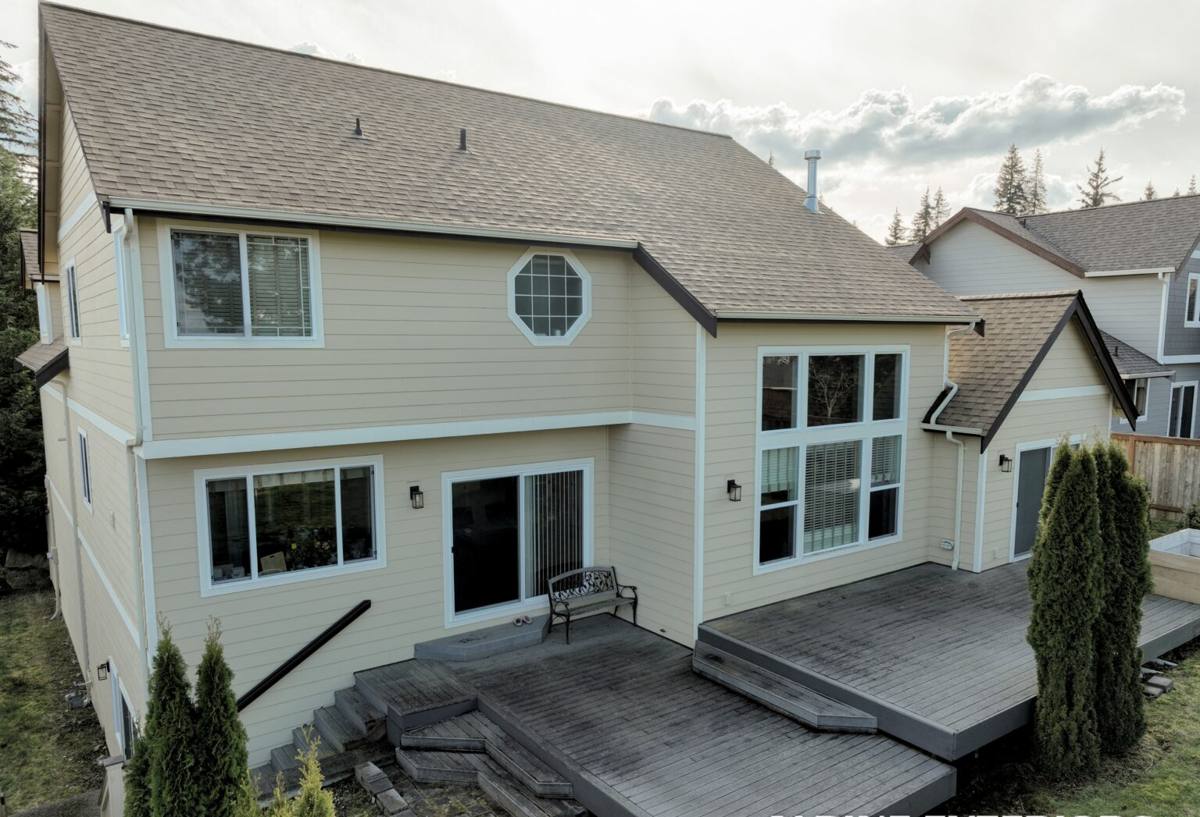
What Marietta's Climate Does to a Deck Over Time
Three conditions do most of the damage to decks in this area, and they compound each other:
Salt Air
Airborne salt from Semiahmoo Bay accelerates corrosion on any exposed metal — nails, screws, joist hangers, railing brackets. Standard construction-grade fasteners that would last decades in a dry inland climate can start rusting and staining within a few years this close to the water. Once a fastener corrodes, it loses holding strength long before it looks obviously bad, which is part of why this matters more than it might seem.
Driving Rain
Rain here doesn't just fall straight down — wind off the water pushes it sideways into ledger boards, under railing caps, and into any gap in the flashing. A deck built with flashing details meant for a calmer inland site will let water track behind the band board and into the house framing, which is one of the more expensive mistakes to discover late.
Moss and Algae
Shaded decks, north-facing decks, and decks under tree canopy in this region grow moss and algae readily, especially where boards stay damp between rains for most of the fall and winter. Beyond the slip hazard, moss holds moisture against the decking surface and accelerates rot in wood and staining in composite.
None of these three are reasons to avoid building a deck in Marietta — they're just the design inputs that need to be respected.
Choosing the Right Decking Material for This Location
There's no single "best" decking material — the right choice depends on budget, how much maintenance you're willing to do, and how exposed the deck is to sun, shade, and salt air. Here's how the common options actually compare for a property in this area.
| Material | Salt Air / Moisture Behavior | Maintenance | Typical Lifespan Here |
|---|---|---|---|
| Pressure-treated lumber | Handles moisture well if fasteners and hardware are corrosion-rated; needs regular sealing | Annual cleaning, re-sealing every 1-2 years | 15-20 years with upkeep |
| Cedar | Naturally rot- and insect-resistant, but softer and more prone to surface checking in driving rain | Regular oiling/staining to hold color and prevent graying | 15-20 years with upkeep |
| Composite decking | Doesn't absorb water like wood; resists rot, but can retain surface moisture in shaded, poorly ventilated areas, encouraging mold on the surface | Periodic washing; no staining or sealing | 25-30+ years |
| PVC/capped decking | Fully sealed surface, best moisture resistance of the group | Lowest maintenance of the options | 25-30+ years |
For decks with significant shade or north exposure — common on tree-lined Marietta lots — we lean homeowners toward composite or capped decking specifically because of the moss and mildew issue, not because wood is a bad product. A well-built cedar or treated-wood deck can absolutely hold up here; it just asks more of the owner in upkeep, and we're upfront about that trade-off before you commit to a material.
Framing and Fasteners: The Part That Determines Whether the Deck Lasts
The surface material gets the attention, but the framing underneath is what actually determines a deck's lifespan in a salt-air environment. This is where we see the biggest gap between a deck built correctly and one that looks fine for a few years and then fails.
- Fasteners and hardware: We use stainless steel or heavy hot-dip galvanized fasteners and joist hangers rated for coastal exposure — not the standard-grade hardware that's adequate inland but corrodes prematurely here.
- Ledger flashing: The ledger board attaches the deck to the house, and it's the single most common point of water intrusion on any deck. We flash it with a full moisture barrier and drip cap so wind-driven rain can't track behind it into the wall framing.
- Joist protection: Joist tape over the top of every joist keeps standing water from soaking into end grain and fastener penetrations — the spots where rot typically starts first.
- Board spacing: Proper gapping between deck boards lets the surface dry between rain events instead of trapping moisture, which directly reduces moss growth.
None of this is visible once the deck is finished, which is exactly why it's worth asking a contractor about before construction starts rather than after a problem shows up.
Footings, Elevation, and Drainage on Marietta Lots
Whatcom County's frost depth and soil drainage requirements set the minimum for footing depth, and we don't shortcut that regardless of how straightforward a deck looks above grade. Beyond code minimums, a few things matter specifically for this area:
Drainage away from the house. With the amount of rain this region gets, grading and footing placement need to move water away from the foundation, not toward it. A deck built without attention to this can quietly contribute to a wet crawlspace or basement over time.
Height and view considerations. Some Marietta properties have a water-adjacent orientation where homeowners want deck height and railing design that preserves sightlines toward the bay without compromising structural stability or code-required railing heights.
Ventilation under the deck. Low-clearance decks with poor airflow underneath trap moisture against the framing from below, which is a common cause of hidden rot that isn't visible from the surface.
Railings, Fascia, and the Details That Take the Weather Head-On
Railings and fascia boards are the most exposed parts of a deck, and they're usually the first place weather damage shows up. Wood railings need the same fastener and sealing attention as the decking itself. Metal railing components — brackets, cable systems, post caps — should be marine-grade or coated to resist salt air corrosion; standard hardware store components will show rust streaking within a couple of seasons in this location. Fascia boards benefit from back-priming (sealing the hidden side, not just the visible face) since that's the surface that stays damp longest against the framing.
Permits and Working Within Local Requirements
Deck projects in this area typically require a permit through the applicable local jurisdiction, and requirements can include setback distances, railing height and spacing codes, and footing specifications tied to the property's soil and frost conditions. Properties closer to the shoreline may have additional review depending on their specific location. We handle the permit process as part of the project so you're not the one tracking down requirements — but we'd rather tell you honestly that permit specifics depend on your exact property than guess at details that don't apply to your lot.
Our Process for a Marietta Deck Project
- Site visit and assessment: We look at sun/shade exposure, drainage, existing structure (for replacements), and how exposed the site is to wind off the bay.
- Design and material selection: We walk through material trade-offs honestly based on your budget, maintenance appetite, and how shaded or exposed your specific site is.
- Permitting: We prepare and submit what's needed for your property.
- Framing and construction: Footings, framing, corrosion-rated hardware, ledger flashing, and decking installation, in that order, with attention to the details above at each stage.
- Final walkthrough: We go over the finished deck with you, including basic maintenance guidance specific to the material you chose.
Why a Crew That Already Works in Marietta Matters
A contractor who's built and repaired decks in this specific area already knows which fastener grades hold up, which corners of a lot tend to stay damp longest, and which framing shortcuts show up as callbacks two winters later. That's knowledge you don't get from a crew that mostly works dry, inland sites and treats every job the same way. It also means someone who's genuinely reachable if a question comes up after the project is done — not a name from an app with no ties to this part of Whatcom County.
Quick checklist — what to look for in a deck contractor for this area:
- Uses stainless or hot-dip galvanized hardware as standard, not an upcharge
- Explains ledger flashing and joist protection without being asked
- Gives you honest maintenance expectations for whatever material you choose, wood or composite
- Handles the local permit process rather than leaving it to you
- Can speak specifically to drainage and moisture on your lot, not just generic deck-building advice
If you're planning a new deck or replacing one that's showing its age in Marietta, we're happy to take a look and give you a straightforward, no-pressure estimate — including an honest read on what your specific site needs. Use the form below to get started.