 Semiahmoo Siding
 Building Decks for Ferndale's Wet, Salt-Touched Climate
Ferndale sits close enough to the water and to the Semiahmoo shoreline that a deck here lives a different life than one built inland. The air carries salt, the rain comes sideways more often than straight down, and the gray months stretch long enough that anything shaded stays damp for weeks at a time. A deck that would hold up fine in a drier part of the state can start showing rot, rust, and moss within a couple of seasons out here if it wasn't built with that reality in mind.
This page is about one job in one place: custom deck construction for homes in and around Ferndale, in Whatcom County. We're not going to give you a generic rundown of deck styles. We're going to walk through what actually matters when you're building something meant to sit outside, uncovered, in this specific climate, for the next twenty-plus years.
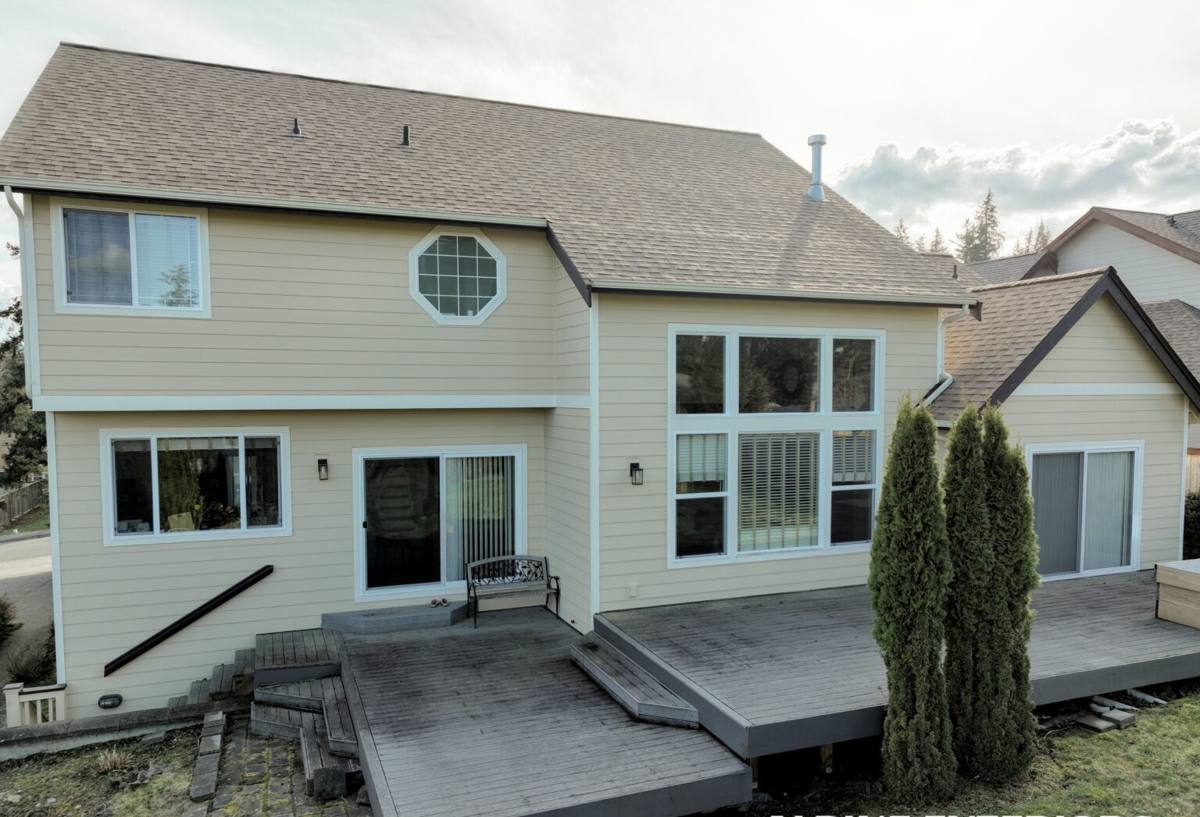
What Whatcom County Weather Does to a Deck
Moisture and Rot
Whatcom County gets a long wet season, and driving rain off the water doesn't just fall on a deck's top surface — it gets pushed sideways into ledger connections, under railing posts, and into any joint that isn't properly flashed or sealed. Wood that stays damp for extended periods, especially where two pieces of lumber touch, is where rot starts. It's almost never the open, sun-exposed boards that fail first — it's the hidden connections: ledger boards against the house, joist ends, post bases sitting in standing water.
Salt Air and Corrosion
Homes closer to the Semiahmoo shoreline and the Strait deal with airborne salt that accelerates corrosion on any metal that isn't rated for it. Standard interior-grade screws and brackets will rust and stain the decking around them within a year or two in a salt-exposed spot. This is a detail a lot of general contractors underestimate because it's not something you notice on day one — it shows up eighteen months later as rust streaks and loosening hardware.
Moss and Algae
The long moss season here isn't just a roof problem. Any deck surface that stays shaded and damp — under a tree canopy, on the north side of a house, or in a low-airflow spot — will grow moss and algae on the boards themselves, and that buildup makes the surface slick and, over time, holds moisture against the wood or composite cap. Deck orientation, gaps between boards, and airflow underneath all affect how bad this gets.
Choosing the Right Decking Material
There's no single "best" decking material — there's a best fit for your budget, your site's sun and shade pattern, and how much upkeep you actually want to do. Here's how the common options compare for a Ferndale-area build:
| Material | Moisture Resistance | Moss/Algae Resistance | Maintenance | Typical Lifespan |
|---|---|---|---|---|
| Cedar | Good if sealed regularly | Moderate — needs cleaning | Annual cleaning + refinish every 2-3 years | 15-20 years |
| Pressure-Treated Pine | Good, treated for ground contact | Moderate — needs cleaning | Annual cleaning + refinish every 2-3 years | 15-25 years |
| Composite (capped) | Excellent | Good, but can still grow in shaded spots | Periodic wash, no sealing/staining | 25-30 years |
| PVC | Excellent | Good | Periodic wash only | 30+ years |
Cedar still gets picked often for its look and the fact that it's a familiar, natural material — but it's the one that demands the most from the homeowner in terms of upkeep in a climate this wet. Capped composite and PVC cost more up front but shrug off the moisture and salt exposure with far less maintenance, which is why we see more Ferndale homeowners moving that direction for anything uncovered. Pressure-treated pine remains a solid, budget-conscious choice for the structural frame regardless of what decking material sits on top.
Substructure Materials Matter Just as Much
Whatever decking you choose on top, the frame underneath deserves the same attention. Ground-contact-rated pressure-treated lumber for joists and beams, and stainless or heavy hot-dip-galvanized hardware rated for coastal exposure, are not places to cut costs — that structure is what everything else depends on, and it's far more expensive to fix once it's buried under finished decking.
What a Correctly Built Deck Involves
A deck that's going to hold up in Ferndale's climate needs a handful of details done right, most of which you'll never see once the project is finished. This is the part of the job that separates a deck that looks good for five years from one that looks good for twenty-five.
- Proper ledger flashing: a self-adhered waterproof membrane and metal flashing where the deck attaches to the house, so water is directed away from the wall structure instead of into it.
- Joist tape: a protective membrane over the top of every joist so fasteners don't create an open path for water into the lumber.
- Footings set below frost depth: concrete footings poured to the depth required by local code, so seasonal ground movement doesn't shift the structure.
- Coastal-rated hardware: stainless steel or heavy-duty coated fasteners and brackets, especially on projects closer to the shoreline.
- Board spacing for drainage: consistent gaps between decking boards so rain sheds through rather than pooling on the surface.
- Airflow underneath: enough clearance and ventilation below the deck framing to let the structure dry out between rain events instead of staying damp.
- Post bases off the ground: post bases that keep wood posts elevated off concrete or soil, away from standing water.
Skip any one of these and the deck can still look fine at the walkthrough. The problems show up later — a soft spot near the house, a railing post that's started to wobble, rust bleeding through the boards — usually after the crew that built it is long gone.
Railings, Stairs, and Code Requirements
Most custom decks in this area need a guardrail once the walking surface is a certain height above grade, and Washington's building code sets clear requirements for guardrail height, baluster spacing, and stair geometry. These aren't optional style choices — they're safety requirements, and they also affect what a permit inspector will sign off on.
A few things worth knowing going in:
- Guardrails are generally required once the deck surface is more than 30 inches above grade, and must meet a minimum height set by code.
- Baluster spacing has a maximum gap requirement so a small child can't pass through the railing.
- Stairs have defined rise and run limits, and typically need a graspable handrail once there are enough steps.
- Ferndale and unincorporated Whatcom County both require permits for most new deck construction, and inspections happen at specific stages of the build.
We handle the permit application and coordinate inspections as part of the build — it's not an add-on service, it's part of doing the job correctly.
Our Process for Ferndale Deck Projects
We keep the process straightforward because most homeowners are doing this once and want to understand what's happening at each stage.
1. Site Visit and Design
We come out, look at the site — sun exposure, drainage, how close you are to the water, what the ground looks like — and talk through what you actually want to use the space for. Orientation and shade patterns matter a lot here because they drive how much moss and moisture pressure the finished deck will deal with.
2. Material and Layout Decisions
We walk through decking material trade-offs honestly, based on your budget and how much maintenance you want to take on, not just what's easiest for us to install.
3. Permitting
We prepare and submit the permit application with the local jurisdiction and schedule the required inspections so there are no surprises partway through.
4. Construction
Footings, framing, flashing, joist tape, decking, and railing — built in that order, with the structural and moisture-protection details handled before anything visible goes on top.
5. Final Walkthrough
We walk the finished deck with you, cover basic care and what to watch for, and make sure everything's built the way we discussed.
What Affects the Cost of a Custom Deck
Every deck is priced around its own specifics, but the same handful of factors drive most of the variation between a modest project and a larger one.
| Factor | Why It Affects Cost |
|---|---|
| Deck size | More square footage means more material, labor, and footings |
| Height and stairs | Taller decks need deeper footings, more framing, and stair structures |
| Decking material | Composite and PVC cost more upfront than wood, less over time |
| Railing style | Cable, glass, or custom railing systems cost more than standard baluster rail |
| Site access | Difficult access for equipment and material delivery adds labor time |
| Old deck removal | Demolition and disposal of an existing structure adds to the timeline and cost |
We'll walk through where your project lands on each of these during the estimate, so you're pricing an actual plan rather than guessing from a general range.
Keeping a Ferndale Deck Looking Good Season After Season
Whatever material you choose, a little seasonal attention goes a long way in this climate:
- Sweep debris and standing leaves off the deck regularly — trapped organic matter is what feeds moss and algae growth.
- Rinse the surface a couple of times a year to knock back early moss and salt residue before it builds up.
- Check railing posts and stair connections annually for looseness, especially after a hard winter.
- For wood decking, reseal or restain on the schedule recommended for the product — skipping a cycle in this climate shortens the wood's life noticeably.
- Keep gutters and downspouts near the deck clear so runoff isn't dumping extra water onto or under the structure.
Why a Local Crew Matters for a Ferndale Deck
A crew that works this area regularly already knows which details matter most for homes near Semiahmoo and Ferndale — how much salt exposure a given site actually gets, which spots hold moss and shade year-round, what the local permit office expects, and how deep footings need to go for this ground. That's not something you get from a general contractor working from a standard checklist built for a different climate. It shows up in the small decisions — hardware grade, flashing detail, board orientation — that determine whether a deck is still solid in fifteen years or starting to show problems in five.
If you're planning a new deck or replacing one that's past its prime, we're happy to come take a look and give you a straightforward, no-pressure estimate. Fill out the form below and we'll get in touch to schedule a visit.