 Semiahmoo Siding
 Windows in Custer Face a Different Climate Than Most of the Country
Custer sits close enough to Semiahmoo Bay and the Strait of Georgia that homes here take on a coastal weather load most inland siding and window crews never have to think about. Salt-laden air, driving rain that comes in sideways off the water, and a long, damp moss season put steady pressure on window frames, sills, and the seals around them. A window that would last two decades in a drier part of Whatcom County can show real wear here in half that time if it wasn't installed with this climate in mind.
Window replacement is not just a glass upgrade. It's an opportunity to correct the flashing, sealant, and drainage details that determine whether a window keeps water out for the next 20-plus years or starts letting moisture into the wall cavity within a few winters. That's the part of the job that matters most, and it's the part that's easiest to get wrong.
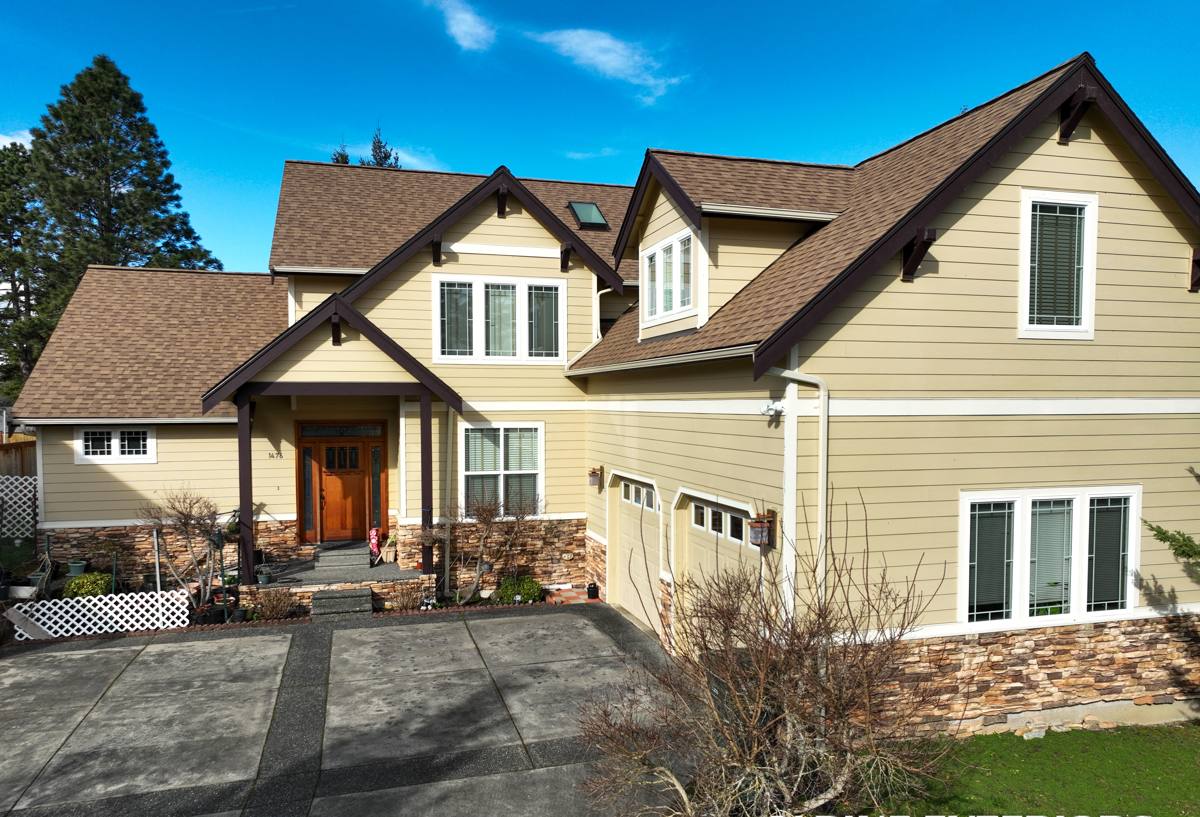
How Salt Air, Driving Rain, and Moss Season Wear Down Windows
Salt Air
Airborne salt from the bay settles on exterior surfaces and accelerates corrosion in metal window components — hinges, cranks, screen frames, and especially older aluminum sashes. It also breaks down certain sealants and finishes faster than they'd wear in a non-coastal setting. Homes closer to open water see this more, but Custer's position means most properties get some degree of salt exposure, even set back from the shoreline.
Driving Rain
Storms moving in off the water tend to drive rain horizontally against west- and southwest-facing walls, which puts far more stress on a window's flashing and seal than rain falling straight down. A window opening that isn't flashed correctly, or has sealant that's failed at the corners, will let wind-driven rain track behind the trim and into the wall assembly. This kind of leak is often invisible from inside for years, until there's staining, soft trim, or a musty smell near the window.
Moss and Persistent Moisture
Whatcom County's long wet season keeps humidity high for months at a stretch, especially on shaded north and east elevations. That's ideal growing conditions for moss and mildew on sills, tracks, and exterior trim. Beyond the cosmetic issue, moss holds moisture against wood and painted surfaces, which speeds up rot in older wood-frame windows and can stain or degrade vinyl and fiber-cement trim around the opening.
Signs a Custer Home Needs Window Replacement, Not Just Repair
- Visible gaps, soft spots, or discoloration in the wood trim or sill around a window
- Condensation building up between panes — a sign the seal on a double- or triple-pane unit has failed
- Windows that are difficult to open, close, or lock, especially after damp weather
- A noticeable draft near the frame even when the window is fully closed
- Moss or dark staining that keeps returning on the sill or lower frame no matter how often it's cleaned
- Rising heating bills without any other clear cause
- Peeling paint or bubbling finish on the interior or exterior frame
Any one of these can sometimes be handled with a repair. Several at once, or a window over 20 years old, usually means the frame and seals have reached the point where replacement is the more honest fix.
What a Correct Window Replacement Job Actually Involves
Flashing and Moisture Barrier Integration
The single most important part of a window replacement isn't the window — it's how the opening is flashed and tied back into the home's weather-resistive barrier. Flashing tape and pan flashing at the sill need to shed water outward and downward, layered correctly with the house wrap so nothing gets trapped behind the new window. This is the step that's most often rushed on a budget install, and it's the one that causes hidden rot years later.
Sealant and Fastening
Exterior sealant needs to be a product rated for the temperature swings and UV exposure this region actually sees, applied at the right joints — not smeared everywhere as a substitute for proper flashing. Fasteners need to be corrosion-resistant given the salt air, and the window needs to be shimmed level and square so it operates smoothly and seals evenly for its full life, not just on install day.
Glass and Frame Selection for Coastal Whatcom County
For a home in Custer, we're generally looking at frame materials and finishes that hold up to salt exposure and near-constant moisture without a heavy maintenance schedule, and glass packages that help with both energy performance and condensation control given the humidity here. The right choice depends on the home's exposure, budget, and how the existing siding and trim are built out.
Comparing Frame Materials for a Custer Home
| Frame Material | How It Handles Salt Air & Moisture | Maintenance | General Cost Tier |
|---|---|---|---|
| Vinyl | Good — won't corrode or rot, holds up well to salt exposure | Low — occasional cleaning | Lower |
| Fiberglass | Very good — dimensionally stable, resists moisture and salt well | Low | Higher |
| Wood (clad exterior) | Fair — interior wood warmth with a protected exterior face, but any exposed or damaged cladding invites rot | Moderate — cladding needs to stay intact | Higher |
| Aluminum | Poor to fair near the water — prone to corrosion and condensation unless it's a thermally broken, coastal-rated product | Moderate to high | Mid to higher |
We don't push one material for every job. The right call depends on the home's exposure to wind-driven rain, how close it sits to the water, and what the homeowner wants to maintain over time. We'll walk through the honest trade-offs for your specific house rather than defaulting to whatever's easiest to install.
Cost Factors Worth Understanding Upfront
- Number and size of openings — the biggest driver of total project cost
- Frame material — vinyl is typically the most budget-friendly, fiberglass and clad-wood cost more upfront but often less over the window's life
- Glass package — double-pane versus triple-pane, and any low-E or gas-fill upgrades for energy performance
- Condition of the existing opening — hidden rot or damaged flashing found during removal adds time and material, and we'll always show you what we find before proceeding
- Retrofit versus full-frame replacement — a full-frame replacement resets the flashing and moisture barrier and is the more thorough fix when the opening shows any sign of past water intrusion
Our Process, Start to Finish
- On-site assessment — we look at each window's current condition, the flashing and trim around it, and any signs of moisture damage before recommending anything
- Honest scope and estimate — you'll know upfront whether we're recommending retrofit or full-frame replacement, and why
- Measurement and ordering — precise measurements to make sure the new units fit correctly the first time
- Careful removal — old windows come out without unnecessary damage to surrounding trim or siding
- Correct flashing and installation — pan flashing, house wrap integration, shimming, and sealant done in the right order, not shortcuts
- Interior and exterior finish work — trim, caulking, and touch-up so the job looks finished, not just functional
- Final walkthrough — we check operation on every window with you before we consider the job done
Why a Crew That Already Works Custer Matters
A contractor who works this stretch of Whatcom County regularly knows which elevations on a typical Custer property take the worst of the wind-driven rain, how much salt exposure to plan for depending on how close a home sits to the water, and how long the moss season really runs each year. That local pattern recognition changes how we flash an opening, what sealant and fastener choices we make, and which frame materials we'll actually recommend versus talk you out of.
It also means we're not learning the region on your project. We've seen how homes here age under this specific combination of salt air, rain, and moisture, and we build the replacement to hold up against that — not against a generic weather assumption that doesn't match this coastline.
What to Look For When Choosing a Window Replacement Contractor
- Ask specifically how they'll flash the opening and tie it into your existing moisture barrier — a vague answer is a red flag
- Confirm whether the quote is for retrofit or full-frame replacement, and why they're recommending one over the other
- Ask about fastener and sealant choices given salt air exposure, not just the window brand
- Get the warranty terms in writing — both the manufacturer's product warranty and the contractor's installation warranty
- Ask how they handle hidden rot or damage discovered once old windows are removed
- Check that they're licensed and insured to work in Washington State
A properly installed window is a system — glass, frame, flashing, and sealant all working together. Any contractor who talks only about the window itself and skips the flashing and moisture barrier conversation isn't giving you the full picture.
If your Custer home has windows showing drafts, moisture, or wear from the salt air and rain, we're happy to take a look and give you a straightforward, no-pressure estimate. Use the form below to get started.