 Semiahmoo Siding
 Custer Roofs Take a Different Kind of Beating
Custer sits in that stretch of Whatcom County between Semiahmoo Bay and the open farmland to the east, close enough to the water that salt-laden air is a constant, and open enough that wind off the Strait of Georgia and the bay hits rooflines with little to slow it down. Add in the long stretch of wet months typical of this part of Washington, and a Custer roof is doing more work than most homeowners realize just sitting there through a normal winter.
Storm damage here rarely shows up as one dramatic event. More often it's a windstorm that lifts a run of shingle tabs, followed by weeks of driving rain finding that opening before anyone notices a stain on the ceiling. By the time it's visible inside, the damage has usually been building for a while. That's the pattern we're built around fixing — and preventing from happening again.
What Actually Counts as Storm Damage
Not every roof problem after a storm is storm damage in the way an insurance adjuster or a roofer means it. It helps to know the difference before you start making calls.
Wind Damage
Wind doesn't need to be a named storm to do damage. Sustained gusts off the water can lift shingle tabs, crease them, or tear them loose entirely, especially along ridges, hips, and roof edges where wind pressure concentrates. Once a shingle's seal is broken, it may look fine from the ground but no longer sheds water the way it should.
Impact Damage
Branches and debris are the usual culprits in this area, given how many mature trees sit close to homes in and around Custer. Impact damage can range from an obvious puncture to bruised shingle mat that only shows up as premature granule loss over the following year.
Water Intrusion
Driving rain, the kind that comes in sideways off the bay during a real blow, can work its way under flashing, around vent boots, and through gaps that would never leak in a normal straight-down rain. This is the damage type most likely to get missed, because the entry point and the stain inside the house can be several feet apart.
What's Not Storm Damage
Roofs that are simply old, under-ventilated, or were never installed correctly will fail faster in weather like ours — but that's wear, not storm damage, even if a storm is what finally exposed it. We'll always tell you honestly which one you're dealing with, because it affects both the repair and any insurance claim.
How We Handle a Storm Damage Repair
1. Inspection and Documentation
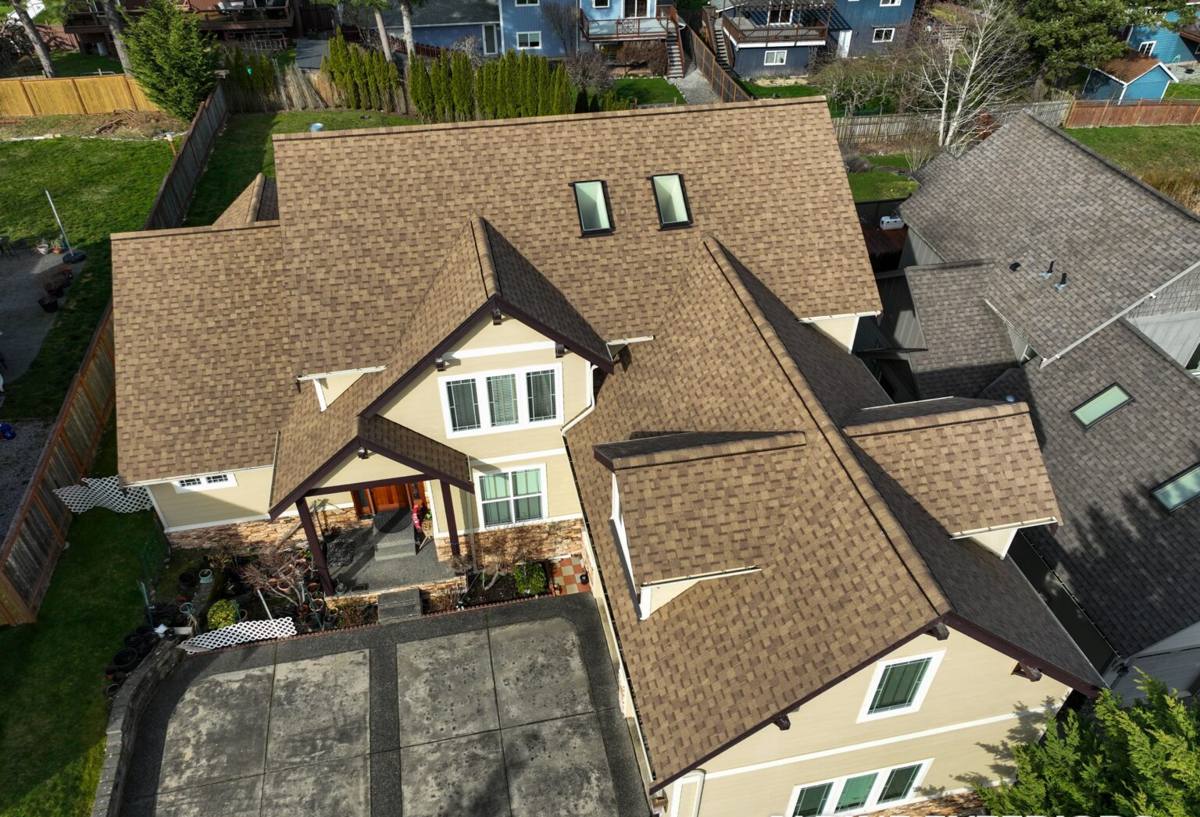
We walk the roof (or use elevated photography when pitch or safety calls for it) and document every affected area — not just the spot you called about. Wind and water damage is often worse a few feet from where it's visible, so a partial look leads to a partial fix.
2. Stabilize First
If there's an active leak or exposed decking, our first priority is stopping water intrusion — tarping, temporary flashing, or securing loose material — before we ever talk about the permanent repair. A roof that's actively taking on water doesn't wait for a scheduling slot.
3. Scope the Real Repair
We separate what needs to be replaced from what can be properly resealed or re-secured. Overselling a full section replacement when a targeted repair will hold is not how we want to be known in this area — and underselling a repair that needs decking replaced just creates a callback.
4. Insurance Coordination
If the damage is claim-worthy, we provide the documentation and scope your adjuster needs. We work for you, not the insurance company, which matters most when there's a disagreement about scope or materials.
Common Storm Damage We See on Custer Roofs
- Lifted or torn shingle tabs along ridges and roof edges, where wind pressure is highest
- Cracked or separated ridge cap shingles, often the first thing to go in a sustained blow
- Flashing pulled loose around chimneys, skylights, and roof-to-wall transitions
- Fastener corrosion on metal flashing and vent components from long-term salt air exposure
- Granule loss and mat bruising from wind-driven debris impact
- Moss-related rot at the decking level, discovered once a storm forces a closer look
- Gutter and downspout damage that redirects water back under roof edges instead of away from the house
Repair Scope: Matching the Fix to the Damage
One of the most common questions we get after a storm is whether a section needs to be patched or replaced. It depends on the extent of the damage, the age of the existing roofing, and whether matching material is still available. Here's how we generally think about it:
| Repair Type | Best For | Typical Timeline | Cost Factor |
|---|---|---|---|
| Spot Repair | Isolated wind or impact damage on a roof under 10-12 years old | Same day to a few days | Lowest — limited material and labor |
| Section Replacement | Concentrated damage to one slope or a cluster of shingles that won't match cleanly | 1-2 days | Moderate — depends on slope size and access |
| Decking Repair + Reroof | Water intrusion that's reached the plywood, or damage discovered under existing shingles | 2-4 days | Higher — driven by decking condition, not just surface material |
| Full Roof Replacement | Storm damage on a roof already near end of life, or damage spread across multiple slopes | Several days to a week | Highest, but often the more economical long-term choice |
We won't push you toward the top of that table if the damage doesn't call for it. We also won't recommend a spot repair on a roof that's clearly past its service life just because it's the cheaper conversation to have.
Salt Air, Rain, and the Long Moss Season
Custer's exposure to the bay means metal components — flashing, fasteners, gutter hardware — age faster here than they do further inland in Whatcom County. Salt air accelerates corrosion, and corroded flashing is one of the more common quiet failure points we find during storm repairs: it looks intact from a distance but has lost its seal at the seams.
Moss is the other constant. Mild, wet winters and shaded rooflines give moss a long growing season, and moss does real damage over time — it holds moisture against the shingle surface, lifts tabs as it grows under the edges, and traps debris that keeps the roof damp longer than it should be. A storm often exposes moss damage that's been developing quietly for a year or more, because the added rain finally pushes water through a spot moss had already compromised. Any thorough storm repair on a Custer roof includes a look at moss growth and drainage, not just the immediate damage.
When to Call Right Away vs. When It Can Wait
Not every issue after a windstorm is an emergency, but some are — and knowing the difference can save you real damage to the interior of the house.
- Call immediately: active dripping or staining inside the house, visible daylight through the roof deck, a large section of shingles missing, or a tree limb resting on the roof
- Schedule soon, not urgent: a handful of lifted or curled shingle tabs, minor granule loss in the gutters, small areas of moss you've noticed spreading
- Worth a look next inspection: aging flashing with no visible leak yet, gutters that are keeping up but showing wear, general roof age approaching 15-20 years
When in doubt, a phone call and a few photos are enough for us to tell you which category you're in before we ever schedule a visit.
Why Hire a Crew That Already Works in Custer
Storm damage repair isn't just about roofing skill in general — it's about knowing how this specific area behaves. A crew that mostly works drier, inland roofs may not think twice about flashing choices or moss prevention that make a real difference on a bay-exposed roof like the ones common around Semiahmoo and Custer. We size fastener and flashing choices for salt air exposure, and we build moss and drainage checks into every storm repair as a matter of course, not an upsell.
Familiarity with the area also means we're not guessing at material lead times, typical roof types, or how quickly weather can turn a manageable repair into an emergency if it sits. When a storm comes through and several homes in the same area need attention at once, having worked here before means we can move efficiently instead of relearning the terrain on your roof.
Get a Straight Answer on Your Roof
If a recent storm has you wondering whether your roof took real damage or just cosmetic wear, the fastest way to know is to have it looked at by someone who isn't guessing. We offer free, no-pressure estimates for Custer and the surrounding Semiahmoo area — an honest look at what's actually going on, what it will take to fix it right, and what can reasonably wait. Use the form below to get started.