 Semiahmoo Siding
 Building New in Custer Means Getting the Window Install Right the First Time
When you're building new in Custer, the windows go in during framing — before siding, before trim, before anyone can see what's happening behind the wall. That's the whole difference between new-construction work and a replacement job. On a replacement, we're working around an existing opening and doing our best to seal up what's already there. On new construction, we control the opening from bare studs forward: the water-resistive barrier, the flashing sequence, the sill pan, the nailing fin, all of it. Get that sequence wrong and you won't know it for years — until the day a window sill goes soft or a stain shows up on the drywall below a header.
Custer sits close enough to Semiahmoo Bay and the Strait that new homes here take a different kind of weather load than houses twenty miles inland. That shapes how we sequence a new-construction window install and which products we're willing to put our name behind.
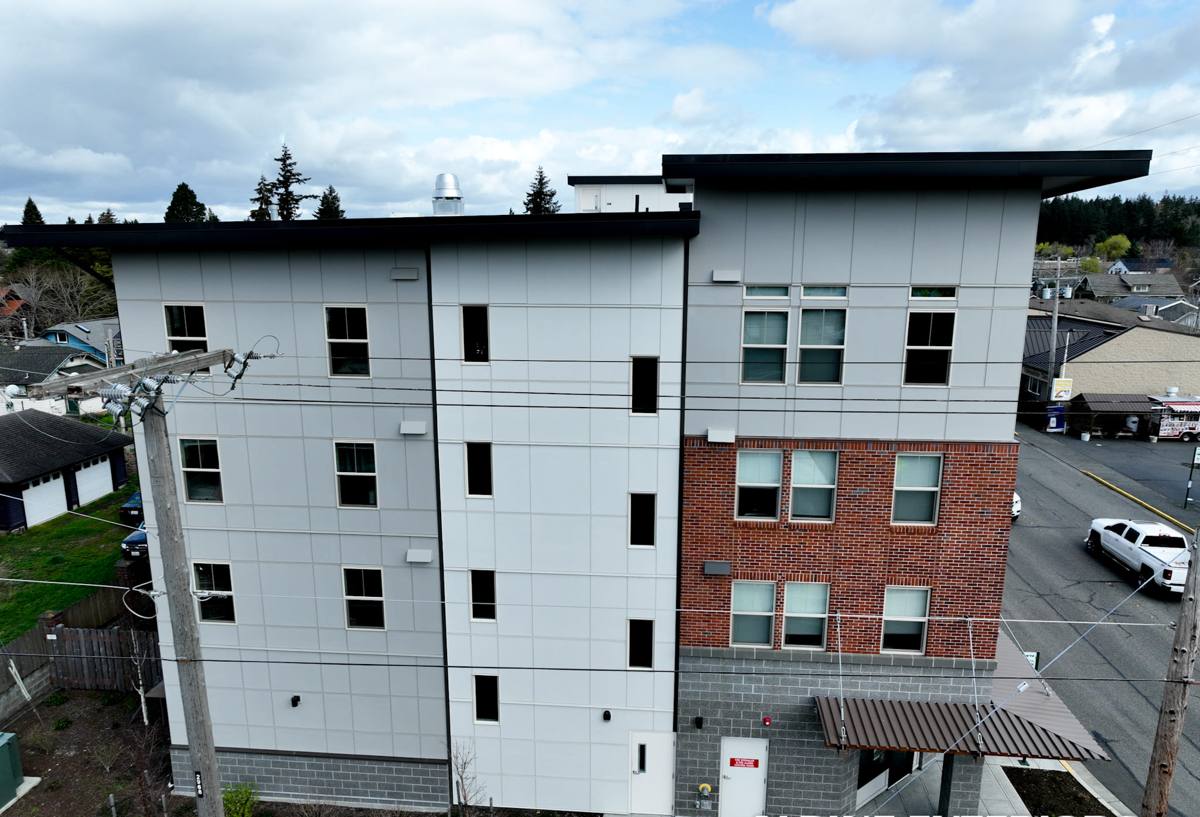
What Custer's Weather Actually Does to a New Window Opening
Salt Air and Metal Fatigue
Windows near Semiahmoo Bay sit in a light but steady salt-air environment. It's not the direct salt spray you'd get right on the water, but it's enough over ten or fifteen years to accelerate corrosion on unprotected fasteners, cheaper aluminum components, and lower-grade hardware. On a new build we get to choose fasteners and flashing tape rated for this exposure from day one, instead of retrofitting a fix later.
Wind-Driven Rain
Storms coming off the water push rain sideways, not straight down. A window that would perform fine in a calm inland yard can leak here if the flashing laps aren't sequenced correctly or if the sill pan doesn't slope water back out and away from the framing. New-construction work gives us the chance to build that drainage path correctly before anything is covered up.
A Long Moss and Algae Season
Whatcom County's damp stretch runs long — often eight months or more of the year with enough moisture sitting on north- and west-facing surfaces to grow moss and green algae film. On windows, that shows up on sills, in track corners, and on trim boards that never fully dry between rains. Frame material and trim detailing matter here more than in drier climates, because whatever we install is going to spend most of the year damp.
Temperature Swings and Condensation
Coastal Whatcom County doesn't see extreme cold, but the daily swing between cool nights and mild days, combined with high humidity, creates condensation risk on the glass and at the frame edges. Proper glazing spec and adequate framing clearance reduce how much moisture collects at the window over a typical winter.
Doing the Installation Correctly: The Sequence That Actually Matters
A correct new-construction window install follows a strict order. Skipping or reversing any one of these steps is the single most common cause of hidden water damage in new builds we're asked to inspect later.
- Rough opening framed square, level, and sized to the manufacturer's tolerance — not "close enough"
- Sill pan flashing installed first, sloped outward, with end dams to direct any intrusion back out of the wall
- Water-resistive barrier lapped correctly above the sill pan before the window ever goes in
- Window set with backer rod and compatible sealant at the nailing fin — not just caulk smeared around the edge
- Flashing tape applied in strict shingle-lap order: sill, then jambs, then head, so every layer sheds water down and out
- Head flashing with a drip cap detail, not just tape, on any exposure facing prevailing wind-driven rain
- Final visual and water-test check before siding closes the wall in for good
That last step matters more than people think. Once siding goes up, a flashing mistake is invisible until it fails. We check our own work before it's covered, because there's no fixing it cheaply after the fact.
Choosing the Right Frame Material for This Climate
Frame material is where we spend the most time with clients on new builds, because it's the decision that determines how the window ages over the next fifteen to twenty years in a damp, salt-tinged environment.
| Frame Material | How It Handles This Climate | Maintenance Burden |
|---|---|---|
| Vinyl | Good moisture resistance, no corrosion risk, performs well near salt air | Low — occasional track and weep-hole cleaning |
| Fiberglass | Very stable in temperature swings, holds up well to damp exposure and UV | Low — durable finish, minimal upkeep |
| Wood-clad | Attractive but the wood core is vulnerable if the cladding or seals ever fail in this moisture load | Higher — needs the cladding and seals monitored over time |
| Bare aluminum | Prone to corrosion and condensation in coastal, high-humidity conditions unless thermally broken | Higher — requires ongoing corrosion checks |
Our standard for new builds near Semiahmoo is vinyl or fiberglass with corrosion-resistant hardware. We're not against wood-clad windows on principle — they look great — but we're upfront with clients that any product relying on a painted or clad surface to keep moisture off a wood core needs more long-term attention in a climate this damp. That's a maintenance conversation, not a defect claim, and it's one we have honestly before you commit to a frame material.
Glass and Weatherstripping Choices That Fit Custer
For new construction here, we default to double- or triple-pane glass with a Low-E coating and argon fill, which cuts down on interior condensation during those cool, damp mornings and keeps energy performance reasonable through the winter. Weatherstripping should be a compression or fin-seal type rated for wind resistance — a cheap foam strip won't hold up against sustained wind-driven rain off the water.
We also pay attention to sill design at the glass level, not just the frame level. A sill without a slight slope and drainage channel will hold standing water after every storm, which is exactly the kind of detail that turns into moss growth and slow rot over a few damp seasons.
How Our New-Construction Process Works
Most of our Custer new-construction work comes in through a builder or general contractor, though we also work directly with owner-builders. Either way, the process looks the same:
- We review the window schedule and rough opening sizes against the plans before framing is finalized, catching sizing conflicts early
- We coordinate install timing with the framer and WRB installer so flashing sequence isn't rushed or skipped under schedule pressure
- We install sill pans, flashing, and windows in the correct order described above, on every opening, every time
- We photograph flashing details before they're covered by siding, so there's a record of what's behind the wall
- We do a final walkthrough with the builder or homeowner, checking operation, seals, and drainage on every unit
That documentation step matters on new builds specifically — it gives the homeowner a record of what's actually behind their walls, which most people never get on a standard build.
Why Timing With the Builder Matters
New-construction windows aren't installed in isolation — they're one step in a sequence that includes framing, the WRB, flashing, and siding, usually with several different subcontractors touching the wall in the same week or two. If the window crew shows up out of sync with the WRB installer, someone ends up improvising a flashing detail on the fly, and that's when mistakes happen. We coordinate directly with framers and builders on Custer jobs so the sequence isn't guessed at on site. That coordination is worth more on this stretch of coastline than it is inland, because there's less room for error before the first real wind-driven rain event tests the work.
Why Hire a Crew That Already Works This Area
A window crew that mostly works inland, drier parts of Whatcom County can do a technically fine install and still miss the details that matter specifically near Semiahmoo Bay — the extra attention to salt-tolerant fasteners, the sill slope that accounts for a longer wet season, the flashing lap sized for wind-driven rain rather than straight-down rain. We work in Custer and the surrounding Semiahmoo-area communities regularly, which means we're not guessing at how this coastline behaves. We've built our sequencing and material defaults around what actually holds up here, not around a generic spec sheet written for a different climate.
If you're planning a new build in Custer and want window installation done correctly from the framing stage forward, we're happy to walk your plans, talk through frame and glass options, and give you a straightforward, no-pressure estimate. Use the form below to get started.