 Semiahmoo Siding
 Building Decks for Custer's Coastal Climate
Custer sits close enough to the water that homes here deal with a different set of conditions than decks built further inland. Salt-laden air off the Strait of Georgia and Semiahmoo Bay, long stretches of driving rain through fall and winter, and a moss season that can run eight months or more all work against an outdoor structure that wasn't built with this specific climate in mind. A deck that would hold up fine in a drier part of the state can start showing problems here in a fraction of the time — soft spots at the ledger board, corroded fasteners, slick moss buildup on walking surfaces, and railings that loosen because the posts were never properly isolated from standing moisture.
We build and repair decks throughout Whatcom County, and Custer's mix of coastal exposure and heavy tree cover is one we plan for specifically, not as an afterthought. That means different material choices, different fastener specs, and different drainage details than you'd use on a dry-climate build.
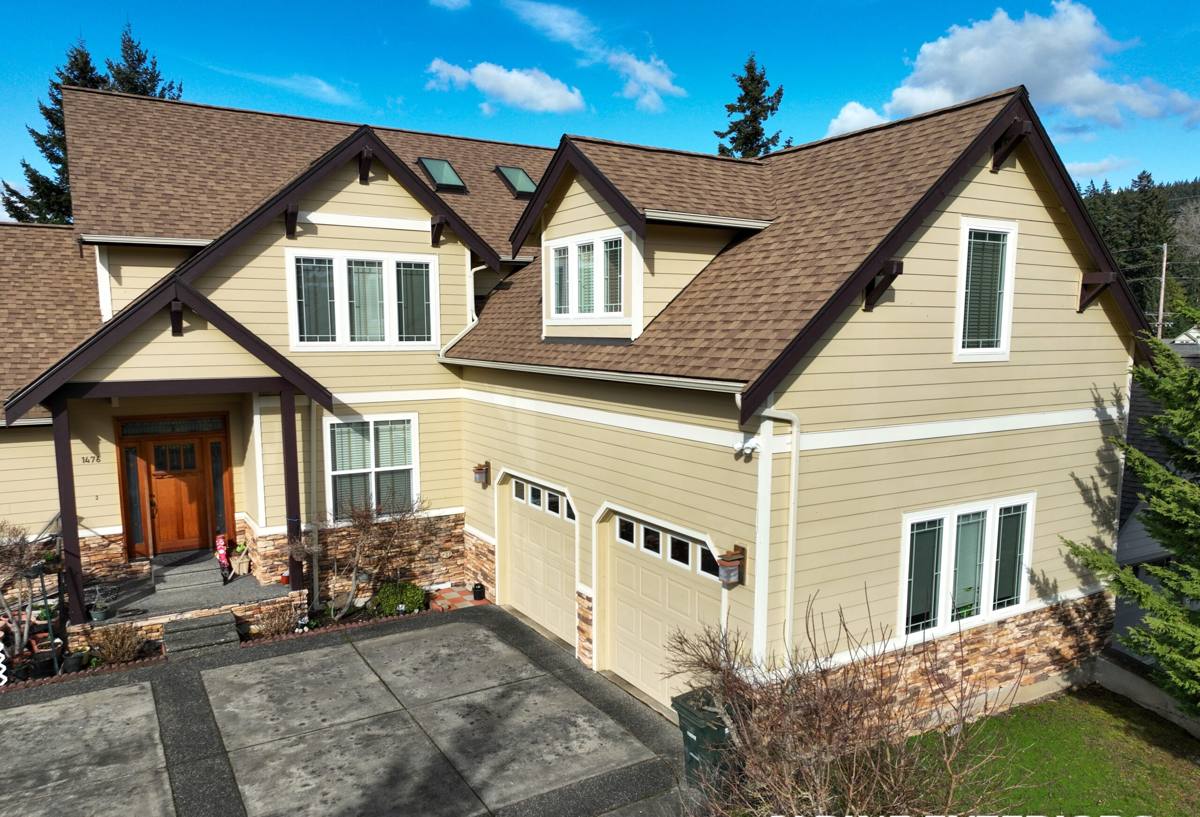
What Salt Air, Rain, and Moss Actually Do to a Deck
Salt Air and Metal Fasteners
Airborne salt accelerates corrosion on anything metal — nails, screws, joist hangers, bolts, and railing hardware. Standard galvanized fasteners can start rusting within a few years this close to salt water. Once a fastener corrodes, it loses holding strength long before the rust is visible from above, which is how a deck can look fine and still have a weakening structural connection underneath.
Driving Rain and Water Intrusion
Rain that comes in sideways off the water finds every gap in flashing, every unsealed screw hole, and every spot where decking boards butt tight against a house wall or post. Water that gets trapped instead of draining is what causes rot — not the rain itself, but rain with nowhere to go.
Moss and Standing Moisture
Custer's tree cover and long wet season give moss ideal growing conditions on any shaded or poorly-drained deck surface. Beyond being a slip hazard, moss holds moisture against the wood or composite surface far longer than open air would, which speeds up surface degradation and, on wood decks, encourages rot in the boards underneath.
Choosing Decking Material for This Climate
There's no single "best" decking material — the right choice depends on your budget, how much upkeep you're willing to do, and how much sun versus shade the deck gets. Here's how the common options actually perform under Custer's conditions:
| Material | Moisture & Moss Behavior | Maintenance | Typical Lifespan Here |
|---|---|---|---|
| Pressure-treated wood | Absorbs moisture readily; needs sealing to resist moss and rot | Annual cleaning, re-sealing every 1-2 years | 10-15 years with upkeep |
| Cedar | Naturally rot-resistant but still needs sealing near the coast | Sealing every 1-2 years, regular cleaning | 15-20 years with upkeep |
| Composite decking | Doesn't absorb water like wood, but surface can still grow moss if shaded and unwashed | Periodic washing, no sealing required | 25-30 years |
| PVC/capped polymer | Fully moisture-resistant surface, best moss resistance of the group | Occasional washing | 25-30+ years |
For shaded lots or homes closer to the water, we lean homeowners toward composite or capped polymer boards precisely because they don't give moss and moisture the foothold that wood does. Wood is still a good option for homeowners who want that traditional look and are willing to keep up with sealing — we're honest about that trade-off up front rather than steering everyone toward the same product.
What Happens Below the Decking Boards
The decking surface is the part everyone sees, but it's the structure underneath that determines whether a deck lasts. A correctly built deck in this climate needs:
- Proper footing depth and size for our soil and frost conditions, so the structure doesn't shift over time
- Ledger board flashing that actually sheds water away from the house rim joist instead of trapping it against the siding
- Joist tape or flashing on top of every joist, protecting the wood from the fasteners and moisture that sit directly on it
- Corrosion-resistant fasteners and hardware rated for coastal or treated-lumber contact, not generic hardware store galvanized screws
- Consistent drainage slope away from the house so water doesn't pool against the structure
- Airflow underneath the deck so the framing can dry out between rain events instead of staying damp
Skipping any one of these doesn't usually cause an obvious problem in year one. It shows up in year five or six as soft framing, a loose ledger connection, or a railing post that's started to rot at the base — the kind of damage that's expensive to fix because it's hidden until it isn't.
Our Deck Building Process
1. On-Site Assessment
We walk the site, look at drainage, sun and shade exposure, existing structure if it's a rebuild, and talk through what you actually want to use the deck for — entertaining, grilling, a quiet spot off the back door. That shapes size, layout, and material recommendations.
2. Design and Material Selection
We lay out the deck footprint, railing style, and stair placement, and walk through decking material options with honest pros and cons for your specific spot — not just the ones with the best margin for us.
3. Permitting
Most deck projects in Whatcom County require a building permit, particularly for anything attached to the house or built above a certain height. We handle the permit application and inspections as part of the job so you're not chasing paperwork.
4. Framing and Structural Work
This is where the climate-specific details matter most — footings, ledger flashing, joist protection, and fastener selection all get handled to the standard this area requires, not a generic build spec.
5. Decking, Railing, and Finish Work
Boards get installed with proper spacing for drainage and material expansion, railings get set and checked for stability, and any wood surfaces get sealed before we consider the job done.
6. Final Walkthrough
We walk the finished deck with you, point out anything you'll need to maintain over time, and answer questions before we call it complete.
Railings, Stairs, and Hardware Choices That Matter Here
Railings and stairs take a lot of abuse from weather because they're the most exposed parts of a deck — full sun, full rain, and in Custer's case, salt-laden wind. We pay particular attention to a few things that get overlooked on lower-quality builds:
- Railing post connections that are properly through-bolted and flashed, not just screwed into the rim joist
- Stair stringers cut and treated to resist the moisture that pools at ground level
- Baluster spacing and railing height that meet current code, especially important if you're pulling a permit
- Fastener and hardware finishes rated for coastal exposure, not just generic exterior-grade
A railing that wobbles within a couple of years almost always traces back to one of these being done wrong at install — not a defect in the material itself.
Maintenance by Material — What to Actually Expect
Every deck needs some upkeep; the question is how much and how often. Here's a realistic breakdown so there are no surprises after installation:
- Wood decks: plan on cleaning and inspecting every spring, re-sealing every 1-2 years, and checking fastener heads for corrosion or popping
- Composite decks: wash surfaces a couple times a year to prevent moss and algae buildup, especially in shaded sections
- All decks: keep gutters and downspouts clear so runoff isn't dumping extra water onto or near the deck structure
- All decks: trim back overhanging branches where possible to reduce shade and debris that feed moss growth
Permits and Local Considerations in Whatcom County
Deck permitting requirements vary by height, attachment to the structure, and footprint size, and Whatcom County's process applies whether you're right on the water in Custer or further inland. Rather than giving homeowners a generic answer that may not apply to their specific lot, we pull the actual requirements for your address as part of the design phase and build the permit application around what your project needs.
Why a Crew That Already Works in Custer Makes a Difference
A deck built to a generic spec sheet can pass inspection and still fail early in a coastal climate, because the spec sheet wasn't written with salt air, driving rain, and heavy moss exposure in mind. Working regularly in this area means we already know which fastener grades hold up, which decking products handle shade and moisture without turning into a moss farm, and where the drainage details actually need extra attention versus where they're optional. That's the difference between a deck that needs real maintenance work in year five and one that's still solid at year twenty.
If you're planning a new deck or need an honest look at whether an existing one needs repair or replacement, we're happy to come take a look. Reach out for a free, no-pressure estimate using the form below.