 Semiahmoo Siding
 Why California Creek Roofs Take a Different Kind of Beating
California Creek sits close enough to Semiahmoo Bay and Drayton Harbor that salt-laden air is a constant, quiet factor in how a roof ages here. It doesn't announce itself the way a storm does. Instead it works slowly on fasteners, flashing, and metal accents, and it combines with the wind-driven rain that comes off the water to push moisture into places a roof in a drier inland area would never see. Add in the tree cover common through this stretch of Whatcom County and you get a long moss season — often eight or nine months of the year with enough shade and dampness for moss and algae to take hold and stay.
None of that means a roof here is doomed to fail early. It means the roof has to be built and installed with those specific stresses in mind. A roofing system that performs fine in a dry, open, inland neighborhood can underperform in California Creek if the fastener grade, flashing metal, or ventilation plan wasn't chosen for salt exposure and near-constant moisture.
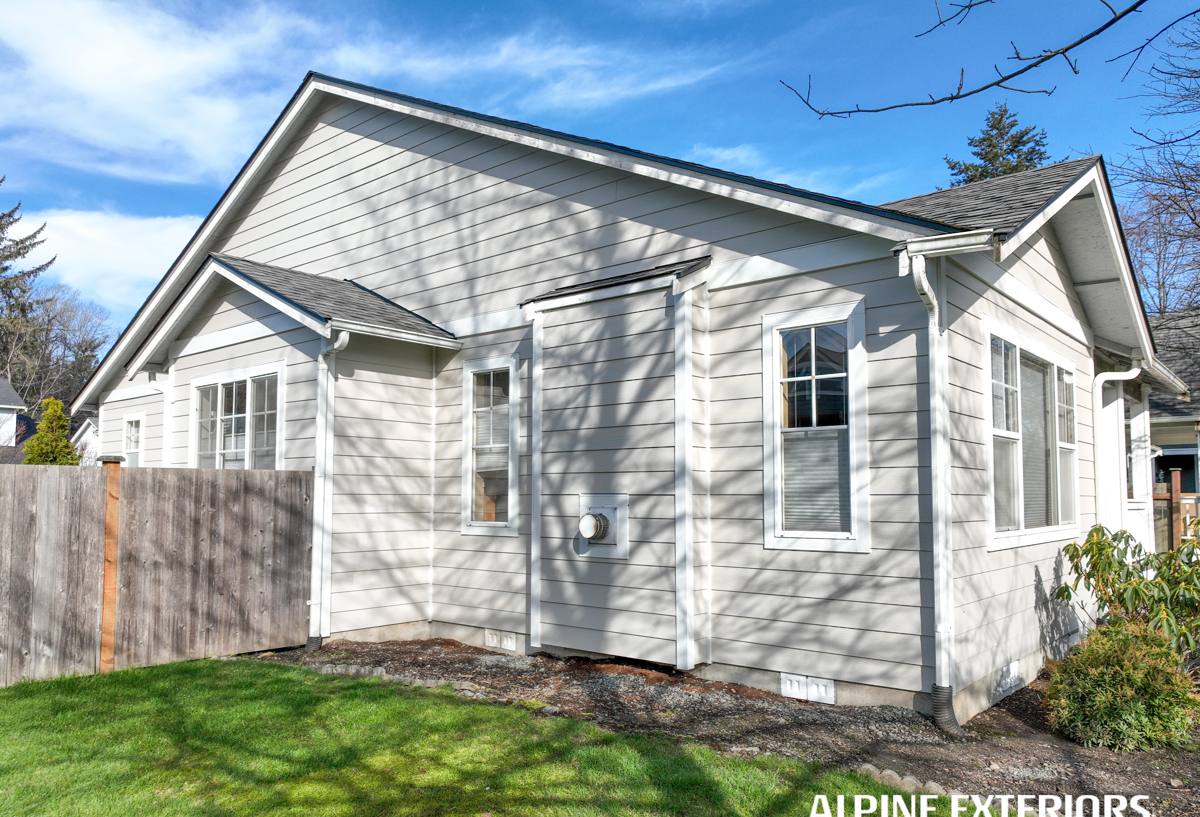
Signs a California Creek Home Is Due for a New Roof
Age and Material Life
Most standard asphalt composition roofs are rated for 20 to 30 years under ideal conditions. In a coastal, moss-prone environment like this one, realistic performance often lands toward the lower end of that range unless the roof was ventilated and maintained well. If your roof is past the 20-year mark and hasn't had significant work done, it's worth a real inspection rather than a guess.
Damage You Can See From the Ground
You don't need to get on a ladder to catch the early warning signs. Watch for:
- Shingle edges that look curled, cupped, or lifted rather than lying flat
- Dark streaking or a greenish-black cast, especially on north-facing or shaded slopes
- Visible moss cushions along ridges, valleys, or under overhanging branches
- Granules collecting in gutters or at downspout outlets
- Sagging along the ridge line or between rafters when viewed from the street
- Rust staining below metal flashing, vent caps, or exposed fasteners
Any one of these on its own might just mean a cleaning or a repair. Several together, especially on a roof already 15-plus years old, usually means it's time to talk about replacement before a small problem becomes a deck or interior repair.
Picking a Roofing System That Fits the Semiahmoo Climate
There's no single "best" roof for every home — it depends on your budget, your home's style, and how much maintenance you want to take on. But some materials genuinely hold up better than others against salt air and long-term dampness. Here's how the common options compare for a property in this area:
| Material | Salt Air Resistance | Moss/Algae Resistance | Typical Lifespan Here | Maintenance Level |
|---|---|---|---|---|
| Architectural asphalt shingle (algae-resistant) | Good with proper fasteners/flashing | Good — copper-infused granules slow regrowth | 20-25 years | Low to moderate |
| Standard 3-tab asphalt shingle | Fair | Fair — no algae-resistant granules | 15-20 years | Moderate |
| Standing seam metal | Very good with coated/marine-grade fasteners | Very good — smooth surface sheds moss | 40-plus years | Low |
| Cedar shake | Fair — needs treatment and airflow underneath | Poor without diligent upkeep | 20-30 years with upkeep | High |
Cedar has real appeal and a traditional look plenty of homeowners want, but we'll be straight with you: in a shaded, damp lot it needs consistent maintenance to keep moss from taking hold underneath the shakes, where it holds moisture against the wood. That's a legitimate trade-off, not a reason to avoid it outright — just something to factor into your decision and your upkeep plan.
What a Correct Installation Actually Involves
Tear-Off and Deck Inspection
We don't install a new roof over rot, soft spots, or hidden moisture damage. A full tear-off lets us inspect the actual roof deck — the plywood or OSB sheathing underneath — and replace any sections that have been quietly failing under old, worn-out roofing. Skipping this step is one of the most common shortcuts in the industry, and it's the one most likely to cost a homeowner later.
Waterproofing Underlayment
Underlayment is the layer between your shingles and the deck, and in a climate with this much wind-driven rain, it matters as much as the shingle itself. We use synthetic underlayment rather than old-style felt paper because it holds up better to moisture over time and doesn't degrade as quickly if it's exposed during installation. In vulnerable spots — eaves, valleys, and around penetrations — we add a self-adhering waterproof membrane for an extra line of defense against rain that gets pushed sideways by coastal wind rather than falling straight down.
Flashing Details That Actually Matter
Flashing is where most roof leaks actually start, not out in the open field of shingles. Because we work on siding as well as roofing, we pay particular attention to the places where the roof meets a wall — chimneys, dormers, and especially where a lower roofline meets a sidewall. That transition needs kick-out flashing to divert water away from the wall assembly instead of letting it run down behind the siding. We also use step flashing at walls, proper valley flashing, and corrosion-resistant boots at every pipe penetration. In a salt air environment, we're deliberate about pairing compatible metals so two different flashing materials don't corrode each other through galvanic reaction.
Ventilation and Moss: Solving the Real Problem, Not Just the Symptom
Moss treatment and roof cleaning deal with the symptom. Ventilation deals with the cause. A roof that traps warm, moist air in the attic stays damp longer after every rain, and that dampness is exactly what moss and algae need to keep coming back. A balanced system — intake at the soffits, exhaust at the ridge — keeps air moving underneath the roof deck so it dries out between storms instead of staying wet for days.
On shaded slopes where moss has been a recurring problem, we'll often recommend zinc or copper ridge strips as an added deterrent. They release trace metal ions when it rains that inhibit moss growth without chemical treatments. It's a small addition during installation that saves a lot of cleaning later.
Our Installation Process, Start to Finish
- On-site inspection of the current roof, attic ventilation, and any related siding or trim issues
- Straightforward written estimate covering material options, scope, and timeline
- Permit pulled through the appropriate local jurisdiction before any work begins
- Full tear-off and disposal of old roofing materials
- Deck inspection with any rotted or damaged sheathing replaced
- Installation of waterproof underlayment, flashing, and ventilation components
- Shingle or metal panel installation to manufacturer specification
- Final walk-through, cleanup, and review of warranty documentation
Permits and Working Respectfully in a Coastal Neighborhood
A full roof replacement in Whatcom County typically requires a building permit, and we handle that process as part of the job rather than leaving it to you. If your property in California Creek falls under an HOA or deed covenants covering exterior materials or colors, we'll work within those guidelines rather than assuming anything — it's a quick conversation up front that avoids problems later. We also plan around tide-influenced wind patterns and seasonal weather windows common to the Semiahmoo area, scheduling tear-off days when the forecast gives us the best shot at keeping your home protected the entire time the roof is open.
Why Hiring a Crew That Already Works California Creek Matters
A roofing crew that's worked this specific stretch of coastline knows things a generic estimate won't capture: which slopes on local homes hold onto moss longest, how much salt exposure a given lot actually gets based on tree cover and wind direction, and which fastener and flashing grades hold up rather than needing replacement in half the expected time. That local pattern recognition shows up in fewer callbacks and a roof that actually performs the way it was rated to.
Because we're also a siding contractor, we look at your home as one connected system rather than treating the roof in isolation. Roof and wall flashing details, especially where they intersect, get evaluated together — so water gets directed away from your walls, not just off your roof and onto them.
Keeping a New Roof Performing Like New
A well-installed roof still benefits from basic upkeep in this climate:
- Clear gutters and downspouts at least twice a year so water doesn't back up under the roof edge
- Remove overhanging branches that keep a section of roof shaded and damp longer than the rest
- Have moss removed gently — no aggressive power-washing, which can strip granules and shorten shingle life
- Schedule a quick inspection after any major windstorm to catch lifted flashing or shingles early
If you're weighing a new roof for a home in California Creek, we're happy to take a look and give you a straightforward, no-pressure estimate — just fill out the form below and we'll go from there.